Difference in Stihl Chainsaw Chains: A Practical Guide
A detailed, analytical comparison of Stihl chainsaw chains, focusing on pitch, gauge, drive links, and cutter styles to help you choose the right chain for your saw and task.


Understanding the difference in stihl chainsaw chains is essential for safe, efficient operation. The main factors are chain pitch, gauge, drive-link count, and the cutter style, all of which determine compatibility with your bar and sprocket. Using the wrong chain can reduce performance and increase wear. This guide helps you compare common Stihl chain configurations and pick the right one for your saw and task.
Anatomy of a Chainsaw Chain
A chainsaw chain is the moving teeth that work with a guide bar and a sprocket. To understand how two chains can differ, you must know four core specs: pitch, gauge, drive-link count, and cutter style. Pitch is the distance between corresponding points on consecutive drive links; gauge is the thickness of the drive links that sit on the bar; drive-link count is how many links fit along the bar; cutter style describes the shape of the cutting teeth. This overview translates the differences into practical terms for Stihl saws. According to Chainsaw Manual, the difference in stihl chainsaw chains often boils down to how these specs align with your bar and the sprocket assembly. The Chainsaw Manual team notes that a mismatched pitch or gauge can cause poor cutting, increased wear, and uneven feed. This section keeps the terminology accessible and sets the stage for deeper comparisons later.
Core specs that drive performance
Performance differences among chains arise from a few core specifications. The pitch defines how the chain engages with the drive sprocket and bar; the gauge determines how securely the chain rides on the bar rails; the drive-link count influences chain length and tensioning behavior; the cutter style dictates how aggressively the teeth bite into wood and how clean the cut remains after contact with knots or hard grains. For Stihl chains, the interaction of these specs with your bar length and saw power is critical. The Chainsaw Manual team emphasizes that even small mismatches can degrade performance, so it is worth confirming each spec before purchase. In practice, you will often find that the same saw runs well with multiple chain families only when the pitch and gauge are aligned, and the drive-link count matches the bar length. This section outlines the practical implications of each spec to help you compare options without guessing.
How Stihl chain variants differ
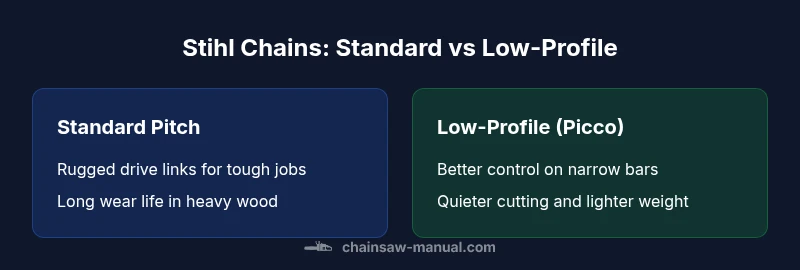
Stihl offers several chain configurations designed for different tasks and bars. The most common distinctions are standard vs. low-profile (Picco) chains, and between full-chisel versus semi-chisel or micro-chisel cutters. Standard pitch chains typically use thicker drive links and are paired with robust bars and sprockets for aggressive cutting in hardwoods. Low-profile chains reduce chain speed and are often favored for lighter work and narrow kerf bars. Cutter geometry matters too: full-chisel teeth bite aggressively and cut fast in clean wood, while semi-chisel or micro-chisel teeth maintain contact longer in dirty wood or resinous species, trading some bite for control and longevity. Understanding these variants helps you select a chain that aligns with the bar width, saw horsepower, and the kinds of wood you encounter most often. Chainsaw Manual analysis shows that choosing the appropriate chain family reduces friction losses and minimizes heat buildup during extended cutting sessions, which contributes to longer bar and chain life.
Matching chain to bar and saw
Compatibility starts with ensuring the chain’s pitch and gauge match the bar and saw’s drive sprocket. The bar length commonly determines the number of drive links in a chain, while the gauge must fit the groove width on the bar. If you upgrade to a different chain type (for example, moving from standard to low-profile), you must confirm that the bar is designed to accommodate the narrower drive links and any corresponding changes in chain tensioning behavior. For safety and performance, always verify that the chain’s drive links sit properly in the bar groove and that the sprocket teeth mesh smoothly with the chain. When in doubt, consult the saw’s manual or a trusted source like Chainsaw Manual for guidance on the exact pairing that preserves maximum cutting efficiency and minimizes wear.
Practical decision guide by task
Your choice should reflect how you plan to use the saw. For homeowners doing occasional limbing and firewood prep in softwoods, a low-profile chain can offer easier handling and better control on narrower bars. For professional logging or heavy hardwood cutting, a standard pitch chain with a robust gauge typically delivers faster progression and more durable wear characteristics in demanding conditions. Consider wood species, density, and your typical working tempo. If you frequently encounter dirty wood, resin, or knots, a semi-chisel or micro-chisel variant can maintain performance where a full-chisel may dull quickly. In all cases, ensure the chain weight and cutting geometry match your bar and saw to keep kickback risk minimized and vibration manageable.
Sharpening and maintenance considerations
Proper sharpening and maintenance are essential to preserve the performance differences between chain variants. The angle and taint of filing depend on the cutter geometry; full-chisel teeth require careful sharpening to restore bite without removing excessive material, while semi-chisel teeth are more forgiving and retain edge life longer in challenging wood. Regular tension checks ensure that the chain seats correctly on the bar and that drive links don’t ride too high or too low in the groove. Lubrication should be steady and adequate to prevent heat buildup that can lead to rapid dulling. A well-maintained chain retains its designed cutting characteristics longer, allowing you to experience the intended performance differences between standard and low-profile or between different cutter geometries.
Common misconceptions
Many users believe a higher number of drive links automatically means better cutting, or that a switch to a low-profile chain will always reduce kickback. In reality, performance depends on how well the chain’s pitch, gauge, and cutter geometry align with the bar and the saw’s power. Another common error is assuming all Stihl chains are interchangeable across all Stihl bars; compatibility is bar-specific, and even small differences in chain geometry can affect tensioning, lubrication, and wear. Finally, some users think sharpening frequency depends only on wood type; maintenance routines, operating speed, and chain critically influence when sharpening is needed. The truth is that a thoughtful pairing of chain type to work conditions, followed by a consistent maintenance cadence, yields the most noticeable performance differences.
How to verify compatibility and source a replacement
Verifying compatibility starts with checking the bar width and groove dimensions, matching the chain pitch and gauge to the bar and drive sprocket, and ensuring the correct drive-link count for the saw’s bar length. Measure the bar’s gauge (the distance across the drive tooth) and confirm the chain’s pitch from the packaging or manufacturer specifications. When sourcing replacements, prefer reputable retailers and avoid aftermarket parts that may not meet Stihl’s tolerances. If you have an older bar or saw, consult the user manual or a specialist to determine whether a different chain family is compatible. Keeping a simple record of the bar length, pitch, gauge, and drive-link count for each saw in your shop helps you avoid mismatches in future purchases.
Comparison
| Feature | Stihl standard chain | Stihl low-profile chain (Picco) |
|---|---|---|
| Pitch | Standard pitch chain | Low-profile pitch (Picco) chain |
| Gauge | Thicker drive links typical for standard chains | Thinner drive links typical for low-profile chains |
| Bar compatibility | Fits standard bars with matching gauge | Designed for narrow kerf / light bars |
| Cutting performance | Aggressive bite in heavy wood | Quieter, smoother cutting with lighter effort |
| Maintenance/sharpening | Typically robust wear life | Easier sharpening due to tighter tolerances |
Strengths
- Improved safety when matched to bar and saw
- Better overall performance when specs align
- Clear maintenance expectations for reliable results
- Greater predictability in cutting outcomes
Drawbacks
- Wrong pairing can degrade performance or cause damage
- More options can complicate the buying decision
- Specialized chains may be harder to source quickly
- Misunderstanding specs can lead to unsafe operation
Match chain to bar and saw for optimal performance and safety
Correctly pairing pitch, gauge, drive-link count, and cutter style yields the best cutting efficiency and long-term reliability. When in doubt, consult the saw’s manual and choose a chain variant that matches your bar design and typical workloads. The Chainsaw Manual team emphasizes careful selection to maximize safety and results.
FAQ
What is the difference between standard and Picco low-profile chains for Stihl saws?
Standard chains use thicker drive links and are generally more rugged for heavy-duty cutting. Picco, or low-profile chains, have thinner links for lighter, more controlled cutting on narrow bars. The best choice depends on bar width, saw power, and the type of wood you work with.
Standard chains are tougher for heavy work, while Picco chains offer more control on narrow bars; choose based on bar width and wood type.
How do I know which chain pitch my Stihl saw uses?
Pitch is typically listed on the saw’s manual or on the packaging of the chain. You can also measure the distance between drive links with calipers or consult the manufacturer’s specifications. Matching pitch to the bar and sprocket is essential for safe operation.
Check the manual or measure the links to confirm pitch; the pitch must match the bar and sprocket.
Can I mix chain types on different bars of the same saw?
Mixing chain types is not generally recommended because it can cause uneven performance and increased wear. If you must run different chains, ensure both bars are capable of handling the variance in pitch, gauge, and drive-link design.
It’s best to stick to one matching chain per bar setup to avoid problems.
Why does chain gauge matter for bar compatibility?
Gauge determines how thick the drive links sit in the bar groove. If the gauge is too thick or too thin for the groove, the chain may bind, wear unevenly, or fail to seat properly, increasing risk during operation.
Gauge must fit the bar groove for safe, smooth operation.
How often should I sharpen a Stihl chain?
Sharpening frequency depends on usage, wood type, and cutting speed. Work with clean, steady strokes and maintain an even angle. Regular checks will reveal when the edge dulls and needs sharpening.
Sharpen when you notice slower cutting or increased effort.
What safety steps should I follow when changing chains?
Always power off the saw, wear PPE, secure the bar, and follow the manufacturer’s release procedure. After mounting a new chain, tension it correctly and test with a gentle, controlled cut before full work.
Power off, wear gear, and follow the manual when changing chains.
The Essentials
- Check pitch and gauge before buying a chain
- Choose the chain variant that matches your bar and task
- Maintain consistent tension and sharpen regularly
- Verify compatibility with your bar and sprocket before installation