Can You Put a Longer Bar on a Chainsaw? Safety and Compatibility
This guide explains whether you can fit a longer bar on a chainsaw, how to assess compatibility, safety implications, and a clear step-by-step process for a responsible upgrade or decision.


You can assess whether a longer bar is feasible by checking the saw’s power, bar mounting capacity, and manufacturer guidelines. This article walks you through compatibility checks, safety considerations, and a clear decision process to determine if extending the bar is appropriate for your tool.
Can you put a longer bar on a chainsaw
According to Chainsaw Manual, upgrading bar length is not a trivial modification. The right bar length depends on engine power, mounting hardware, and the chain’s pitch and gauge. In many cases, a longer bar may not be recommended by the manufacturer and could compromise safety, reliability, and warranty. This article uses the exact phrase you’re asking about to help homeowners, DIY enthusiasts, and professionals make an informed decision: can you put a longer bar on a chainsaw while staying safe and compliant? We’ll cover compatibility, how to measure, and the practical steps if you decide to pursue a longer bar, with safety as the top priority.
Bar length, engine power, and compatibility
One of the most critical factors when considering a longer bar is engine power. A saw with limited horsepower or torque may struggle to drive a longer cutting edge, leading to sluggish starts, increased fuel consumption, and risk of kickback. Always check the maximum bar length recommended by the manufacturer for your specific model. If you do not have access to the manual, consult the brand’s official support or a trusted chainsaw technician. The engine’s displacement and cooling capacity also influence whether a longer bar can be supported without overheating during sustained cutting. Remember, can you put a longer bar on a chainsaw should be answered with a product-specific answer rather than a general rule. Additionally, ensure the bar you plan to install uses the same mounting pattern, chain pitch, and gauge. A mismatch here can cause chain derailment or power loss during operation.
Bar mounting, chain pitch, and gauge
Beyond length, the hardware must align. Bar mounts, drive sprockets, and the chain must match the bar’s pitch and gauge. If you install a longer bar without matching chain and mounting hardware, you risk chain tension problems, uneven wear, and potential derailment. Use the saw’s user manual or a service chart to confirm the correct combination of bar length, chain pitch (the distance between chain rivets), and gauge (bar groove thickness). If any of these don’t align with a longer bar, the upgrade is not advisable. This is a common pitfall that many DIYers encounter when asking can you put a longer bar on a chainsaw.
Safety risks and warranty considerations
Longer bars introduce additional kickback potential, greater torque on the bar, and added leverage on the cutting teeth. These changes can affect control and safety, especially for less experienced users. The risk of bar/chain derailment increases if the chain tension is not optimized for the new bar length. In addition, many manufacturers tie bar length to warranty and safety certifications; exceeding the recommended bar length can void warranties or violate usage guidelines. Always weigh the safety implications and warranty language before proceeding. Chainsaw Manual emphasizes prioritizing PPE, training, and conservative upgrades when possible.
Measuring, comparing, and choosing the right bar
If you decide to explore a longer bar, start by identifying the maximum bar length allowed for your model, then compare it to the bar you want to install. Measure the current bar length and verify the new bar’s overall length, mounting hole alignment, and nose shape. Ensure the new bar shares the same drive link count and that the chain’s pitch and gauge match. Consider also the practical effects on maneuverability, balance, and cutting speed. Sometimes a longer bar is valuable for heavy-duty felling or bucking, but for routine pruning or light-duty work, staying within manufacturer recommendations is safer and more efficient.
Tools & Materials
- Chainsaw scrench tool(Loosen bar nuts and tension screws without bending components)
- Flat-head screwdriver(Assist in removing screws on bar cover or covers with screws)
- Phillips screwdriver(Alternative tool for screws on covers or tensioner area)
- Socket wrench or hex key set(Remove and reinstall bar mounting bolts; ensure proper torque)
- Replacement bar matching pitch/gauge(Ensure compatibility with chain and mounting system)
- Replacement chain (matching pitch/gauge)(Needed if changing bar length affects chain compatibility)
- Bar oil and rags(Lubrication during and after replacement; keep components clean)
- Personal protective equipment (gloves, eye protection)(Maintain safety during all steps)
Steps
Estimated time: 30-60 minutes
- 1
Check compatibility and manufacturer guidance
Locate the owner’s manual or official support page for your model to verify the maximum recommended bar length. If the manual lists a different bar length than the one you want, do not proceed without professional guidance. This step answers the core question: can you put a longer bar on a chainsaw for your exact model?
Tip: If the manual allows a longer bar, note the exact length and required chain pitch/gauge for future reference. - 2
Gather matching bar and chain components
Select a bar that matches the saw’s mounting pattern, bar groove width, and drive links. Obtain a chain with the same pitch and gauge as the new bar. Having everything aligned before disassembly prevents rework and reduces risk.
Tip: Double-check the bar’s nose sprocket compatibility with your chain to avoid binding. - 3
Relieve tension and remove the bar cover
Disconnect the saw from any power source and carefully relieve chain tension using the tensioning screw. Remove the bar cover and set aside the bar and chain. Take care not to drop parts or nick the chain.
Tip: Keep track of screws and small parts to avoid losing them during reassembly. - 4
Remove the old bar and install the longer bar
If the longer bar requires different mounting bolts or spacing, remove the old bar’s mounting hardware and replace with the correct components. Align the bar with the clutch drum and ensure the bar nose sits properly in the sprocket area.
Tip: Do not force parts; if they don’t seat smoothly, stop and verify compatibility. - 5
Re-tension the chain and lubricate
Reinstall the chain and bar cover, then re-tension according to the manufacturer’s specification. Lubricate the bar with fresh bar oil. Spin the chain by hand to ensure smooth movement without binding.
Tip: Over-tightening can cause excessive wear and heat; under-tightening increases the risk of derailment. - 6
Test in a controlled environment
Perform a light straight cut on a soft wood sample in a controlled area to observe balance, vibration, and cutting performance. Stop immediately if you notice binding, unusual noise, or loss of control.
Tip: Always wear PPE and keep bystanders clear of the work zone. - 7
Assess performance and decide
Evaluate whether the longer bar meets your needs without compromising safety or warranty. If there are any concerns about control, heat, or reliability, revert to the original bar length or consult a professional.
Tip: When in doubt, revert to the manufacturer-recommended configuration and consider a larger saw suited to heavier work.
FAQ
Can I simply attach a longer bar to any chainsaw model?
No. Bar length is tightly linked to engine power, mounting hardware, and chain specifications. Always check the user manual or manufacturer guidance for your exact model before attempting an upgrade.
Longer bars aren’t universal. Check your model’s specs first, then decide.
What are the risks of using a longer bar?
Increased engine load, higher kickback risk, potential chain derailment, and possible warranty issues. If any of these risks are present, proceed with caution or revert to the stock bar.
Longer bars can improve reach but raise risks like kickback and engine strain.
How do I tell if my saw can handle a longer bar?
Consult the manual or manufacturer’s website to confirm the maximum bar length for your model. Also verify pitch/gauge compatibility with the chain and bar.
Check the manual for the maximum bar length and exact specifications.
Is it safer to upgrade the bar or buy a bigger saw?
Often, a bigger saw is safer and more balanced for longer bar use. Upgrading a bar can compromise safety if it exceeds design limits.
Usually a bigger saw is safer for long bars; upgrades should stay within specs.
What steps should I take if I decide to upgrade the bar length?
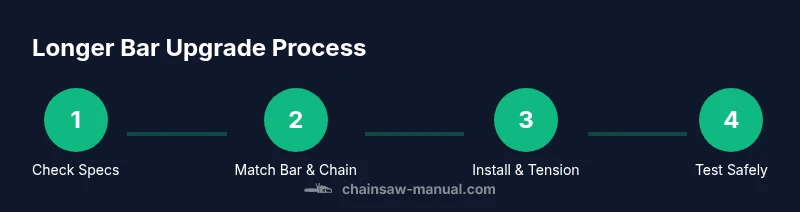
Confirm compatibility, purchase matching bar and chain, carefully install, re-tension the chain, and test in a controlled environment before use.
If you upgrade, follow compatibility checks and test carefully.
Watch Video
The Essentials
- Verify model-specific bar length limits before upgrading
- Match bar length with pitch/gauge and mounting pattern
- Re-tension and lubricate carefully to prevent binding
- Wear PPE and test in a controlled environment
- If unsure, consult a professional or revert to stock configuration