What to Clean a Chainsaw With: A Practical Guide
Learn exactly what to clean a chainsaw with, plus step-by-step methods, tools, and safety tips to keep your saw in top condition. Practical, field-tested guidance for homeowners and professionals.


You should clean a chainsaw with mild, non-abrasive cleaners, water sparingly, and a soft brush. Disengage power, remove the fuel and spark source as applicable, and dry thoroughly before lubrication. Use manufacturer-recommended bar and chain oil, and avoid solvents near gaskets, seals, and the carburetor.
What to Clean Chainsaw With: Safe Substances and Why
Keeping a chainsaw clean isn’t about using harsh chemicals—it’s about choosing safe, effective products that don’t damage plastics, seals, or the carburetor. The Chainsaw Manual team emphasizes simple, widely available items like mild dish soap, warm water, and citrus-based degreasers for grime. Avoid gasoline, kerosene, or highly volatile solvents near the air intake and internal components, as these can degrade gaskets or foul the fuel system. After use, a light film of bar oil on moving parts helps reduce corrosion and wear. By choosing the right cleaners and applying them with soft brushes, you minimize downtime and extend service life. This approach aligns with Chainsaw Manual’s safety-first philosophy and practical maintenance guidance.
In daily use, always start with the basics: a clean workspace, protective gear, and a plan for disposing of used rags and oily wipes. Cleanliness reduces the chance of dirt migration into the engine housing and supports better cooling. This section sets the foundation for the detailed steps that follow in the official guide.
Cleaning Agents: Safe Choices and Why to Avoid
Choosing the right cleaning agents is essential for preserving the integrity of seals, gaskets, and plastics. Mild dish soap mixed with warm water is a dependable starting point for removing surface grime. For stubborn grease, citrus-based or non-chlorinated degreasers can be effective without harsh solvents. Always avoid gasoline, kerosene, lacquer thinner, and other strong, single-solvent cleaners around the carburetor, air intake, and fuel system; they can degrade rubber parts and seals. If you must use a degreaser, test it on a small, inconspicuous area first and rinse thoroughly. After cleaning, use a clean cloth to wipe dry before air-drying in a well-ventilated area. Chainsaw Manual’s testing indicates that lower-toxicity cleaners paired with proper rinsing deliver the best long-term results.
Important note: never submerge critical components like the carburetor or engine housing in water. Keep water exposure to the exterior and removable parts only. This practice minimizes the risk of corrosion and ensures reliable performance.
Prep and Safety Prerequisites
Before you begin cleaning, prepare a safe, well-lit workspace and ensure the saw is completely powered down. For gas saws, let the engine cool, then disconnect the spark plug boot or remove the spark plug wire to prevent accidental cranking. If you own an electric chainsaw, unplug the tool and remove the battery. Drain or separate fuel from the chain saw if you’ll be removing the bar and chain. Gather your PPE: safety glasses, cut-resistant gloves, and sturdy footwear. Having a dedicated cleaning area with a tray for small parts helps keep everything organized. According to Chainsaw Manual, these safety steps reduce risk and protect you from sharp edges and hot surfaces. A clean environment also minimizes the chance of contaminating fuel or lubrication systems during maintenance.
Step-by-Step Cleaning Sequence (Overview)
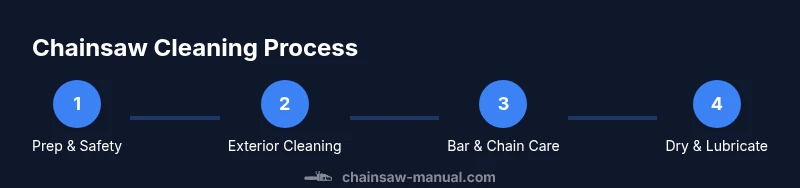
This section outlines the general flow of a thorough chainsaw cleaning. Start by securing the saw on a stable workbench. Then remove the chain and guide bar to access the saw housing, cooling fins, and air intake. Use a soft brush and mild cleaner to scrub grime from the exterior, followed by a careful wipe-down of internal channels and cooling fins. Dry parts completely before reassembling. Finally, reassemble, lubricate with bar oil and chain oil, and perform a short functional check to verify tension and smooth operation. For best results, refer to the step-by-step section for exact actions and timings. Chainsaw Manual emphasizes that consistent, deliberate cleaning improves performance and safety.
Cleaning the Bar and Chain: Focused Care
The bar groove, oil passages, and drive sprocket areas accumulate resin and metal particles. Use a soft brush to dislodge wood fibers and pitch, then wipe the bar rails with a cloth. Clean the drive sprocket and tip of the bar carefully to avoid burrs. For the chain, inspect each link for dullness, signs of wear, or damaged drive teeth. If needed, remove pitch with a degreaser-dampened brush, then rinse lightly and dry. After cleaning, re-lubricate before reinstallation to minimize immediate wear. The goal is to restore smooth, consistent lubrication and reduce friction hotspots that can cause kickback or poor cutting performance.
Air Filter, Cooling Fins, and Muffler Area
A clogged air filter reduces engine efficiency and increases fuel consumption. Remove the air filter and inspect for dirt or damage; clean or replace as needed. Wipe cooling fins with a soft brush to maintain airflow and prevent overheating during operation. Inspect the muffler area for carbon buildup that could restrict exhaust flow. Use a small pick or brush to loosen debris from hard-to-reach crevices. Reinstall components with care, ensuring seals and gaskets seat properly. Regular attention to these areas improves cold starts and running temperature stability.
Rinsing, Drying, and Lubrication
Rinse exterior parts with a damp cloth or soft brush to remove residual cleaner. Avoid direct water jets into the engine or carburetor. After rinsing, dry thoroughly with lint-free towels and let any remaining moisture evaporate in a warm, dry environment. Apply a light coat of protective spray or anti-corrosion spray to metal surfaces, then wipe off excess. Reinstall the chain and bar, re-tension the chain, and fill with fresh bar oil and chain oil before testing. Proper drying and lubrication prevent rusting and extend the life of the bar and chain.
Storage, Maintenance Intervals, and Long-Term Care
Store the saw in a dry, well-ventilated area away from direct sun and heat sources. Keep fuel fresh and stabilize if storing for extended periods, and consider draining fuel before long-term storage. Maintain a regular cleaning cadence after each use, especially in dirty or resinous conditions. Schedule periodic inspections for wear on bar rails, drive sprockets, and clutch components. Chainsaw Manual recommends documenting maintenance activities to track wear patterns and replacement needs. A proactive approach reduces downtime and improves reliability over time.
Final Safety Check and Quick Test
Before powering up, recheck all fasteners, guards, and safety features. Ensure the chain brake is functioning and the chain tension is correct. Wipe down all surfaces one final time, confirm there is no moisture near the spark plug or air intake, and ensure oil reservoirs are filled with the correct lubricants. Start the saw and listen for unusual noises or vibrations. If anything feels off, power down and re-inspect. Adhering to these checks aligns with Chainsaw Manual’s safety-first guidance and reduces the risk of kickback or component failure.
Tools & Materials
- Safety glasses or goggles(Protect eyes from debris and splashes)
- Cut-resistant gloves(Nitrile or leather; protect hands from sharp edges)
- Bucket or basin (3 L or larger)(For soaking small parts if needed)
- Mild dish soap(Gentle cleaner for grime)
- Warm water(For dilution and rinsing)
- Non-chlorinated degreaser or citrus-based cleaner(For stubborn grease)
- Soft brush and old toothbrush(Reach crevices and bar areas)
- Rags or microfiber towels(Drying and polishing)
- Bar oil and chain oil(Lubricants matching manufacturer specs)
- Screwdrivers, pliers, hex keys(Disassembly and reassembly)
- Compressed air can (optional)(Blow dust from tight spots)
- Anti-corrosion spray or protective wipe (optional)(Protection after cleaning)
- Small parts tray or magnet(Keep fasteners organized)
- Owner’s manual or service guide(Torque specs and parts reference)
Steps
Estimated time: 70-100 minutes
- 1
Disconnect power and secure the saw
Power off the saw, unplug the cord or remove the battery, and ensure the chain cannot move. Allow the engine to cool if it’s a gas unit. This reduces the risk of accidental starts while cleaning.
Tip: Always remove the ignition source before touching moving parts. - 2
Remove chain and guide bar for thorough access
Loosen the bar nuts and carefully lift the bar and chain away from the body. Inspect for wear on the tensioning mechanism and set aside parts in a tray. This step gives you full access to the housing, fins, and intake paths.
Tip: Take photos during disassembly to aid reassembly. - 3
Clean exterior surfaces and cooling fins
Use a soft brush to remove sawdust and resin from the housing and cooling fins. Wipe with a damp cloth, applying cleaner as needed. Be careful around the carburetor and air intake; avoid soaking these areas.
Tip: Work from the top down to prevent grime from dripping into cleaned areas. - 4
Inspect and clean air filter and muffler area
Remove the air filter and clean or replace if dirty. Check the muffler area for carbon buildup and use a small brush or pick to remove debris. Reassess seals and gaskets for wear.
Tip: A clean air path improves engine performance and fuel efficiency. - 5
Clean bar and chain components
Scrub the bar rails and groove with a soft brush. Clean the drive links and tensioner surfaces on the chain. Rinse if necessary and dry thoroughly before lubrication.
Tip: Avoid harsh solvents on the chain to prevent weakening the rivets. - 6
Dry, lubricate, and reassemble
Dry all parts completely. Re-lubricate the bar rails and chain with fresh oil. Reinstall the chain and bar, re-tension to manufacturer specs, and ensure all screws are snug.
Tip: Do a light test before making a full cut to verify tension and smooth operation. - 7
Final safety check and test
Perform a visual inspection for loose parts and proper alignment. Start the saw on a safe surface to confirm smooth operation and absence of unusual noises. Stop immediately if something feels off.
Tip: Always keep the test area clear of obstructions and people.
FAQ
Can I use dish soap to clean a chainsaw?
Dish soap mixed with warm water is a safe starting point for exterior cleaning. It effectively removes grime without corroding plastics. Avoid harsh detergents near the carburetor and seals. After washing, rinse and dry thoroughly.
Dish soap with warm water is fine for exterior cleaning, as long as you avoid the carburetor and seals and dry the saw completely afterward.
Is it safe to soak chainsaw parts in water?
Soaking essential parts is generally discouraged, especially around the carburetor, fuel system, and electronics. Small parts may be rinsed, but avoid prolonged immersion. Dry all parts completely before reassembly.
Soaking parts isn't recommended; rinse thoroughly and dry completely before putting anything back together.
Should I clean the chainsaw after every use?
Regular cleaning after dirty or resinous use helps prevent buildup that can affect cooling and lubrication. A quick exterior wipe plus routine bar and chain checks can save downtime later. For heavy use, a more thorough cleaning every few uses is advised.
Yes, clean after dirty or resinous work to prevent buildup and keep cooling and lubrication effective.
What cleaners should I avoid around the carburetor?
Avoid gasoline, kerosene, lacquer thinners, and other strong solvents on and around the carburetor. These can degrade seals and gaskets. Use mild cleaners and restricted spray to prevent entry into the fuel path.
Avoid strong solvents near the carburetor; stick to mild cleaners and careful application.
Can I start the chainsaw immediately after cleaning?
Do not start immediately after a cleaning session if moisture remains. Ensure all parts are dry, then re-check tension and lubrication before testing. A cautious approach prevents damage and reduces kickback risk.
Wait until everything is dry and properly reassembled before starting the saw.
How often should I replace the air filter?
Air filter replacement depends on usage and environment. Inspect after each cleaning and replace if dirty or damaged. Regular replacement maintains engine performance and fuel efficiency.
Check the air filter each cleaning and replace when dirty to keep performance steady.
Watch Video
The Essentials
- Disconnect power and fuel sources before cleaning
- Choose mild cleaners and avoid direct immersion of engine components
- Dry thoroughly and lubricate before reassembly
- Inspect for wear and maintain regular cleaning intervals