How to Clean Chainsaw Air Filter: A Practical Guide
Learn how to safely clean your chainsaw air filter with our practical, step-by-step guide. Maintain engine performance, reduce wear, and extend filter life with proper cleaning and maintenance.


In this guide you’ll learn how to clean your chainsaw air filter to maintain optimal engine performance and safety. You’ll need a clean workspace, basic tools, and a few minutes. Regular cleaning prevents fuel wastage, starting problems, and excessive smoke caused by a clogged filter. Follow the steps in this article for a safe, effective cleaning routine.
What a Chainsaw Air Filter Does and Why It Gets Dirty
The air filter on a chainsaw protects the engine by trapping dust, sawdust, and particulates before they can enter the combustion chamber. When the filter becomes clogged, the enginestarves for air, reducing power and requiring the engine to work harder. This can increase fuel consumption and cause the chain to slow or stall during cutting. According to Chainsaw Manual, regular air filter maintenance is a key part of safe, reliable operation. The goal when learning how to clean chainsaw air filter is to remove debris without damaging the filter medium. A filter in good condition will be clean, dry, and easy to breathe through. Signs of a dirty filter include a darkened appearance, visible dust, a stiff or crunchy texture, and a noticeable drop in engine performance. If you notice smoke or a rich fuel odor, the filter is likely clogged and needs attention.
Tools and Materials You’ll Prepare Before You Start
Before you begin, gather the tools and materials to minimize interruptions. A clean workspace helps keep dust out of the engine. You’ll typically need a replacement air filter or cleaning kit (check your model), screwdrivers or hex keys, a small brush or compressed air, lint-free cloths, and mild detergent if the filter is washable. Having a spare filter on hand is wise, as some saws require a replacement after cleaning. Always reference your saw’s manual for model-specific guidance and filter type. A tidy setup reduces risk and speeds up the process.
Safety First: Workspace Setup and PPE
Maintenance should occur in a well-ventilated, stable area away from ignition sources. Wear safety glasses and gloves to protect against sharp edges and dust. Ensure the chainsaw is cool to the touch before you start. Engage the chain brake to prevent accidental movement, and disconnect the spark plug wire or battery to eliminate the risk of startup during disassembly. If your saw has a loud muffler, consider hearing protection. Keeping a dedicated toolkit for maintenance helps avoid cross-contamination with fuel or oil residues.
Step-by-Step Cleaning Process Overview
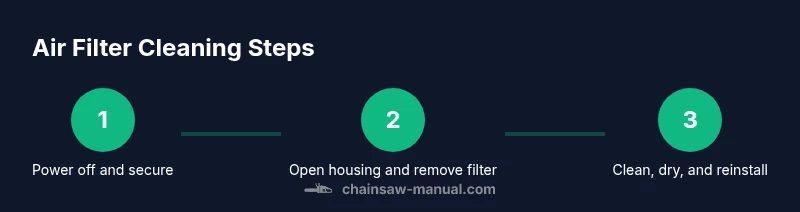
Learning how to clean chainsaw air filter centers on careful disassembly, proper cleaning methods for the filter material, and thorough drying before reassembly. The process varies slightly by filter type (foam versus paper), so follow the filter section of your manual for model-specific instructions. In general, you’ll remove the filter, inspect for tears, either wash or brush away debris, dry completely, and reinstall. This sequence ensures the engine remains protected and ready for the next cut.
Drying, Reinstallation, and Verification
After cleaning, ensure the filter is completely dry before reinstalling. Any residual moisture can warp or damage the filter and housing. Reassemble the filter housing securely, reconnect the spark plug wire, and perform a brief test start away from flammable materials to confirm there’s no air leakage around the housing. If you notice poor idle, loss of power, or unusual noises, recheck the seal and filter seating. A proper seal is essential to maintain optimal airflow and engine protection.
Ongoing Maintenance and Common Pitfalls
To maximize filtration efficiency, inspect the filter as part of your routine maintenance schedule. Foam filters are typically washable and reusable; paper filters are commonly disposable and may require replacement when damaged or excessively dirty. Avoid using harsh solvents on paper filters and never reinstall a damp filter. Keep the air intake path clear of debris and inspect the filter cap O-rings or seals for cracks. Document your maintenance so you know when to clean or replace next.
Tools & Materials
- Replacement air filter or cleaning kit(Check your saw model for compatible type)
- Screwdrivers/hex keys(Phillips and flat-head as needed for housing screws)
- Small brush or compressed air(Use air in short bursts from a safe distance)
- Lint-free cloths(For wiping and drying the filter)
- Mild detergent and water(Only if the filter is washable; follow manufacturer guidelines)
- Gloves and safety glasses(Protect hands and eyes from dust and sharp edges)
Steps
Estimated time: 20-30 minutes
- 1
Power off and secure the saw
Cool the saw completely, disconnect the spark plug wire (or remove the battery) and engage the chain brake. This prevents accidental starts while you work. Clear the work area of tools so you don’t drop small parts into the saw.
Tip: Keep a dedicated workspace and label removed screws so reassembly is quick. - 2
Open the housing to access the filter
Use the appropriate screwdriver to remove the housing screws and lift the cover. Note where each screw came from so you can reinstall them in the correct positions. If your model has a secondary cover, remove it as instructed in the manual.
Tip: Take a quick photo of the assembly before removing parts in case you forget their orientation. - 3
Remove the air filter element
Gently lift the filter from its seat. Be careful not to drop dust into the intake. Inspect the element for tears, warping, or excessive buildup that indicates replacement may be necessary.
Tip: Place the filter on a clean surface to prevent contamination during cleaning. - 4
Clean the filter according to type
If your filter is foam, rinse with mild detergent and warm water, rinse well, and squeeze out excess moisture—do not wring. Paper filters are typically not washable; tap to remove loose dust or replace if heavily soiled. Allow the filter to dry completely before reinstallation.
Tip: For foam, avoid detergents with strong solvents that can degrade the material. - 5
Dry the filter thoroughly
Air dry the filter completely in a clean, dust-free area. Do not use heat or a hair dryer, which can warp the material. A fully dried filter helps maintain proper airflow and prevents moisture from entering the engine.
Tip: Ensure no residual moisture remains in the housing before reassembling. - 6
Reinstall and test the saw
Reinsert the filter, reseat the housing, and secure screws firmly but not overtight. Reattach the spark plug wire and perform a careful test run outdoors. Listen for unusual sounds or air leaks and verify smooth idle.
Tip: Check that the seal around the filter housing is intact to prevent unfiltered air entry.
FAQ
How often should I clean my chainsaw air filter?
Inspect and clean the filter based on usage and dust exposure; in dusty environments, check more often. Use a baseline of after every long cutting session or weekly in heavy conditions, and replace if damaged.
Check the filter frequently in dusty conditions and clean as needed. Replace if damaged.
Can I wash a chainsaw air filter?
Foam filters are typically washable and reusable; paper filters are usually not washable and should be replaced when dirty or damaged. Always refer to your model’s manual for the correct method.
Foam filters can be washed; paper filters usually cannot. Check your manual.
What if the air filter is damaged?
Replace the damaged filter immediately. A torn or warped filter allows debris into the engine, reducing performance and potentially causing damage.
If torn or warped, replace the filter before using the saw again.
Should I replace the filter every year?
Replacement frequency depends on usage and conditions. Inspect for wear and clogging; replace when performance drops or signs of damage appear.
Replace when worn or damaged, not necessarily every year.
What is the difference between foam and paper air filters?
Foam filters are typically washable and reusable but may require oiling or special care per model. Paper filters are usually disposable and provide strong filtration but must be replaced when dirty.
Foam is washable; paper is usually disposable. Check your model.
Is it safe to run the chainsaw without an air filter?
No. Operating without an air filter can cause rapid engine wear and debris intrusion. Always reinstall a clean, compatible filter.
No—your engine needs a proper air filter to stay protected.
Watch Video
The Essentials
- Inspect and clean the air filter regularly to protect engine health.
- Follow model-specific guidelines for foam vs. paper filters.
- Ensure complete drying before reassembly to prevent damage.
- Document maintenance to stay on top of replacement intervals.
- Recheck seals after reinstallation to avoid unfiltered air intake.