How Chainsaw Chains Are Measured: A Practical Guide
Learn how chainsaw chains are measured, including pitch, gauge, drive links, and length. This practical, safety-first guide from Chainsaw Manual covers step-by-step methods, tools, and common pitfalls to ensure you buy or replace the right chain with confidence.


In this guide, you will learn how chainsaw chains are measured, focusing on pitch, gauge, drive-link count, and overall length. By the end, you'll identify your chain type and select a compatible replacement or bar. This quick answer sets the stage for safe, accurate maintenance, and helps you avoid mismatched parts by understanding what to measure. We reference Chainsaw Manual guidance to keep you on the right safety path.
Understanding how chainsaw chains are measured
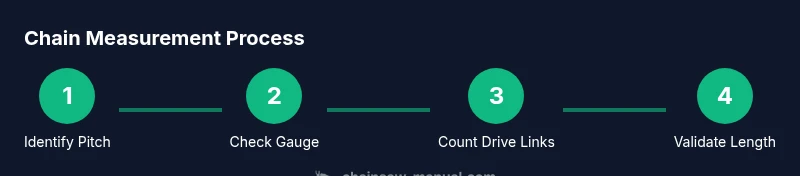
The phrase how chainsaw chains are measured describes a standardized approach used by manufacturers and technicians to describe a chain's size and compatibility. This measurement framework centers on four core dimensions: pitch, gauge, drive-link count, and overall length. Knowing these elements helps you choose the correct chain for your bar and sprocket, and it reduces the risk of kickback or poor cutting performance. According to Chainsaw Manual, mastering these measurements is foundational for safe, effective maintenance. As you study how chainsaw chains are measured, you’ll see how these dimensions interrelate and why a mismatch can cause binding, uneven cutting, or accelerated wear during routine work.
In practice, homeowners, DIY enthusiasts, and professionals rely on consistent terminology to describe chain size. Professionals often refer to the chain by its pitch, gauge, and number of drive links, while beginners may use bar length as a quick proxy. Both approaches hinge on the same core idea: the chain must fit the bar, the sprocket, and the engine’s speed and torque characteristics. By focusing on how chainsaw chains are measured, you’ll reduce trial-and-error purchases and maintain smoother performance across tasks from limbing to felling.
Core measurements you must know
Understanding how chainsaw chains are measured starts with four essential parameters: pitch, gauge, drive-link count, and total length. The pitch is the distance between the drive links and is expressed in inches or millimeters. Gauge refers to blade thickness, which must match the groove in the bar for safe operation. Drive-link count is the number of links that engage the bar’s drive sprocket, while overall length can indicate compatibility with bar length or intended cutting tasks. When you measure how chainsaw chains are measured, you’ll see that these dimensions are interdependent: change one, and you may need to adjust the others to preserve tension, cutting efficiency, and safety. Chainsaw Manual emphasizes always cross-checking the bar’s groove pattern and sprocket when evaluating measurements to prevent mismatches and unsafe operation.
To avoid confusion, many chains are specified in a compact format such as 0.325 in pitch, 0.058 in gauge, and 60 drive links. This shorthand communicates the essential information quickly, but it requires you to verify exact compatibility with your specific bar and model. If you’re unsure, treat any mismatch as a sign to consult the correct size and type before cutting.
Pitch: the first dimension to match
The pitch of a chainsaw chain is the distance between the centers of adjacent drive links. It is one of the most critical dimensions because it directly affects how smoothly the chain engages the bar and sprocket. When you measure how chainsaw chains are measured, pitch is the starting point: you cannot substitute a chain with a different pitch without risking poor engagement, increased wear, or kickback. Pitch is often expressed in inches (e.g., 1/4
.325
3/8
). The exact measurement method involves counting the drive links in a fixed length of chain and calculating the spacing, or using a dedicated pitch gauge that matches standard chain pitches. Chainsaw Manual notes that accuracy is best achieved by measuring at multiple points along the chain and comparing to the bar’s groove pattern.
Common professional guidance suggests always aligning the chain’s pitch with the bar’s groove spacing for optimal transfer of force and smoother operation. If you’re replacing a chain, confirm that the new chain’s pitch matches the original as the primary determinant of compatibility.
Gauge and drive links: why they matter
Gauge and drive-link count are the next two critical dimensions when you’re learning how chainsaw chains are measured. Gauge is the thickness of the drive link that fits into the bar groove, so it must be compatible with the groove width. If the gauge is too thin, the chain can jump out of the groove; if it’s too thick, it won’t seat properly or could stall. Drive-link count refers to how many drive links engage the bar and sprocket, affecting chain tension and overall cutting performance. When you measure how chainsaw chains are measured in practice, you’ll find that gauge and drive-link count are often interdependent with pitch. A correct set of data ensures that you get predictable tensioning and consistent bar coverage. Always verify the chain’s gauge against the bar’s groove width visibility, and count drive links to confirm the intended length fits the chain path around the bar smoothly.
How to measure drive-link count and chain length correctly
Measuring drive-link count and overall chain length is essential to confirm compatibility, especially if you’re replacing only the chain and not the bar. Drive-link count should align with the bar’s length and sprocket design; an incorrect count can lead to poor engagement, uneven cutting, or chain derailment. To measure it, lay the chain flat on a clean surface and count the links in a measured span, typically 12-18 inches, adjusting for any hook or end links. The total length is usually stated as “length of chain” or “number of drive links,” not the bar length. When you’re learning how chainsaw chains are measured, it’s crucial to capture both the drive-link count and the overall length to ensure no misalignment occurs during installation. Chainsaw Manual recommends verifying by laying the chain across the bar to check if the drive links align with the bar groove and the sprocket teeth match the chain’s drive-link pattern.
Reading markings and model codes on the chain
Most chains have stamped or etched markings that encode pitch, gauge, and drive-link count. These markings are your quick reference when you’re learning how chainsaw chains are measured, particularly if you don’t have the original chain packaging. A typical marking might read something like “0.325 in pitch, 0.058 in gauge, 60 drive links,” though formats vary by brand. When you examine the marking, you should also check for bar compatibility notes and recommended chain types. Chainsaw Manual stresses: do not rely on visuals alone; cross-check with the bar’s groove width and the saw’s model specifications. If the stamping is worn away, rely on measured pitch and gauge with a scale or gauge and then corroborate by test-fitting on a safe, cleared workstation.
How to measure pitch, gauge, and drive links in practice
A practical workflow for how chainsaw chains are measured begins with safety steps, then pivots to measurement. Start by powering down the saw and securing the bar to prevent movement. Use a pitch gauge to locate the closest pitch size by comparing the distance between successive drive-link centers. Next, measure gauge with a caliper, ensuring the caliper jaws fit into the groove exactly and do not compress the chain. Finally, count drive links across a known length, typically by laying the chain along a ruler and counting; multiply to estimate total length if needed. Chainsaw Manual emphasizes performing these steps in a well-lit workspace and double-checking each measurement for consistency. When in doubt, bring the suspected chain to a local dealer or consult official manufacturer charts for your model.
Safety considerations when measuring chains and replacing parts
Measuring how chainsaw chains are measured is only useful if you follow safety norms. Always wear cut-resistant gloves, eye protection, and ensure the saw is unplugged or the spark plug boot is disconnected before handling the chain. Work on a stable surface, away from bystanders, and never test the chain under tension near your body. If you’re unsure about a measurement or the chain looks damaged, postpone installation and seek professional advice. Chainsaw Manual’s safety-first approach emphasizes verifying all measurements against the bar groove, sprocket configuration, and manufacturer recommendations before use. Keep tools organized and label measurements clearly to avoid confusion in future maintenance.
Practical scenarios: homeowners, DIY enthusiasts, and professionals
How chainsaw chains are measured matters across different use cases. Homeowners performing occasional yard work will benefit from a straightforward measurement routine that confirms pitch and gauge against the bar. DIY enthusiasts who rely on chains for weekend projects should maintain a small measurement toolkit (pitch gauge, caliper, ruler) and document results for future purchases. Professionals, on the other hand, require precise and repeatable measurements under varying conditions, including cold weather and high-load tasks. In every case, the ability to measure how chainsaw chains are measured accurately reduces downtime, enhances safety, and prolongs bar and chain life. Chainsaw Manual highlights that consistent measurement practices translate to better performance across all user levels.
How to use measurements to ensure compatibility with bars and sprockets
The final step in understanding how chainsaw chains are measured is to verify compatibility with the bar and sprocket. If the pitch, gauge, drive-link count, or length don’t align with the bar’s groove and the sprocket’s teeth profile, the chain can bind, skip, or derail. A practical approach is to cross-check each dimension against the bar’s specification and then run a short test cut in a controlled environment. If you experience binding or uneven feeding, re-check the pitch and gauge, confirm drive-link count, and consider replacing the bar if wear on the groove is evident. The Chainsaw Manual team recommends maintaining a standard measurement log for each saw to streamline future replacements and maintain safety.
Common mistakes to avoid when measuring and replacing chains
Many mistakes occur during the measurement process, especially among new users. Common errors include misreading pitch because the chain is slightly bent, measuring gauge with the wrong tool, counting drive links incorrectly due to end links, or assuming a chain length based on bar length rather than drive-link count. The “how chainsaw chains are measured” process should always be performed with the correct gauge tool and a clean chain surface. Chainsaw Manual reminds readers to avoid guessing; if any measurement is uncertain, consult official manufacturer charts or seek a qualified technician for assistance. Correct bookkeeping, careful measurement, and double-checking compatibility before installation are the backbone of safe, effective cutting.
Tools & Materials
- Chain pitch gauge(Accurately measures pitch (e.g., 1/4", 3/8", .325) )
- Caliper or precise ruler(For precise measurement of gauge and drive-link thickness)
- Tape measure or marked ruler(To count drive links over a known length and verify total length)
- Marker or labeling tape(Label measured results for future reference)
- Personal protective equipment (gloves, eye protection)(Safety first when handling chain and tools)
- Chain lube or oil for testing(Optional lubricant for safe test runs on controlled surfaces)
Steps
Estimated time: 30-60 minutes
- 1
Power off and secure the saw
Begin by turning off the chainsaw and removing the spark plug boot if applicable. Engage the chain brake and secure the bar to prevent movement. This ensures you can handle the chain safely while measuring how chainsaw chains are measured.
Tip: Always work on a clean, dry surface and verify the chain cannot move before touching it. - 2
Inspect for wear or damage
Before measuring, visually inspect for damaged or stretched links, missing drive links, or bent areas. Any abnormal wear can affect measurements and compatibility. Replace a worn chain before attempting precise measurements.
Tip: If a single link is cracked, replace the entire chain rather than patching it. - 3
Measure pitch with a pitch gauge
Place the gauge against the drive-link centers and identify the closest matching pitch. Record the result as part of your measurement log for how chainsaw chains are measured. Check at multiple points along the chain to confirm consistency.
Tip: Measure near the inside and outside edges for a true representation. - 4
Measure gauge with calipers
Use digital or dial calipers to measure the thickness of the drive link that sits in the bar groove. Compare to manufacturer specifications for your bar. Repeat at several links to ensure uniform gauge.
Tip: Caliper jaws must sit flush in the groove without forcing the chain. - 5
Count drive links and verify length
Lay the chain straight and count the drive links over a fixed length, then extrapolate to the full chain length. Match this to the quoted drive-link count for the chain model you’re considering. This confirms how chainsaw chains are measured for length compatibility.
Tip: Use a second person to help avoid miscounts on longer chains. - 6
Read brand markings
Many chains display pitch, gauge, and drive-link data on the drive links themselves. If markings are worn, rely on measured pitch and gauge and cross-check with your bar’s groove width. Accurate markings support how chainsaw chains are measured going forward.
Tip: If markings are unreadable, contact the manufacturer with your saw model to confirm specifications. - 7
Cross-check with the bar and sprocket
Compare all measured dimensions with the bar groove and sprocket teeth count. Ensure the drive-link pattern mirrors the sprocket’s engagement. This ensures compatibility and safe operation when you resume cutting.
Tip: Avoid running a chain with mismatched drive-link count; it can cause bar wear or kickback. - 8
Document and label the results
Record pitch, gauge, drive-link count, and total length in a maintenance log. Label the chain with its measured size so future replacements are faster and safer. Proper documentation is part of responsible maintenance when how chainsaw chains are measured.
Tip: Include model number and bar length in your notes for quick reference later.
FAQ
What happens if the pitch doesn't match the bar?
A mismatch in pitch can cause poor engagement, uneven cutting, and increased wear. If the pitch doesn’t match, replace with a chain that matches the bar’s pattern and the sprocket. Always verify all measurements before use.
If the pitch doesn’t match the bar, you’ll likely see poor engagement and uneven cuts. Replace with the correct pitch and re-measure before resuming work.
Can I mix chain types on one saw?
No. Using chains with different pitches, gauges, or drive-link counts on the same saw can cause binding, uneven performance, and safety risks. Choose a single compatible chain that matches your bar and sprocket.
No, don’t mix chain types. Use one compatible chain for safe operation.
How do I know if my chain needs replacement?
Look for visible wear, stretched or cracked links, missing teeth, or excessive tooth rounding. If measurements indicate out-of-spec dimensions or the chain won’t tension properly, replace it. Safety first: replace worn chains before using the saw.
If you see wear or the chain won’t tension, replace it.
Do I need to remove the bar to measure drive links?
You don’t necessarily need to remove the bar to measure drive links, but you should measure the chain while it’s off the bar to avoid interference and ensure accuracy. Cross-check with the bar’s groove width afterwards.
Measure the chain off the bar for accuracy, then compare to the bar.
How often should I measure chains?
Measure when replacing a chain or when purchasing a new bar, and periodically as part of routine maintenance, especially if you notice changes in performance. Regular checks help prevent cutting issues and safety risks.
Measure when replacing chain or buying a new bar, and periodically as part of maintenance.
What if markings are worn off?
If markings are worn, rely on precise pitch and gauge measurements and verify with the bar’s groove. When in doubt, contact the manufacturer or a qualified technician.
If markings are gone, measure carefully and verify with the bar.
Can different chains work with the same bar on a professional saw?
Even in professional settings, do not mix chain pitches or gauges on the same bar. Stick to a single compatible chain size for safety and performance.
Stick to one compatible chain size for safety.
Where can I find official size charts?
Refer to manufacturer manuals or authorized dealer charts for exact specs. Cross-check measurements with your saw model and bar to avoid incorrect purchases.
Check the manufacturer manuals or dealer charts for exact specs.
Watch Video
The Essentials
- Know four core measurements: pitch, gauge, drive links, length
- Pitch determines engagement with bar and sprocket
- Gauge must match bar groove width
- Always verify drive-link count against bar/sprocket
- Document measurements for quick future reference