Easy Chainsaw Mods: Safe Upgrades for Better Performance
Discover practical, safety-first easy chainsaw mods to boost performance and comfort. This guide covers essential tools, simple upgrades, and safety tips for homeowners, DIYers, and professionals.


With care, you can perform several easy chainsaw mods that improve reliability and comfort without compromising safety. Focus on manufacturer-approved upgrades such as bar maintenance, air-filter cleaning, proper chain tension, lubrication, and anti-vibration adjustments. Start only after you read the manual, wear PPE, and work in a well-ventilated area. If unsure, consult Chainsaw Manual.
Why easy chainsaw mods matter
According to Chainsaw Manual, performing safe, practical upgrades can extend your saw's life and improve daily performance without compromising reliability. The philosophy behind easy chainsaw mods is to stay within the scope of what the manufacturer intends and to avoid drastic, untested changes. In practice, this means choosing OEM parts, validating air and fuel paths, maintaining lubrication, and protecting the operator with proper PPE. Homeowners and professionals alike benefit from a thoughtful, safety-first approach that minimizes downtime and reduces the risk of injury. When mods are implemented with care, you gain smoother starts, steadier idle, and more predictable cutting performance. This section explores why adopting incremental, well-documented upgrades matters for long-term reliability and safe operation. The Chainsaw Manual team emphasizes that progress should be measured, reversible, and aligned with the tool’s design intentions.
Safety-first boundaries: what to modify and what to avoid
Not every customization is appropriate or safe. The best results come from enhancements that preserve core safety features and stay within the manufacturer’s guidelines. Avoid permanent alterations to the carburetor, exhaust system, or ignition system, and do not remove factory safety devices. Before you begin, verify local regulations and wear full PPE: cut-resistant gloves, safety glasses, ear protection, and sturdy boots. If a modification requires tools beyond standard handsets or risks injuring the chain or bar, stop and consult a professional. This section helps you draw a line between useful, safe maintenance and risky, non-approved changes. Remember: mods that do not provide a measurable safety or reliability benefit are not worth the risk. Chainsaw Manual’s guidance centers on responsible, controlled upgrades that preserve safety margins.
Core upgrades: bar maintenance and air intake
A clean, properly maintained bar and well-sealed air intake are foundational to reliable operation. Easy chainsaw mods in this category include inspecting the bar groove for wear, cleaning the oil passage, and ensuring correct bar oil flow. Replace worn bars or damaged rollers only with OEM-compatible parts. Clean or replace air filters to reduce dust intrusion and maintain crisp combustion. A bright, dust-free intake improves throttle response and reduces engine strain. For any modification, ensure you recheck alignment and looseness after reassembly. The goal is incremental improvement without compromising engine health.
Lubrication and chain tension: the heart of performance
Lubrication and chain tension are critical for lifespan and cutting efficiency. Start by cleaning the oil pump screen and verifying oil flow to the bar; a clogged pump can starve the chain of lubrication and cause overheating. Check chain tension when the chain is cool and adjust per the manual so that it just hugs the guide bar without sagging. Excess tension or loose chains lead to accelerated wear or derailment. Use manufacturer-approved oil types and ensure the oil tank seals are intact. These steps may seem small, but they yield smoother operation and longer bar life.
Ergonomics and anti-vibration considerations
Vibration and weight distribution influence control and fatigue. Easy mods in this domain include upgrading anti-vibration mounts if compatible with your model, adjusting handle positions within factory specifications, and replacing worn vibration dampeners with OEM parts. Balanced handling reduces operator fatigue and improves line accuracy when cutting. When evaluating changes, test at low speed and in a controlled environment before returning to active work. Ergonomics improvements should always prioritize safety and steadiness of cut.
Simple power and efficiency tweaks you can do safely
Power tweaks should be conservative and reversible. Focus on legitimate efficiency gains such as ensuring clean air pathways, proper fuel mix per the manufacturer’s guidance, and consistent chain lubrication. Avoid invasive “performance hacks” that alter exhaust flow or ignition timing. If your saw model has adjustable settings for idle or idle speed, make small, documented adjustments per the service manual and verify after a safe test. Remember that efficiency should go hand in hand with reliability and safety.
Common mistakes and how to verify results
Common errors include skipping PPE, using aftermarket parts without compatibility verification, or neglecting oil flow and chain tension. After mods, perform a controlled test cut in a safe, open area with a hazard-free setup. Listen for unusual noises and watch for excessive smoke or heat, which indicate imbalances or lubrication issues. Document all changes and compare performance against your baseline. Verification steps help ensure mods deliver predictable outcomes rather than unpredictable performance.
Real-world scenarios: homeowners and professionals share wins
Homeowners often want quieter operations and easier starting, while pros look for consistent performance across varying workloads. In practice, many find value in routine bar maintenance, clean air paths, and precise tensioning, which reduce kickback risk and improve control. Professionals typically emphasize provenance of parts and adherence to OEM guidelines to preserve warranties and safety certifications. These shared successes reinforce that patient, measured mods—when aligned with safety standards—yield durable improvements that survive long-term use.
How to document and maintain mods over time
Create a simple modification log: note the date, parts used, and observed performance. Schedule periodic inspections of the bar, chain, and oil system, and recheck tension and alignment after every few hours of cutting. The log helps you track wear patterns and plan preventive maintenance rather than reactive fixes. Establish a reproducible testing protocol after each modification to confirm that changes remain beneficial and safe across different wood densities and temperatures.
Tools & Materials
- Owner's manual(Refer to model-specific guidance before any mods)
- Screwdriver set (Phillips #2, flathead)(For housing and cover screws)
- Torx driver set(For fasteners common on higher-end models)
- Torque wrench(Use only for critical fasteners per torque specs)
- Bar oiler oil(OEM-recommended oil grade and viscosity)
- Bar oil (cleaning brushes and rag)(Rags for oil path inspection and wiping excess)
- Air filter cleaner(Keep intake clear of dust for optimal performance)
- Spark plug wrench(If your model has accessible spark plug, inspect condition)
- Safety PPE (gloves, goggles, ear protection, boots)(Essential for any modifications or testing)
- Replacement bar and chain (OEM)(Only if wear or damage is observed)
- Chain sharpening file or grinder(For minor edge maintenance if needed)
Steps
Estimated time: 1.5-3 hours
- 1
Inspect and prepare
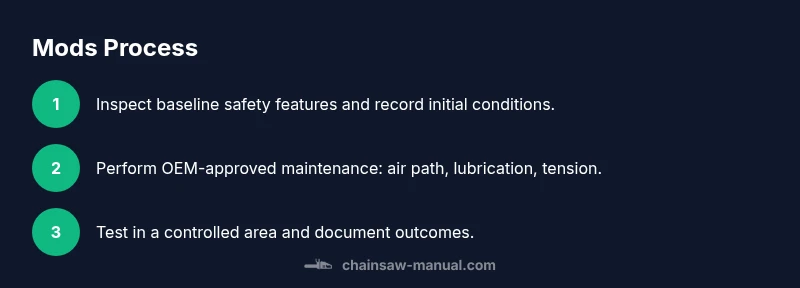
Wear PPE and inspect all safety features. Check fuel, oil levels, chain tension, and bar condition. This baseline ensures mods won’t be undermined by preexisting faults.
Tip: If anything looks damaged, postpone mods and consult a pro. - 2
Check chain tension
Loosen engine screws and verify chain tension when the bar is cool. The chain should sit tight against the guide bar with a slight looseness when pulled by hand.
Tip: Proper tension prevents derailment and extends chain life. - 3
Clean air path
Remove the air filter housing, clean or replace the air filter, and inspect the carb intake for blockages. A clean path improves throttle response and reduces engine strain.
Tip: Avoid forcing debris into the carburetor; tap filter cleanly and rinse if applicable. - 4
Inspect lubrication system
Check the oil pump screen, oil line, and bar oil flow. Ensure the bar receives lubrication during idle and cutting. Replace damaged hoses or seals as needed.
Tip: Test oil flow by pointing the bar toward a dull surface and starting briefly to observe oil spray. - 5
Bar maintenance and alignment
Inspect the groove for wear, check bar alignment with the chain, and wipe the groove clean. Replace a worn bar if needed to maintain accurate tracking.
Tip: Keep bar and chain lubricated and free of pitch buildup to prevent binding. - 6
Document changes and test
Record any adjustments in a modification log and perform a controlled test cut in a clear area. Monitor for unusual vibration, noise, or smoke.
Tip: If anything feels wrong, stop and revert to baseline settings.
FAQ
Are easy chainsaw mods safe for beginners?
Yes, when you stay within OEM guidelines, use proper PPE, and test changes in a controlled area. Begin with simple, reversible upgrades and consult the manual if you’re unsure.
Yes, but begin with manufacturer-approved steps, wear PPE, and test in a controlled area.
Can mods void warranty?
Some modifications can void warranties if they bypass safety features or use non-OEM parts. Check your model’s warranty terms and document all changes.
Modifications can affect warranty; review terms and keep records.
Do I need special tools for mods?
Most safe mods use common hand tools and OEM parts. Avoid advanced tools unless specified by the manufacturer.
Usually not; stick to OEM-recommended tools.
How do I test safety after mods?
Perform a controlled test cut in a clear area. Listen for unusual noises, watch for excessive vibration, and verify oil flow. Re-check all fasteners after testing.
Test in a safe area and listen for anything unusual.
What are the most common mods for performance?
Common upgrades include improved bar maintenance, optimized air intake, and ensuring consistent lubrication. Keep expectations aligned with safety and reliability.
Bar maintenance, air intake, and lubrication tweaks are common.
Where can I get manufacturer-approved upgrades?
Check the saw maker’s official parts catalog or authorized service centers. OEM parts ensure compatibility and preserve safety features.
Use the manufacturer's parts and services for upgrades.
Is there a risk of kickback with mods?
Modifications that alter chain behavior or bar geometry can affect kickback risk. Always assess changes for safety implications and maintain proper stance and grip.
Yes—assess safety implications of any geometry changes.
Should I consult a professional for complex mods?
For non-trivial upgrades or if you’re unsure about torque specs, get a qualified technician to review or perform the work.
When in doubt, consult a professional.
Watch Video
The Essentials
- Follow OEM guidance for all mods
- Prioritize safety gear and controlled testing
- Document changes and assess impact over time
- Avoid non-approved alterations that affect safety
- Regularly inspect lubrication, bar, and chain