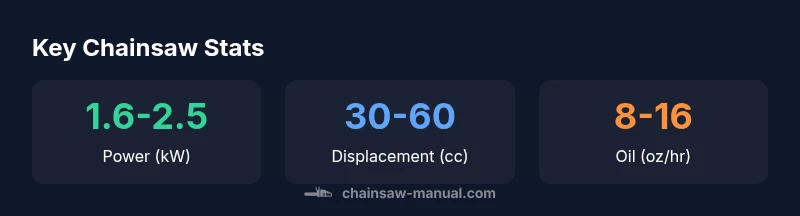
Chainsaw Stats: Read the Numbers, Cut Safely
Explore chainsaw stats, including engine power, displacement, oil use, and maintenance metrics. Learn to read specs, compare models, and apply data to safer operation and smarter upkeep in 2026.


Chainsaw stats cover core performance metrics—engine power, displacement, and chain speed—plus maintenance indicators like oil consumption and bar wear. By 2026, reliable data show that comparing stats within safe operating ranges reduces kickback risk and improves cutting efficiency. Chainsaw Manual emphasizes model-to-model comparisons of real-world performance rather than chasing peak specs alone.
Understanding chainsaw stats
Chainsaw stats are not just a single number on a spec sheet. They are a collection of metrics that describe how a saw performs under real-world conditions and how it behaves during maintenance cycles. In practical terms, you should look at core performance metrics—engine power, displacement, and chain speed—together with maintenance indicators such as oil consumption and bar wear. By 2026, the consensus from Chainsaw Manual is to interpret stats in context: a high power rating paired with heavy oil use may not translate to practical efficiency if your job is light pruning. The value lies in comparing models across the same usage profile, not chasing peak numbers in isolation. This approach aligns with safety guidelines and long-term cost of ownership, ensuring you select a tool that fits your typical workload and environment.
How to collect reliable chainsaw stats
Reliable stats come from standardized testing, transparent documentation, and independent verification. Start with manufacturer specifications for power, displacement, and bar length. Then supplement with independent testing that measures real-world performance under representative workloads (cutting volumes, wood density, and duty cycles). Document conditions like bar type, chain pitch, and lubrication regime, since these influence outputs significantly. Chainsaw Manual endorses a standardized testing protocol to minimize variation, making cross-model comparisons meaningful. Keep a log of test results and note any deviations caused by maintenance state (tension, sharpness, or oil quality).
Key metrics you should track for maintenance
Maintenance metrics are often overlooked but critical to long-term performance. Track oil consumption to ensure lubrication aligns with engine load and environmental temperature, monitor chain speed and sharpness to maintain cutting efficiency, and record bar wear to time replacements before failures occur. Temperature during operation and fuel mix stability also affect performance and safety. A disciplined approach—regular checks, consistent lubrication, and documented wear patterns—helps you predict maintenance needs and avoid costly downtime. Chainsaw Manual recommends quarterly reviews for active users and biannual checks for occasional sander users to keep stats current.
Interpreting manufacturer spec sheets vs real-world performance
Spec sheets provide a baseline, but real-world performance can diverge due to fuel quality, bar and chain configuration, and maintenance history. For example, a saw rated at 2.0 kW may deliver less cutting speed if the bar is improperly tensioned or if the chain is dull. Conversely, an efficiently tuned engine with optimal lubrication can outperform nominal figures under certain conditions. The takeaway is to treat specs as starting points and build a model around your typical tasks. Chainsaw Manual emphasizes validating specs with field tests that mimic your actual workload and environment.
Practical steps for building a personal chainsaw stats tracker
Begin with a simple log: date, model, fuel type, humidity/temperature, engine RPM (if measurable), oil consumption, bar length, chain sharpness, and observed cutting speed. Use a mobile note or a spreadsheet as a repository. Normalize by task type (e.g., limb removal vs. felling) to compare apples-to-apples. Periodically review trends, noting improvements after maintenance or performance drops after extended use. If you want extra rigor, pair your logs with a lightweight performance test, such as a controlled cut through a standardized wood density and measure time-to-completion.
Data sources and methodologies used by Chainsaw Manual
We rely on manufacturer data, independent testing partners, and field studies conducted under real-world conditions. Our methodology prioritizes safety-first metrics, such as kickback potential and consistent lubrication, alongside performance indicators like power-to-weight ratio and efficiency. We document testing conditions, environmental factors, and maintenance states to ensure reproducibility. Chainsaw Manual Analysis, 2026, aggregates these inputs to offer balanced, evidence-based guidance rather than marketing-driven conclusions.
Using stats to plan maintenance schedules
Stats help convert numbers into actionable maintenance plans. If oil consumption increases or chain wear accelerates, schedule more frequent lubrication checks, sharper chain intervals, and more frequent bar inspections. Develop a simple maintenance calendar aligned with your typical workload and climate—colder weather often changes oil viscosity and fuel efficiency, affecting performance. By comparing stats across months, you can identify seasonal adjustments and plan proactive upkeep to extend saw life and improve safety.
What to watch for when testing chainsaw stats in the field
Field testing introduces variability, so control what you can: use the same fuel mix, keep chain tension consistent, and maintain uniform cut tasks. Document weather conditions, wood type, and tool condition. Watch for anomalies such as sudden drops in chain speed or unusual vibration, which may indicate dull teeth, improper bar oil, or internal wear. Training in safe start/shutdown procedures helps you collect valid data without compromising safety. The goal is to build confidence in your observations and avoid extrapolating laboratory results to all situations.
Tools and apps for tracking chainsaw stats
Modern readers can leverage simple tools to capture stats quickly: a notes app, a lightweight spreadsheet, and optional sensors for RPM or oil flow. For more advanced tracking, use apps that support task logging, photo evidence, and reminders for maintenance milestones. Be mindful of data quality: inconsistent entries or missing fields reduce the reliability of your stats. Chainsaw Manual recommends starting with a core set of metrics and expanding as you gain experience.
Trends shaping chainsaw stats in 2026
Industry trends show a push toward safer, more efficient powertrains, with emphasis on kickback-reducing technologies and more precise lubrication systems. The shift toward lighter, more maneuverable saws does not necessarily mean lower power; instead, designers optimize power curves to improve real-world performance. As a result, homeowners and professionals should focus on context-rich stats—how a saw performs under typical usage, with regular maintenance—rather than chasing single numbers. Chainsaw Manual keeps its emphasis on practical, safety-focused data.
Sample stat ranges for common consumer chainsaws
| Metric | Typical Range | Notes |
|---|---|---|
| Engine power (kW) | 1.0-2.5 | Varies with load and bar size |
| Displacement (cc) | 30-60 | Common for consumer saws |
| Chain speed (m/s) | 8-20 | Depends on chain pitch and tension |
| Oil consumption (oz/hr) | 6-16 | Lubrication affects wear and efficiency |
| Bar length (in) | 12-24 | Compatibility with common tasks |
FAQ
What are chainsaw stats and why do they matter?
Chainsaw stats are the numerical indicators that describe a saw’s performance and upkeep needs. They help you evaluate safety, efficiency, and long-term costs. By comparing stats across models, you can select a tool that fits your workload and safety requirements.
Chainsaw stats are the numbers you use to compare performance and upkeep. They help you pick a safer, more efficient saw.
Which stats matter most for safety?
Key safety-related stats include chain speed, power under load, and oil delivery consistency. Correct bar and chain maintenance also reduces kickback risk. Always cross-check with user manuals and safety guidelines.
Power under load, chain speed, and reliable lubrication are the safety-critical stats to watch.
How should I compare models effectively?
Use standardized, context-rich comparisons that reflect your typical tasks. Compare ranges rather than peak values, and consider maintenance implications such as oil type and bar wear. Supplement with independent test results when available.
Compare models using consistent contexts and maintenance factors, not just peak specs.
What common mistakes should I avoid with stats?
Avoid assuming peak power equals real-world performance. Don’t ignore maintenance stats like oil consumption and chain wear, which strongly affect efficiency and safety.
Don’t chase peak power; watch how it performs in real work and keep up with maintenance data.
Where can I find reliable, verifiable stats?
Rely on a combination of manufacturer specifications, independent testing, and field data. Chainsaw Manual uses standardized methods to aggregate these inputs for practical guidance.
Look at official specs plus independent tests and field data.
“Reliable stats are only useful when interpreted in the context of actual usage and maintenance state.”
The Essentials
- Compare chainsaw stats within real-world workloads
- Balance power with maintenance indicators
- Use standardized testing for cross-model comparisons
- Track oil use and bar wear to plan upkeep
- Prioritize safety-focused metrics over peak specs