Used Chainsaw Buying Guide: Safe, Smart Picks for 2026
Learn to buy a used chainsaw safely: how to inspect, test, price, and maintain. Chainsaw Manual guides homeowners and professionals with practical, safety-first guidance for smarter purchases in 2026.


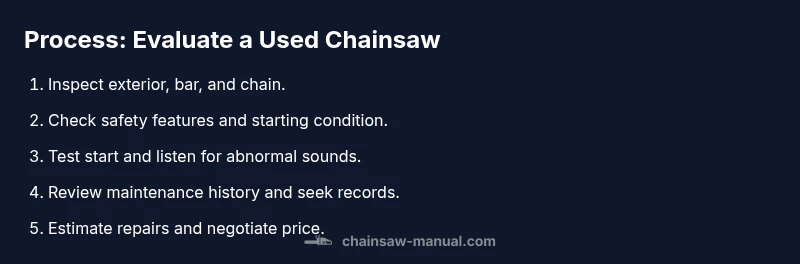
Overall, a used chainsaw can be a smart, safe choice if you buy from a reputable source and verify key details. Focus on history, compression, chain and bar wear, fuel/oil condition, and safety features. Test the saw in a controlled way, request service records, and compare several candidates. According to Chainsaw Manual, a careful inspection plus a timed startup check reduces risk and extends value.
Why a used chainsaw can be a smart buy for DIYers and professionals
According to Chainsaw Manual, a well-chosen used chainsaw can deliver decades of service when you buy from a reputable seller and perform a thorough inspection. For homeowners tackling weekend projects, or professionals who need a budget-friendly backup saw, a used model offers substantial cost savings if you understand risk, limit expected repairs, and know what questions to ask. In practice, a used chainsaw can be a solid investment when you shop with a plan and a checklist. The key is to separate solid deals from hazards, and to be prepared for a few maintenance tasks after purchase. Beyond price, reliability, safety features, and the availability of replacement parts are critical. The goal is to maximize value while minimizing downtime. This article walks you through practical, safety-first steps to evaluate options and build confidence before you buy.
How to assess overall condition before buying
Before you commit to a used chainsaw, take a methodical tour of the machine and its history. Look for obvious damage to the housing, handle, and chain brake, and inspect the bar and chain for uneven wear or cracks. Check the chain tension when the saw is off, then test the tension again after a quick start. Ask for records of recent servicing, bar/chain replacements, and carburetor work. Look for oil leaks around the crankcase and fuel lines, and confirm that the chain brake engages smoothly. By documenting these observations, you’ll be in a better position to evaluate true value and predict future maintenance needs.
Mechanical checks you should perform on a used chainsaw
A hands-on mechanical check helps you separate good candidates from risky builds. With the saw off, rotate the chain by hand to feel for smooth movement and confirm there is no grinding noise. Check the clutch cover for worn springs and springs that snap back into place. If you can access a compression tester, take a reading and compare it to typical ranges for the model. Inspect the spark plug for fouling, corrosion, or oil buildup, which can indicate lubrication issues. Finally, examine the air filter for excessive dust and the muffler for signs of excessive carbon buildup.
Fuel system, carburetor, and fuel/oil mix considerations
Most used chainsaws rely on a two-stroke powertrain that depends on proper fuel and oil ratios. Old fuel can cause carburetor varnish and startup problems, so ask when fuel was last replaced and whether the fuel has been stabilized. Inspect the fuel lines for cracks and the carburetor for sticking needles. If the seller has cleaned the carburetor, request proof or a fresh service. Always plan for a new spark plug and fresh fuel-oil mix if you buy a used chainsaw, and avoid relying on stale fuel for test starts.
Safety features, PPE, and safe operating checks
Safety is non-negotiable with any chainsaw. Verify that the chain brake, throttle interlock, and stop switch function correctly, and inspect the hand guards and anti-vibration features. Wear proper PPE during any inspection: cut-resistant gloves, eye protection, hearing protection, and a hard hat with face shield if you’ll be testing near wood. Explain the safety steps to the seller and perform a controlled start only in a clear, stable area. If anything feels loose or abrupt, walk away.
Cost of ownership and value math for used chainsaw
Beyond the sticker price, plan for maintenance costs, replacement bars and chains, and occasional carburetor service. A used chainsaw may require new fuel lines, an air filter, and spark plug replacements, which add to the total ownership cost. Compare the asking price to the cost of a comparable new model and factor in historical maintenance when evaluating value. The math should account for reliability, availability of spare parts, and anticipated downtime for repairs.
Where to buy and how to negotiate a price
Local classifieds, saw shops, and rental yards are common sources for used chainsaws. When negotiating, anchor your offer to observed wear and the need for parts or service, and request a written maintenance history. If possible, ask to see the saw run on a small log and verify chain tension and safety features during a supervised test. Be prepared to walk away if the seller cannot provide records or offers unclear answers.
Maintenance tips after purchase
Once you own a used chainsaw, establish a basic maintenance routine: clean the air filter, lubricate the bar and chain, sharpen the chain, and rotate the bar periodically. Use fresh fuel and oil with the correct mix ratio, and store the saw in a dry place. Keep a service log and replace worn components before they fail. Regular inspections help you get the most life out of a used chainsaw.
Tools & Materials
- Gloves(Cut-resistant preferred; wear during inspection and operation)
- Flashlight(Bright, adjustable to inspect bar/chain and carburetor area)
- Screwdriver set (Phillips and flat-head)(Remove covers; check screws on clutch and handle)
- Spark plug wrench(Remove and inspect spark plug; check gap)
- Rags or shop towels(Wipe surfaces; check for oil leaks)
- Compression tester (optional)(Useful to compare against model specs)
- Owner's manual or model spec sheet(Reference for model-specific values)
Steps
Estimated time: 60-90 minutes
- 1
Gather history and documentation
Ask the seller for maintenance records, receipts, and any note on prior repairs. Confirm hours of operation where available and check for a consistent service history. This helps establish whether the saw was cared for or neglected.
Tip: Request multiple owner records and verify with the seller. - 2
Inspect exterior, bar, and chain
Look for cracks, dents, oil leaks, and uneven wear on the housing. Inspect the bar for straightness and deeply grooved wear; check the chain for tip wear and tightness.
Tip: Take high-resolution photos of wear areas for later comparison. - 3
Check safety features and chain tension
Engage the chain brake and test the throttle lock to confirm proper function. With the saw off, check chain tension and adjust if necessary to see the tension mechanism operate smoothly.
Tip: Avoid wiggling the chain by hand while the saw is powered. - 4
Test-start and listen
If the seller agrees, perform a safe start on a stable surface away from people. Listen for unusual grinding or smoke, and observe whether idle and throttle respond smoothly.
Tip: Keep hands clear of the chain and use PPE. - 5
Evaluate fuel system and spark plug
Inspect fuel lines for cracks and check the spark plug for fouling or oil buildup, which can signal lubrication or fuel issues. If possible, run a quick test with fresh fuel.
Tip: If you smell stale fuel, that’s a red flag. - 6
Perform a controlled cut test
With supervision and proper safety, make a light test cut on a small log to assess power delivery and cutting action. Stop immediately if something feels wrong.
Tip: Monitor chain speed and cutting resistance closely. - 7
Negotiate and close the deal
Base your offer on observed wear, needed repairs, and the cost of potential repairs. If needed, request a discounted price or seller-provided service before transfer.
Tip: Be prepared to walk away if records are missing.
FAQ
What should I check first when buying a used chainsaw?
Start with the exterior, chain brake, and bar condition. Verify safety features and ask for maintenance history. A quick test start in a controlled area confirms basic operation.
Begin with exterior checks and safety features, then test start in a safe area.
How do I test-start a used chainsaw safely before buying?
Ensure the area is clear of people and objects. Use PPE, hold the saw securely, and follow the clutch cover instructions for starting and stopping. Listen for abnormal sounds and verify smooth throttle response.
Test-start in a clear area with PPE, listening for unusual noises.
Do used chainsaws require more maintenance than new ones?
Used saws typically need closer inspection of fuel lines, carburetors, and bars. Expect some refreshes, such as new spark plugs and filters, and plan for periodic maintenance.
They may require more routine checks and possible part replacement.
Can I negotiate price if I find issues?
Yes. Base your offer on observed wear, needed repairs, and current market values. Propose a price that accounts for parts or service the saw will require, and be prepared to walk away.
Negotiate based on what needs work and how it affects value.
Is a warranty available for used chainsaws?
Some sellers offer limited warranties or service guarantees on used chainsaws. Read the terms carefully and verify what is covered and for how long before purchasing.
Warranties may be available; check coverage and duration.
Where is the best place to buy a used chainsaw?
Local classifieds, saw shops, and rental yards are common sources for used chainsaws. Compare several listings and verify seller credibility with clear maintenance history.
Shop around locally and verify seller credibility.
Watch Video
The Essentials
- Inspect exterior, bar, and chain thoroughly before buying.
- Get maintenance history and test startup to verify reliability.
- Factor in potential repairs when negotiating price.
- Prioritize safety features and PPE in every evaluation.
- Document results and keep a service log for future maintenance.