Chainsaw 7 Days: Safe Weekly Maintenance Guide for Pros
Practical 7-day maintenance guide for chainsaws, covering daily checks, sharpening, lubrication, fuel handling, and safe storage to keep your saw reliable.


Using a chainsaw 7 days plan, you will inspect, sharpen, lubricate, test, and store your saw to maximize safety and reliability. This hands-on guide covers daily checks, proper fuel handling, and storage tips, with emphasis on chain tension, air filtration, and bar oil. Follow each day’s step for best results. This plan aligns with safety standards.
What the 7-Day Chainsaw Care Plan Entails
The chainsaw 7 days plan is a practical weekly routine designed to keep your chainsaw ready for work while minimizing safety risks. According to Chainsaw Manual, a disciplined, daily sequence helps homeowners and professionals maintain performance, prevent fuel problems, and extend tool life. This block outlines the goals, scope, and rationale behind a weekly care cycle, focusing on safe handling, routine checks, and the interplay between chain, bar, and engine systems. The plan emphasizes gradual, manageable tasks rather than one long session, so you can complete each day with confidence and accuracy, even in tight schedules. In this approach, you will address storage, fuel quality, air filtration, chain tension, lubrication, and preventive cleaning to avoid common failure modes. Implementing the 7-day cadence reduces downtime and fosters safe operation across job sites and home projects alike, aligning with real-world usage patterns and Chainsaw Manual safety guidance.
Safety prerequisites and workspace setup
Before you begin any maintenance, assemble the right protections and a clean, ventilated workspace. Wear ANSI-rated eye protection, hearing protection, gloves, and sturdy clothing. Ensure children and pets are away from the work area, fuel is stored properly, and a fire extinguisher is nearby. If you are working on a gas-powered chainsaw, disconnect the spark plug or remove the starter rope for non-start tasks to prevent accidental ignition. Keep the area well lit and free of flammable liquids. Chainsaw maintenance can be safe and efficient when you follow these precautions, which are aligned with Chainsaw Manual guidance.
Day-by-day overview (Days 1–7)
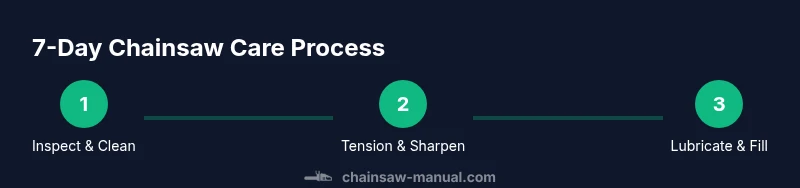
Day 1: Inspect and document overall condition, clean exterior surfaces, and remove debris from the cooling fins. Day 2: Check chain tension and sharpening; adjust with the scrench as needed and perform a visual drive-link check. Day 3: Clean or replace the air filter; inspect the carburetor if applicable and check spark plug condition. Day 4: Lubricate bar and chain, verify oil flow, and inspect oil holes for blockages. Day 5: Inspect the fuel system, top up fuel and bar oil, and replace fuel if it shows signs of aging. Day 6: Run a light test cut on a clean surface to observe performance and any abnormal vibrations. Day 7: Dry-run storage protocol: clean, drain or stabilize fuel if required, and prepare for storage in a dry, cool place. Each day builds on the previous one, ensuring thorough care without overwhelming your schedule. This daily cadence makes maintenance predictable and improves reliability when paired with a weekly safety review.
Maintenance actions you will perform
During the 7-day cycle, you will perform a sequence of focused actions that reinforce safe operation and long-term performance. These include tightening and inspecting the chain, sharpening teeth as required, cleaning the air intake and cooling passages, lubricating the bar and chain with the appropriate lubricant, and managing fuel quality. The process also emphasizes proper disposal of old fuel, storing the saw away from moisture, and keeping an orderly work area. Following these steps helps prevent heat buildup, chain damage, and unexpected kickback.
Common pitfalls and how to avoid them
Common mistakes include running a dull chain, neglecting air filters, overfilling the bar oil, and storing the saw with old fuel. To avoid these, perform daily visual checks, maintain a sharp edge with correct angles, and use fresh fuel or stabilizer as recommended. Do not skip the chain tension check, and never operate the tool without PPE. Keep a simple, repeatable checklist to ensure nothing is missed, and review safety steps before each use.
Storing your chainsaw for the 7 days
If you plan to store the saw for a full week, prepare it properly. Empty or stabilize fuel according to manufacturer guidance, clean all surfaces, and ensure the chain is disengaged and the bar is oiled lightly to prevent rust. Store in a dry, well-ventilated location away from direct sunlight and extreme temperatures. Consider placing the tool on a rack or mat to keep it away from moisture and accidental contact. These storage practices help prevent corrosion and preserve the integrity of the chain and bar.
Returning to work: pre-start checks
Before you resume cutting after seven days, perform a quick pre-start safety checklist. Verify chain tension, tension drive links, inspect the air filter, confirm the chain brake engages, and ensure the fuel and oil levels are appropriate for the planned task. Start the saw in a well-ventilated area away from bystanders, and run it briefly to observe sound, vibration, and exhaust before starting full operation. This approach minimizes surprises and keeps operations safe.
Tools & Materials
- Chainsaw (with chain brake)(Ensure proper protective guards are in place; inspect bar and chain for damage.)
- Screwdriver or scrench(Phillips/flat-head to adjust tension.)
- Bar and chain oil(Use viscosity recommended by the manufacturer.)
- Chain sharpening file and gauge(Maintain correct filing angle and depth gauge.)
- Bar groove cleaner(Remove debris from groove and oil holes.)
- Brushes, rags, and soft cloths(Clean surfaces without splashing contaminants.)
- Air filter cleaning tool or can of compressed air(Blow out dust; do not use on hot components.)
- Fuel and stabilizer (for gas-powered)(Follow manufacturer ratios; label fuel containers.)
Steps
Estimated time: 45-60 minutes
- 1
Prepare workspace and safety gear
Clear the area, put on eye and hearing protection, gloves, and sturdy clothing. Position the saw on a stable surface and set aside flammables. Engage the chain brake and ensure the spark plug is removed for electrical checks when applicable.
Tip: Set up a containment mat to catch oil and fuel spills. - 2
Power down and secure the bar
Disconnect the ignition source or remove the spark plug cap for gas models, and engage the chain brake. Secure the bar to prevent movement during maintenance.
Tip: Never perform maintenance with the engine hot. - 3
Check chain tension and condition
Visually inspect the chain for missing drive links, bent teeth, or kinks. Adjust tension so the drive links sit properly on the bar rails and still move freely by hand.
Tip: Correct tension reduces wear and prevents derailments. - 4
Clean air filter and cooling passages
Remove and inspect the air filter; clean or replace as needed. Clear debris from cooling fins and intake path to prevent overheating.
Tip: Use a soft brush; avoid sharp tools that can damage the filter. - 5
Sharpen or replace the chain
If teeth are dull or chipped, file to restore the edge, or replace the chain if wear exceeds manufacturer limits. Maintain equal filing angles and depth gauges for uniform performance.
Tip: Sharpen evenly to maintain consistent cutting action. - 6
Lubricate bar and chain and fill oil reservoir
Refill bar oil up to the recommended level and run briefly to distribute lubrication. Check for leaks and ensure oil reaches the chain during operation.
Tip: Use the correct oil grade; temperature affects viscosity. - 7
Store properly for the 7-day period
If storing for a week, drain or stabilize fuel if required, wipe down surfaces, and store in a dry, cool place. Keep the saw away from moisture and direct sunlight.
Tip: Never store with fuel in an unvented container.
FAQ
What is included in a chainsaw 7 days plan?
A chainsaw 7 days plan includes daily inspections, sharpening, lubrication, fuel handling, and storage steps designed to keep the saw ready and safe. It emphasizes chain tension, air flow, and clean filters.
A weekly maintenance plan includes daily checks, sharpening, lubrication, and safe storage to keep your saw ready.
Is it safe to store a chainsaw for a week without starting it?
Yes, with proper preparation: clean the saw, drain or stabilize fuel if required, and store in a dry place away from moisture. Do not leave fuel in an unvented container.
Yes, if you prepare the saw and store it correctly.
Should I drain fuel before storage?
For short-term storage (a week), some saws can be stored with fresh fuel; for longer storage, drain and dispose of old fuel properly and use fuel stabilizer as recommended by the manufacturer.
It depends on storage duration; check your manual.
How often should I sharpen the chain during the week?
Inspect daily; sharpen as needed if you notice dull cutting, chipping, or increased effort. Avoid over-sharpening to maintain tooth geometry.
Sharpen as needed when dull.
What PPE is essential for maintenance?
Wear eye protection, hearing protection, gloves, and sturdy clothing. Use cut-resistant gloves when handling the chain.
Wear proper PPE: eye and ear protection, gloves.
Where can I find more detailed step-by-step guides?
Look for official Chainsaw Manual resources or certified safety guides that provide task-specific checklists and procedures.
Check Chainsaw Manual resources for more guides.
Watch Video
The Essentials
- Inspect chain tension daily to prevent accidents.
- Keep bar oil at the correct level for consistent lubrication.
- Clean air intake and cooling passages to maintain engine performance.
- Follow a structured 7-day plan to reduce downtime.
- Store and transport the saw safely to extend life.