Mastering a v8 Chainsaw: Safe Use and Maintenance
Learn safe, practical steps to operate and maintain a v8 chainsaw, including PPE, fueling, starting procedures, cutting techniques, and routine maintenance tips from Chainsaw Manual.


In this guide you will learn to safely inspect, start, operate, and maintain a v8 chainsaw, with a focus on PPE, fuel management, kickback avoidance, and routine maintenance. You'll follow a step-by-step process to prepare, cut, and service the tool while minimizing risk. Whether you're a homeowner or professional, following these practices helps you avoid common injuries, reduces downtime, and extends the life of your equipment.
What is a v8 chainsaw and why it matters
A v8 chainsaw refers to a high-power, multi-cylinder gas engine configuration used in some heavy-duty or concept-level saws. In practice, most consumer models rely on compact two-stroke engines with one or two cylinders; a true V8 arrangement emphasizes smoother power delivery and greater torque at lower RPM. When you’re evaluating a v8 chainsaw, consider how engine balance, cooling, and vibration management influence cutting efficiency and operator control. A well-matched bar length, chain pitch, and chain speed are essential to getting the expected bite without stalling. For homeowners, this design promises quicker stock removal and fewer passes, but it also means more weight and higher heat generation. Pro users appreciate the consistent performance for large-diameter hardwoods, frequent delimbing, or long sessions. Regardless of power, the practical rule remains: safety and technique trump raw speed. Chainsaw Manual’s guidance emphasizes careful setup, frequent self-checks, and disciplined handling to keep you productive and injury-free.
Tools & Materials
- Helmet with face shield (ANSI Z89.1 rated)(Protection for head and face from debris)
- Hearing protection (NRR 24 dB+)(Ear muffs or plugs to reduce noise exposure)
- Safety goggles or anti-fog glasses(Over-face protection to shield eyes from chips)
- Cut-resistant chainsaw chaps or trousers(Heavy-duty material to protect legs)
- Heavy-duty gloves(Grip control and abrasion resistance)
- Sturdy boots with steel toes(Supportive, non-slip footwear for stability)
- Bar oil(Lubricates chain and bar; keep reservoir filled)
- Gasoline fuel mix (as per manufacturer)(Fresh fuel, stored in approved container)
- Spare chain and sharpening kit(Keep chain sharp for safe operation)
- Screwdriver/chain tension tool (scrench)(Adjust chain tension and bar nuts)
- Fuel container approved for gasoline(Safe, compliant storage container)
Steps
Estimated time: 90-150 minutes
- 1
Inspect equipment and PPE
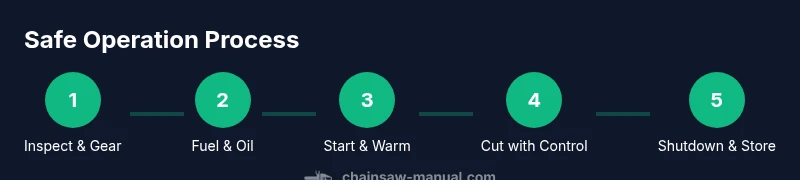
Before starting, verify that the saw, chain, and bar are in good condition. Check chain tension, bar wear, and fuel/oil levels. Ensure all PPE is ready and properly worn. A quick visual check can prevent interruptions during cutting.
Tip: Take 2–3 minutes to confirm everything is secure and properly worn. - 2
Prepare workspace and fuel safely
Clear your work area of bystanders, trip hazards, and loose debris. Mix and fill fuel in a well-ventilated area away from open flames, then fill the bar oil as required. Wipe up any spills to prevent slips.
Tip: Never refuel a hot engine; allow it to cool first. - 3
Check chain tension and bar oil
With the engine off, ensure the chain tension is snug but movable by hand. Spin the chain and listen for smooth operation. Confirm the bar oil reservoir is full enough to lubricate through the first several cuts.
Tip: If the chain sag is visible, readjust tension before starting. - 4
Start the engine and warm up
Follow the manufacturer’s starting procedure: set choke if cold, engage throttle, and pull smoothly until the engine runs steadily. Allow a short warm-up to reach stable idle speed before making any cuts.
Tip: Keep hands away from the chain during startup. - 5
Position yourself and assess cut path
Stand with feet apart for balance, knees slightly bent, and the saw close to your body. Identify exit paths and any kickback hazards. Clear the target area of unstable material that could shift during the cut.
Tip: Plan an escape route before each cut. - 6
Make a test cut on a small branch
Begin with a light, controlled test cut to assess bite and wood texture. If binding occurs, pause and adjust stance or angle before proceeding.
Tip: A test cut helps prevent pinching the bar on larger cuts. - 7
Proceed with established cutting technique
Use a steady, upward motion for better control, apply even pressure, and avoid twisting the saw. Maintain a firm grip with both hands and keep the body behind the cut to reduce kickback risk.
Tip: Let the chain do the work; avoid forcing the saw. - 8
Shutdown, refuel, and clean
After finishing, allow the engine to cool, clean debris from the saw, and store it with the chain guard in place. Check for any fluid leaks and log maintenance actions for future reference.
Tip: Wipe down after use to prevent corrosion.
FAQ
Is a v8 chainsaw safer than standard models?
Power is not a safety substitute. Safe operation depends on proper PPE, correct technique, and routine maintenance. A high-power design can be safer if managed with discipline and good habits.
Power alone isn’t safety—use proper PPE and technique every time.
What PPE is mandatory when using a v8 chainsaw?
Mandatory PPE includes a hard hat with face shield, hearing protection, eye protection, cut-resistant chaps, gloves, and sturdy boots. Ensure PPE fits correctly and is in good condition.
Always wear full PPE before starting.
How often should I sharpen the chain?
Inspect the chain regularly and sharpen when you notice reduced cutting bite or increased effort. Do not oversharpen, which can weaken the chain.
Sharpen when cutting becomes noticeably dull.
Can I operate a v8 chainsaw for long periods?
Yes, with breaks and proper cooling. Monitor engine temperature and avoid pushing the saw beyond its limits during extended sessions.
Take regular breaks to prevent overheating.
What about fuel mix and bar oil types?
Use the fuel and bar oil recommended by the manufacturer. Avoid stale fuel and ensure bar oil is suitable for the operating conditions to prevent excessive wear.
Use fresh fuel and proper bar oil as directed.
How should I transport and store a v8 chainsaw?
Transport with the bar covered and the chain brake engaged. Store in a dry, secure area away from children and ignition sources; disconnect spark plug wire if storing for long periods.
Store safely and keep the chain guarded.
Watch Video
The Essentials
- Wear full PPE before starting any cut.
- Check chain tension and bar oil every session.
- Follow a deliberate startup and warm-up routine.
- Shut down correctly and clean after use.