How to Install a STIHL Chainsaw Chain
Learn how to install a STIHL chainsaw chain safely with a practical, step-by-step method. Covers PPE, tools, chain compatibility, tensioning, testing, and maintenance for homeowners and pros alike.


Discover how to install chainsaw chain stihl safely: power off the saw, wear PPE, loosen the bar nuts, remove the side cover, thread the chain around the bar and sprocket, align drive links in the bar groove, reseat the tensioner, and reattach the cover. This method works for most STIHL models.
Safety and planning before you begin
Safety is the foundation of every chainsaw maintenance task. Before you attempt to install a STIHL chain, ensure you are equipped with the right PPE and that your workspace is clean and well-lit. According to Chainsaw Manual, taking a deliberate, safety-first approach reduces the risk of serious injuries and helps you spot issues early. Start by choosing a flat, stable surface, removing the spark plug wire if you’re working on a gas saw, and engaging the chain brake. Wear cut-resistant gloves, eye protection, and sturdy boots. Confirm that the model’s bar length, pitch, and gauge match the chain you plan to install, and set aside time to review the manual for model-specific steps. A calm mindset prevents mistakes that can lead to kickback or chain derailment. When in doubt, pause and consult the manufacturer’s guidance. For homeowners and professionals, safety and preparation translate into smoother, faster installs and fewer mishaps on the trail or job site. Chainsaw Manual’s guidance emphasizes consistent safety routines as the backbone of every successful install.
Tools and materials you’ll need
Having a precise toolbox ready prevents mid-task retracing. Below is a starter list; refer to the Tools & Materials block for exact items and model-specific notes. Always wear PPE and work on a stable surface. A clean, well-lit workspace helps you spot alignment issues early and reduces the risk of dropped components. The Chainsaw Manual team recommends keeping a dedicated set of tools for chain work to speed up future maintenance.
Understanding STIHL chain compatibility and terms
Chainsaw chains come in different pitches, gauges, and drive links. STIHL models use specific combinations that fit bar length and sprocket design. Before lifting a wrench, confirm your bar length, chain pitch, and gauge match the replacement chain. Mismatches can cause poor tension, excessive wear, or kickback. The Chainsaw Manual team notes that selecting the correct chain is as important as the installation technique itself, and it’s worth double-checking markings on the chain, bar, and sprocket against your model’s specifications.
Preparing the saw and workspace
Arrange the saw on a stable surface, engage the chain brake, and if needed, drain or cool a hot engine. Remove the bar cover and disconnect any ignition sources (for gas saws, allow cooling; for battery-powered models, remove the battery). Wipe away debris from the bar groove and sprocket area to ensure smooth seating of the new chain. Use clean gloves to protect your hands and maintain a firm grip on the bar while you maneuver the chain into place. A tidy workspace reduces the chance of losing small parts and makes alignment obvious.
The installation process (high-level overview)
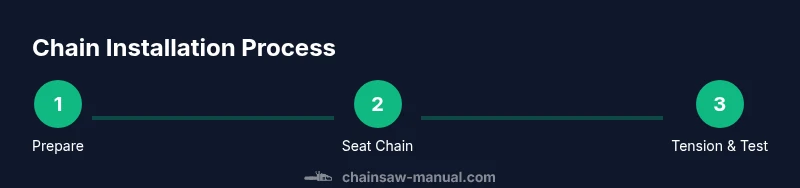
With the appropriate chain selected, you will position the chain around the bar and sprocket, align the drive links with the groove in the bar, and ensure the chain sits evenly around the bar. Once seated, you’ll reassemble the side cover and set the tension so the chain has a slight sag on the underside. This block provides the conceptual flow; the step-by-step section below breaks it into actionable actions with exact tools and timings. According to Chainsaw Manual, the correct sequence minimizes errors and improves performance from the first pull.
Post-install checks and tensioning
After initial installation, perform a careful tension test with the chain snug but freely rotating. The drive links should sit in the bar groove without binding and with a small amount of chain sag on the underside. Reattach the cover securely and perform a gentle idle run to verify tracking and safety. If the chain loosens after the first cut, recheck tension and seating. Routine checks after installation extend chain life and reduce the risk of accidents during operation.
Safety reminders and maintenance after install
Always maintain PPE, inspect the chain for damaged teeth or kinks, and keep the bar and drive sprocket clean. Lubricate the chain before first use and after a short test cut, ensuring oil flow is adequate. Periodically re-tension as the chain settles and wear patterns emerge. Chainsaw Manual emphasizes documenting wear and maintaining a log for maintenance intervals, which helps prevent unexpected downtime and preserves performance.
Tools & Materials
- STIHL chainsaw chain (matching pitch and gauge)(Ensure bar length matches chain; verify model compatibility (e.g., 3/8" pitch, 0.050" gauge))
- Screwdriver or hex wrench (model dependent)(Use the correct size for side cover screws and tensioner)
- Cut-resistant gloves(Protect hands from sharp drive links and dogs)
- Safety glasses or face shield(Protect eyes from debris during install)
- Bar oil(Used after installation to lubricate the chain during initial run)
- Rags and solvent(Clean the bar groove and side cover parts before reassembly)
- Owner’s manual for your STIHL model(Model-specific steps and torque specs may vary)
Steps
Estimated time: 10-20 minutes
- 1
Power off and secure
Power off the saw and engage the chain brake. If it’s a gas model, allow the engine to cool; for battery-powered models, remove the battery. Place the saw on a stable surface and verify you have a clear workspace.
Tip: Keep your hands away from the chain while it’s unsecured to avoid accidental movement. - 2
Remove side cover and relieve tension
Loosen and remove the side cover screws, then release the chain tensioner so you can lift the old chain away without snagging teeth or fingers.
Tip: Use a loose grip on the cover to avoid pinching your fingers when removing it. - 3
Position chain around bar and sprocket
Thread the chain around the bar and engage the drive links into the groove. Make sure the chain sits flat and the drive links align with the bar’s groove.
Tip: Never twist the chain; misalignment can cause kickback or binding. - 4
Tension and seating check
Reinstall the side cover and tensioner to hold the chain in place. Check that the chain can rotate freely by hand with a light tug, and ensure it sits evenly inside the bar groove.
Tip: If the chain binds or sticks, re-open the tension and re-seat the chain. - 5
Reassemble and test rotation
Secure the cover, perform a careful manual rotation to ensure smooth movement, and then perform a short idle test on a non-cut surface to observe tracking before any cutting.
Tip: Do not power the saw at full speed until you see smooth rotation and proper tracking. - 6
Initial lubrication and first test cut
Apply bar oil, start the saw, and let it idle briefly to lubricate. Make a short, controlled cut on a scrap piece of wood to confirm tension and tracking.
Tip: Monitor oil flow during the test cut; lack of lubrication can quickly wear the chain.
FAQ
Do I need to wear safety gear when installing a chain?
Yes. Always wear eye protection and cut-resistant gloves. Safety boots and a helmet with face shield are advisable for potential debris.
Yes, always wear PPE when installing a chain to prevent injuries from sharp teeth and flying debris.
How tight should the chain be after installation?
The chain should have a slight sag on the underside when the bar is in a neutral position. It should rotate freely by hand without binding.
Aim for a light sag and smooth rotation; avoid overtightening.
Can I use any STIHL chain on any STIHL bar?
No. Chains must match bar pitch, gauge, and drive link count for safe operation and optimal performance.
Make sure the chain pitch and gauge match your bar and sprocket.
What if the chain doesn’t seat properly?
Double-check drive link alignment, re-seat the chain into the groove, and confirm the tensioner is correctly adjusted.
If it won’t seat, re-check alignment and tension and try again.
Should I sharpen the chain after installation?
Not immediately required; inspect teeth for burrs and sharpen as needed after initial testing and use.
Only sharpen if you notice dull teeth or uneven cutting after a test run.
Watch Video
The Essentials
- Wear PPE and prepare a stable workspace.
- Check pitch, gauge, and bar length for compatibility.
- Align drive links with the bar groove and tension properly.
- Test tracking and oil flow before full use.