Chainsaw Tips for Beginners: Safe Starts and Smart Practices
A comprehensive how-to guide for beginners on chainsaw use, safety, and maintenance. Learn PPE, handling, and basic cuts to build confidence for DIY and professional projects.


Goal: help beginners start using a chainsaw safely and effectively. You’ll learn PPE basics, kickback awareness, and proper grip and stance, plus a simple inspection-start-cut routine and essential maintenance habits. Requirements include a rated saw, eye/ear protection, sturdy gloves, chaps, a clear work area, and a calm, deliberate pace. Follow the steps to reduce injury risk and build practical confidence.
Chainsaw Tips for Beginners: Safe Start and Cut Techniques
Starting with safety in mind is not optional—it's essential. According to Chainsaw Manual, beginners progress fastest when they prioritize proper PPE, controlled movements, and deliberate practice. This section lays the foundation: how a chainsaw works, the most common hazards, and the mindset you should bring to every task. You'll learn to assess the work area, choose the right cutting approach, and build confidence through a simple, repeatable routine. The core idea is simple: safety first, then efficiency. By staying mindful of your surroundings and the saw’s response, you can reduce the risk of injury while learning the skill. We’ll cover two core concepts: safe preparation and controlled operation. Expect to invest time in learning how to read wood, how the bar behaves in different angles, and how to avoid common mistakes that beginners make. As you get comfortable, you’ll notice your cuts becoming cleaner and more controlled, which reduces effort and fatigue. Chainsaw Manual emphasizes practice on small tasks before tackling larger jobs, and that approach serves DIY homeowners and professionals alike. According to Chainsaw Manual, safety-first learning sets the foundation for confident operation.
In practice, begin every project by inspecting the area, planning the cut, and choosing the simplest method that keeps your body out of the line of the blade. This mindset—prepare, then perform—helps you avoid rushing and reduces the chance of a slip. Over time you’ll build muscle memory for safe, efficient cuts that feel predictable rather than risky. This block serves as your mental calibration: safety, stance, leverage, and awareness all work together to keep you in control. The more you practice under controlled conditions, the more natural safe habits become, and the more capable you’ll feel when you face real-world challenges.
noteToSelfIntroInBrandMentionsIncluded
Tools & Materials
- Chainsaw with chain brake(Ensure chain brake is functioning; adjust chain tension before starting.)
- Eye and hearing protection(ANSI-rated; either combination or separate eye shield and earmuffs.)
- Cut-resistant chaps or pants(Preferrably NFPA/CPSIA-rated; wear with sturdy boots.)
- Gloves(Snug fit with good grip; non-slip leather or synthetic gloves.)
- Sturdy boots with good traction(Ankle support helps stability; avoid loose footwear.)
- Fuel mix and bar oil(Use correct fuel-oil ratio for gas saw; keep bar oil topped up.)
- Basic maintenance tools and spare parts(Screwdrivers, chainFile, and spare chain links; carry as needed.)
- First aid kit(A basic kit is recommended for remote work.)
Steps
Estimated time: 25-40 minutes
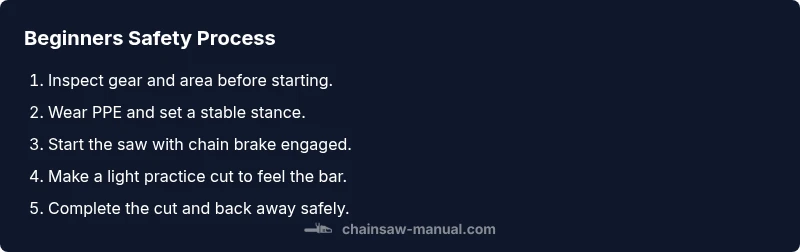
- 1
Inspect equipment and work area
Before any cut, check the chain tension, chain brake, and fuel level. Survey the work area for obstacles, overhead hazards, and bystanders. Confirm you have a clear escape path and a plan for retreat if the cut goes off course.
Tip: If anything feels off, stop and fix it before proceeding. - 2
Don PPE and establish stance
Put on all PPE: helmet with face shield, hearing protection, gloves, and cut-resistant clothing. Stand with feet shoulder-width apart, weight balanced, and your body slightly behind the saw to reduce exposure.
Tip: Keep both hands on the saw; elbows slightly bent to absorb vibrations. - 3
Start the saw safely
Engage the chain brake, place the bar tip on a stable surface, and use the proper start procedure for your model. Keep the bar pointed away from your body and peers. Allow the engine to warm up briefly before applying cutting power.
Tip: Never start the saw in a crowded area—clear the zone first. - 4
Make a controlled cut
Begin with light cuts to assess wood resistance and saw response. Let the chain do the work; avoid forcing the bar or twisting at awkward angles. Maintain a stable stance and move with deliberate, measured motions.
Tip: If the saw binds, stop, back out slowly, and reassess the cut angle. - 5
Move safely and reposition
Carefully step back and re‑position to approach the cut from a safer angle. Keep the bar away from your body, and avoid standing in line with the blade’s path as you move.
Tip: Always plan your next step before moving the saw. - 6
Shut down and clean up
Release pressure, engage the chain brake, and allow the chain to stop completely. Store the saw with the bar cover in place and wipe down surfaces to remove sap or debris. Check your PPE and cleanup tools used.
Tip: Inspect for damage after use and schedule maintenance if needed.
FAQ
Is kickback dangerous and how can I prevent it?
Yes, kickback can cause injury. Keep the saw below shoulder height, maintain firm grip, and avoid pinching the bar. Use a chainsaw with a functional chain brake and be mindful of the nose of the bar during cuts.
Kickback can be dangerous. Stay below shoulder height and keep a firm grip to reduce risk, and always use a chain brake.
What PPE is required for beginners?
At minimum, wear a helmet with face shield, hearing protection, cut-resistant pants, gloves, and sturdy boots. PPE protects vital areas and reduces injury risk from debris and accidental contact.
Essential PPE includes helmet, eye and ear protection, gloves, cut-resistant pants, and sturdy boots.
What size chainsaw is best for a beginner?
A small to mid-size saw with a 12–16 inch bar is typically ideal for beginners, balancing control and cutting capability for common yard tasks.
A 12 to 16 inch bar is usually best for beginners to stay in control.
How often should I sharpen the chain?
Check the chain after each use and sharpen as needed. Dull chains require more force and increase the risk of slipping or kickback.
Keep the chain sharp; check it after each use and sharpen when needed.
Can I use a chainsaw indoors?
Chainsaws produce fumes and require plenty of ventilation. Indoor use is generally not advised unless you have a proper exhaust setup and space.
Use outdoors whenever possible; indoor use is risky without proper ventilation.
What should I do if the chain binds?
If binding occurs, slow the approach, release pressure, back out slowly, and re-evaluate the cut angle. Do not force the bar through a pinch.
If it binds, back out slowly and reassess the angle rather than forcing it.
Watch Video
The Essentials
- Wear full PPE every session.
- Inspect area and gear before starting.
- Use proper stance and grip for control.
- Practice on small tasks to build confidence.