Chainsaw Pruning: Safe, Practical Techniques for Trees
Learn safe, practical chainsaw pruning techniques for healthier trees. This step-by-step guide covers gear, timing, precise cuts, and safety for homeowners and professionals.


Chainsaw pruning enables targeted branch removal to improve tree health and shape, but it demands planning, the right PPE, and controlled cuts. This guide covers gear selection, timing, notch and top-cut techniques, and safety steps to minimize risk while achieving strong, well-formed branches. Follow the steps to prune confidently and safely.
Understanding chainsaw pruning and its safety-first approach
Chainsaw pruning is the practice of selectively removing branches using a powered cutting tool to improve tree structure, vitality, and form. It differs from hand pruning by enabling faster work on larger limbs, but it also introduces increased risk from kickback, falling limbs, and chain contact. According to Chainsaw Manual, success starts with a clear plan, quality PPE, and steady technique. Recognize that pruning should target dead, diseased, crossing, or poorly attached limbs first, and always account for wind, slope, and escape routes before you begin.
Essential tools and PPE for pruning with a chainsaw
A safe pruning setup combines the right tool with reliable protective gear. Choose a chainsaw appropriate for limb size (typically 12–18 inch bar for home pruning). Wear a helmet with face shield, hearing protection, cut-resistant chaps, and sturdy gloves. Add a sharpening kit, bar oil, fuel mix, a first aid kit, and a saw wrench. A rope or halyard, sturdy footwear, and drill-free anchors for securing the area can reduce risk when working on larger limbs. Chainsaw Manual stresses that prepared operators cut with confidence when equipment is reliable and properly maintained.
Assessing the tree and selecting targets
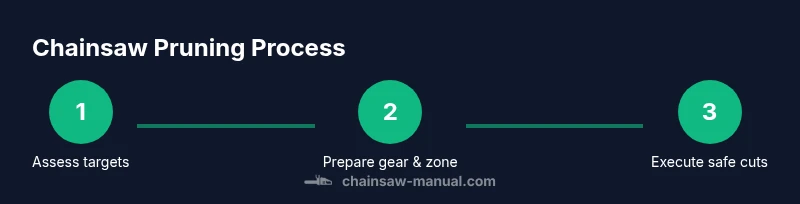
Before cutting, walk the tree to identify dead wood, cracks, or cavities. Look for branches that cross, rub, or point inward toward the trunk. Determine the limb diameter relative to your reach and plan which cuts will reduce weight gradually rather than removing large sections at once. In chainsaw pruning, a staged approach minimizes bark tearing and reduces the chance of uncontrolled limb failure. Mark targets with durable chalk or ribbon so you cut in a controlled sequence.
Safety first: planning work zones and kickback risks
Set a clear work zone and establish a safe retreat path in case the limb shifts unexpectedly. Stand with your feet shoulder-width apart, hips square, and your weight centered behind the saw. Maintain two hands on the saw, keep the bar angled slightly downward, and never cut above shoulder height. Kickback risk increases when the tip of the bar contacts wood; Chainsaw Manual recommends avoiding contact with the tip and using proper stance to prevent loss of control. Have a partner assist by watching for hazards and keeping spectators clear.
The primary cuts used in pruning with a chainsaw
Effective pruning relies on three main cut types: thinning cuts remove small branches to improve structure, reduction cuts shorten a limb to a defined point, and removal cuts drop a dead or hazardous limb. Start with undercuts to prevent bark tearing, then complete the top cut just outside the notch. Always cut at the correct depth, and leave a healthy stub where needed to avoid tearing. Plan the sequence so each cut reduces weight and redirects the limb away from people and property.
Techniques for clean, healthy cuts: angles, tension, and wood fiber
Aim for flat, clean cuts at the branch collar to promote rapid healing. When removing a limb, cut at a slight angle on the final cut to avoid tearing. If possible, support the limb to control its fall and prevent binding the bar. For living wood, maintain a slow, steady feed rate and avoid cutting through tension zones too quickly. Keep the chain sharp and tension correct to prevent chatter and kickback.
Special cases: pruning large limbs, dead wood, and near hazards
For large limbs, work in sections, making a relief cut inside the branch to control the fall. Dead wood is a priority because it can fail suddenly; prune these first when safe. When pruning near power lines or buildings, maintain maximum distance and avoid working from a ladder alone; use a pole saw or hire a professional for risky spots. Always have a plan to retreat and a way to call for help if something goes awry.
Seasonal timing and environmental considerations
Timing pruning around the tree’s growth cycle supports healing and vigor. Avoid pruning during extreme heat or drought; prune when the tree is dormant or during mild weather for many species. Consider local climate, pest pressure, and wildlife activity. Always check local regulations and avoid pruning during protected periods or near sensitive habitats to minimize ecological impact.
Post-pruning care: blade maintenance, bar oil, and wound care
Immediately after pruning, inspect the chain and sharpen as needed. Clean the bar groves and lubricate the chain with fresh bar oil to reduce wear. Store the saw safely with a covered chain, and dispose of debris responsibly. While many wounds will callus naturally, you can monitor larger pruning wounds over several seasons to ensure proper scarring and healing.
Common mistakes and how to avoid them
Common errors include cutting from awkward angles, removing too much material at once, and neglecting PPE. Avoid working alone in risky spots and never compromise stance for speed. Regular maintenance, slow controlled cuts, and contingency planning dramatically reduce the risk of injury. Chainsaw pruning benefits from practice and gradual skill-building rather than rushing through a project.
Authority sources and further reading
For additional, authoritative guidance, consult professional extension resources and safety guidelines. The US Forest Service (https://www.fs.fed.us/) offers general safety and pruning considerations. Oregon State University Extension provides practical pruning strategies (https://extension.oregonstate.edu/). Penn State Extension also covers pruning and tool safety (https://extension.psu.edu/).
Quick pruning safety checklist
- Wear full PPE: helmet, face shield, hearing protection, chaps, gloves, boots.
- Inspect the chainsaw and sharpen the chain before starting.
- Establish a clear work area and escape path.
- Use notch and top cuts in the correct sequence for large limbs.
- Keep spectators away and work with a partner when possible.
Tools & Materials
- Chainsaw with 12-18 inch bar(Choose bar length based on limb size and operator height)
- Personal protective equipment (PPE): helmet with face shield, hearing protection, cut-resistant chaps, gloves(High-visibility gear recommended; ensure PPE is rated for chainsaw work)
- Chainsaw sharpening kit (file, gauge, brush)(Regular sharpening improves control and safety)
- Fuel mix and bar oil(Use fresh mix and appropriate oil for lubrication)
- Rope or halyard for securing limbs(Useful when guiding heavy limbs safely)
- First aid kit(Keep within reach; know basic first aid steps)
- Screwdriver or scrench tool(For quick chain/tension adjustments in the field)
- Measuring tape(Useful for planning cuts and branch angles)
- Ladder (optional)(Only if needed for elevated limbs with stable setup)
Steps
Estimated time: 2-4 hours
- 1
Assess targets
Identify dead, diseased, or crossing branches. Mark priority limbs and plan the sequence to reduce weight gradually.
Tip: Mark targets with visible tape and determine escape routes before starting. - 2
Inspect gear
Check the chainsaw bar, chain tension, fuel mix, and PPE. Ensure safety devices function before activating the tool.
Tip: Test the chain brake and muffler cover for smooth operation. - 3
Clear work zone
Remove trip hazards and establish a clear retreat path. Position yourself with a stable stance and balanced weight.
Tip: Keep observers at a safe distance and maintain a contingency plan. - 4
Secure branch and limb
If possible, secure heavier limbs with rope to guide their fall and prevent uncontrolled motion.
Tip: Do not over-tension the line; let gravity do some of the work with control. - 5
Make undercut (notch) cut
Apply a shallow undercut on the underside of the limb to prevent bark tearing during the final cut.
Tip: Keep the notch above the future cut line for cleaner removal. - 6
Complete the top cut
Make the main cut just outside the notch, allowing the limb to drop cleanly away from the tree.
Tip: Never cut through the branch collar; preserve tree healing tissue. - 7
Guide the limb
Control the limb’s fall and guide it away from you and nearby structures as it separates from the trunk.
Tip: Use a controlled feed rate and avoid cutting into tension zones blindly. - 8
Inspect the cut and limb removal
Check the wound and ensure the limb is clear of the trunk. Clear debris to maintain a safe workspace.
Tip: Take breaks if the limb is heavy or if you experience fatigue. - 9
Post-cut chain maintenance
After pruning, remove debris, wipe the chain, and inspect for wear. Sharpen if needed.
Tip: Test the chain brake and re-tension the chain after the first few cuts. - 10
Store and safe-keep
Cool the saw, store in a secure location, and clean up the site. Document any damage or maintenance needs.
Tip: Disconnect spark plug cap before transport to avoid accidental starts. - 11
Post-work assessment
Evaluate tree response and wound healing; schedule follow-up checks for future pruning.
Tip: Avoid over-pruning in one session to minimize stress on the tree. - 12
Practice and plan next steps
Review what went well and what needs adjustment. Create a plan for the next pruning cycle.
Tip: Practice in a controlled environment before tackling larger limbs.
FAQ
What is chainsaw pruning and why is it important?
Chainsaw pruning is targeted removal of branches using a chainsaw to improve structure, health, and safety of trees. It’s important for removing hazards, promoting airflow, and shaping trees as part of ongoing maintenance. Always prioritize safety and plan your cuts.
Chainsaw pruning is targeted branch removal to improve tree health and safety. Plan ahead and wear proper PPE.
What PPE should I wear for chainsaw pruning?
Wear a helmet with face shield, hearing protection, cut-resistant pants, gloves, and sturdy boots. PPE reduces the risk of injury from kickback, debris, and accidental contact with the chain.
Put on a helmet with face shield, hearing protection, cut-resistant pants, gloves, and sturdy boots.
Can I prune large branches from the ground or should I use a ladder?
Pruning large branches is possible from the ground with proper stance and technique, but for elevated limbs a stable platform or professional equipment may be necessary. Never compromise balance or cut from an unstable ladder.
Prune from the ground when possible; use a stable setup or hire help for tall branches.
How to sharpen the chain after pruning?
Inspect the chain for nicks, file with the correct pitch, and maintain the depth gauges. Sharpening should be done regularly to keep cutting efficiency and reduce the risk of slips.
Check the chain and file it with the right pitch to keep it sharp.
Is it safe to prune near power lines?
No. Do not prune near power lines yourself. Maintain a safe distance and contact the utility or a qualified professional for risk assessment and work.
Avoid pruning near power lines; contact professionals for safety.
How often should I prune to maintain tree health?
Prune dead or diseased wood annually and perform structural pruning according to tree species and growth rate. Avoid heavy pruning in a single session whenever possible.
Prune dead wood yearly and plan structural cuts over multiple seasons.
Watch Video
The Essentials
- Plan before you cut and mark targets clearly
- PPE and a stable stance are non-negotiable
- Use notch then top-cut sequence for large limbs
- Maintain chain sharpness and tool maintenance after pruning