Chainsaw Pole: Safe Handling and Use Guide
A practical, safety-first guide to using a chainsaw pole (pole saw) for limb removal, pruning, and light felling. Learn gear, setup, techniques, and maintenance for homeowners and professionals.


With a chainsaw pole, you can safely reach overhead limbs and distant branches without climbing. This guide covers choosing the right pole, proper attachment, PPE, safe cutting techniques, and maintenance. You will assess your workspace, secure the tool, attach the pole saw, perform controlled cuts, and store the equipment correctly.
Understanding the chainsaw pole and its uses
The chainsaw pole, often called a pole saw, is a long, lightweight attachment that extends the reach of a handheld chainsaw. It enables arborist-style pruning and limb removal from the ground, reducing the need for ladders or climbs. The device combines a motorized saw head at the end of a telescoping pole, with a pivoting head option in many models. When used correctly, it offers safe access to overhead limbs and awkward angles, making routine maintenance tasks more efficient for homeowners and professionals. According to Chainsaw Manual, the right setup and safety protocols are essential for safe operation. This region is not about heavy felling but about controlled pruning and light limb removal. Understanding the pole's reach, weight balance, and cutting angle is the first step toward safe use.
A chainsaw pole is versatile for yard work, but it requires deliberate technique. You’ll often work from stable ground with a firm stance, ensuring your body remains outside the swing path of the saw. Before you begin any cutting, review local regulations and known hazards in the area. This keeps both you and your property safe while you gain height and reach without dangerous climbs. The goal is precise, controlled cuts that minimize damage to surrounding limbs and reduce the risk of kickback or tool binding. Chainsaw Manual’s guidance emphasizes preparedness and safety as the foundation of every pole-saw task.
Safety first: PPE and pre-checks
Personal protective equipment (PPE) is non-negotiable when using a chainsaw pole. A compliant helmet with a face shield, hearing protection, cut-resistant gloves, and sturdy boots protect against flying debris and accidental contact with the chain. Add chainsaw chaps or pants to shield legs, and ensure your eyewear stays clear during the work. Before you start the engine, conduct pre-checks: confirm the chain tension is correct, verify bar oil level, and test the chain brake. Inspect the pole attachment for secure locking and confirm there's no play in the pivot head. Keep bystanders at a safe distance, and work only on solid, level ground with a clear retreat path. Chainsaw Manual analysis highlights that safety gear and thorough checks substantially improve on-site safety.
Choosing the right pole saw configuration
Pole saw configurations vary by reach, weight, and flexibility. For most homeowners, a telescoping model offers adjustable reach without adding excessive weight. Longer poles extend your reach for overhead limbs but demand better balance and stronger footing. Consider the weight of the combination when fully extended—heavy configurations can tire you quickly and affect control. Ensure compatibility with your chainsaw model and confirm the pole head orientation suits your common cutting angles. If you frequently prune in tight spaces, a shorter, lighter pole may offer better maneuverability. Selecting the right setup reduces fatigue and increases control during delicate cuts.
Assembly and inspection: attaching the pole to the chainsaw
Begin with the engine off and the chain brake engaged. Attach the pole saw head according to the manufacturer’s guidelines, ensuring a snug fit and proper locking mechanism. Check for any wobble or looseness in the connection, then secure the pivot joint if needed. Without starting the engine, run a brief movement to confirm the attachment holds steady. Finally, test the pole’s flexibility and extension mechanism in a controlled environment. A well-fitted pole reduces vibration transmission to your hands and improves precision in cutting.
Workspace setup and planning for overhead limbs
Plan before you cut. Survey the area for trip hazards, power lines, and nearby structures. Clear the ground beneath your work zone and position your body so you can retreat without crossing your cutting path. Establish a safe handling zone and avoid working alone if possible. If you must work on uneven terrain, consider braces or a stable platform to maintain footing. Clear communication with others in the vicinity helps prevent accidental entry into the work zone during a cut. Planning reduces the chance of pinch points and improves accuracy when you reach overhead limbs with the pole saw.
Cutting techniques for branches at height
Approach height pruning with deliberate control. When a branch is too heavy to support with one pass, make an undercut from beneath to prevent bark tearing, followed by a top cut from above. Keep the cut close to the limb junction to minimize lever forces that could kick the tool or cause a sudden branch drop. Work from the tip toward the trunk only as necessary, maintaining a stable stance and a clear escape route. If the branch is large or dead, plan for multiple smaller cuts rather than one heavy bite. This technique helps preserve the tree’s structure and reduces the chance of binding the chain.
Working around hazards and kickback prevention
Kickback is a major risk when operating a pole saw. Maintain a firm grip with both hands on the chainsaw handle, position yourself to the side of the cut rather than directly in line with it, and avoid contacting metal objects or the ground with the bar. Keep the wood-handling area clean, free of obstructions, and never operate from a ladder if a safer alternative exists. If the branch binds or you hear a high-pitched squeal, stop and reassess your angle before continuing. Chainsaw Manual notes that consistent, calm technique is more reliable than rushing through a task.
Maintenance and care between uses
After finishing, wipe down the pole and saw head to remove sap and debris. Re-tension the chain if needed and check bar oil levels before storing. Clean the pivot joints and lubricate moving parts to maintain smooth operation. Inspect for wear on the pole joints, clamps, and locking mechanisms. Store the tool in a dry, secure location away from children and pets. Regular maintenance extends the life of the pole saw and keeps performance steady for your next project.
Troubleshooting common issues with pole saws
If the saw won’t start, verify fuel or battery as appropriate, and ensure the ignition system is functioning. A dull chain reduces cutting efficiency; sharpen or replace it following manufacturer guidance. If the pole feels unstable or wobbly, re-check the attachment and fasten any loosened screws. A chain that runs off track may require tension adjustment or cleaning of the guide bar. When in doubt, consult the user manual or seek qualified service to prevent further damage.
Storage, transport, and seasonal prep
Store the pole saw and chainsaw in a clean, dry space with the chain brake engaged. Remove fuel or discharge batteries according to safety guidelines if transporting in a vehicle. Use a blade cover to protect the chain and prevent accidental contact. Periodically inspect for rust, cracks, or other signs of wear and address immediately. When the season changes, perform a quick safety check before returning to work to ensure everything remains in good condition.
Practical project scenarios: pruning, limbing, and light felling with a pole
Pole saws excel at pruning and limbing, especially when you need to reach above head height. For light/fine limb removal, use controlled bites and steady motion to avoid tearing bark. When limbing multiple branches, plan your sequence to minimize re-positioning, and consider cutting branches in logical sections. For pruning, remove smaller growth first to balance the tree’s shape and health. In all cases, maintain consistent grip, posture, and a clear safety margin around your cutting area.
Final prep for next job and upgrade considerations
Before your next task, review the pole saw’s condition, confirming no cracks or loose fittings. If you anticipate frequent overhead work, consider upgrading to a longer, lighter pole or a model with improved vibration dampening. Evaluate whether a gas-powered unit or an electric cordless option better suits your typical work environment. Keeping a running list of maintenance items helps you stay prepared and minimizes downtime between jobs.
Tools & Materials
- PPE kit (hard hat with face shield, hearing protection, cut-resistant gloves, sturdy boots)(Essential head-to-toe protection for all pole-saw tasks)
- Chainsaw with secure chain and tuned tension(Baseline tool for pole-saw operation; ensure safety features are functional)
- Pole saw attachment (telescoping or fixed)(Choose based on reach needs and weight balance)
- Bar oil and fuel or battery charge(Maintain proper lubrication and power for consistent cuts)
- Screwdriver or wrench set(Used for attaching and adjusting hardware on the pole head)
- Rope, lanyard, or helper line (optional)(Can assist with stabilizing yourself or guiding branches from a distance)
- First aid kit(Always have basic medical supplies nearby when working with power tools)
- Ladder or stable elevated platform (optional)(Only use when ground-based reach is insufficient and always with fall protection in place)
- Cleaning brush and rags(Remove sap and debris after use to prevent corrosion)
Steps
Estimated time: 60-90 minutes
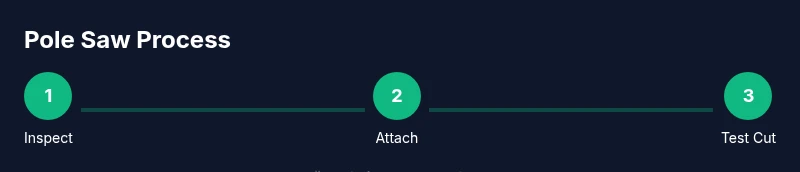
- 1
Inspect equipment and site
Power off the saw, engage the chain brake, and inspect the pole head for secure locking. Survey the work area for hazards, level footing, and a clear retreat path. Confirm there are no bystanders within the potential cut zone before proceeding.
Tip: If anything feels loose, do not proceed—address it first to avoid mid-cut adjustments. - 2
Attach pole saw to the chainsaw
Follow the manufacturer’s instructions to attach the pole head to the chainsaw. Check that locking pins click into place and there is no lateral play. Manually test movement of the pole extension to ensure smooth operation without binding.
Tip: Double-check the alignment of the saw head with the pole to prevent bindings during cutting. - 3
Power up and test at a safe distance
Start the chainsaw away from the limb, then bring the bar head into a controlled motion to test cutting action. Verify chain speed, bar oil flow, and the pivot head’s response. Stop immediately if anything vibrates excessively or feels off.
Tip: Use a short, low-risk test cut on a nearby scrap branch to confirm control before reaching higher limbs. - 4
Position your body and establish footing
Stand with a solid, shoulder-width stance. Position the pole so the saw head remains on the outside of your body from the cut, never in line with your torso. Keep both hands on the handles and maintain a light, controlled grip to reduce reaction force.
Tip: Never reach beyond your safety radius; if you must, reposition the base rather than over-extending. - 5
Make the underlying cut (undercut) if needed
For large branches, make a shallow undercut on the underside about a third of the branch’s diameter. This reduces bark tearing and helps control the branch as you finish the cut from above.
Tip: Keep the pole steady and avoid twisting the saw blade during the undercut. - 6
Complete the top cut and control the drop
Finish with the top cut from above, guiding the branch to fall in a planned direction. Maintain control, keep your stance grounded, and retreat slowly as the branch completes its fall. Do not stand directly under the branch path.
Tip: Allow the branch to settle before removing the pole; sudden movement can cause binding or kickback. - 7
Clean up, inspect, and store
Turn off the saw, inspect the cut area for sharp edges or snag points, and clean sap from the blade and pole. Re-tension and lubricate as needed, then store in a dry location with the chain brake engaged.
Tip: Document any wear or needed maintenance to address before your next job.
FAQ
What is a chainsaw pole and what is it used for?
A chainsaw pole, or pole saw, is a long attachment that extends reach for pruning and limb removal from the ground. It enables safe access to higher branches without climbing and is ideal for maintenance tasks in backyards and small properties.
A pole saw extends your reach for pruning from the ground, making overhead limb work safer and more convenient.
Is it safe to use a chainsaw pole for overhead limbs?
Yes, when you use proper PPE, a secure attachment, stable footing, and correct cutting techniques. Avoid working near power lines and never rush the cut. If the limb is unstable, re-evaluate or call for assistance.
It can be safe with the right gear and careful technique; don’t rush the cut.
What PPE should I wear when using a chainsaw pole?
Wear a certified helmet with face shield, hearing protection, cut-resistant gloves, sturdy boots, and chainsaw chaps or pants. Protective eyewear and snug clothing prevent injuries from debris and spinning parts.
Protective gear is essential for every cut—wear everything from head to foot.
Can I use a chainsaw pole without a ladder?
A chainsaw pole is designed to reduce ladder use by extending reach. If you cannot safely reach the limb from the ground, stop and reassess your plan or call for help. Never compromise balance to reach a branch.
Use the pole to reach without a ladder whenever possible; if not, pause and reassess.
How can I prevent kickback when using a pole saw?
Maintain a firm two-handed grip, stand to the side of the cut, and avoid pinching the bar. Ensure no obstructions near the blade and use controlled, gradual cuts rather than full power bites.
Keep a firm grip, stay to the side, and cut gradually to avoid kickback.
How should I store a chainsaw pole after use?
Clean the tools, engage the chain brake, and store in a dry place away from children. Check for wear and perform a quick maintenance check before next use.
Clean, secure, and store safely; perform a quick check before your next job.
What maintenance does the pole require between uses?
Wipe away sap, lubricate joints, re-tension the chain as needed, and inspect for cracks or wear. Keep bar oil topped up and store in a dry environment.
Clean, lubricate, and inspect between uses to keep it reliable.
Watch Video
The Essentials
- Wear full PPE and perform pre-checks every session
- Attach pole head securely and test before use
- Plan cuts to minimize risk and maximize control
- Maintain equipment to extend life and safety
- Store safely with the chain brake engaged