Stihl Chainsaw Oil Mix: A Practical Guide
Learn how to mix fuel for your Stihl chainsaw with clear ratios, oil types, and safety tips. This educational guide covers premix methods, proper measurement, storage, and maintenance to protect your engine and extend saw life.


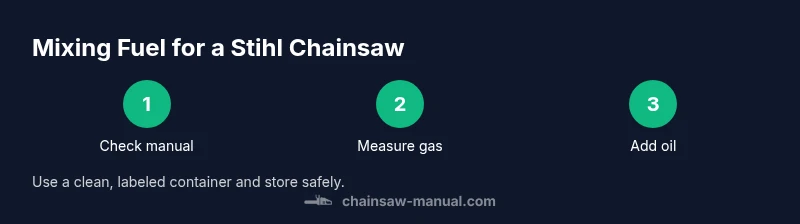
This guide shows you how to mix the correct premix for a Stihl chainsaw, covering fuel-oil ratios, oil types for two-stroke engines, and safe handling. You’ll also learn storage, measurement, and basic maintenance to protect your saw.
What is the stihl chainsaw oil mix?
The stihl chainsaw oil mix is the fuel blend used by most Stihl two-stroke engines. Because these saws run on a single mix of gasoline and oil, the ratio you choose directly affects lubrication, cooling, and overall engine longevity. There is no separate oil reservoir in many older and modern two-stroke engines, so oil must be mixed into the gas before fueling. The correct stihl chainsaw oil mix helps prevent piston and bearing wear, reduces smoke, and minimizes carbon buildup. To identify the right ratio, inspect the saw’s label or the owner’s manual, then use a clean, calibrated container to measure fuel and oil accurately. Small deviations compound under load, especially in hot weather or during heavy cutting. This article follows Chainsaw Manual’s safety-first approach, with clear guidance on selecting ratios, measuring accurately, and handling premixed fuel safely.
Why the stihl chainsaw oil mix matters for performance
The oil in the fuel lubricates the engine as it travels through the crankcase and transfer ports. A correct mix reduces friction, minimizes heat, and prevents varnish or gum formation that can clog injectors or carburetors. When the oil content is too low, piston rings may wear prematurely; when it’s too high, you’ll see smoking, fouled plugs, and reduced power. Chainsaw Manual emphasizes that a stable mix supports reliable starts, smoother idling, and consistent cutting performance. Inconsistent mixtures can also increase emissions and shorten the service life of critical components like crankshaft bearings and piston skirts. Proper mixing is a simple, cost-effective maintenance step that pays off in fewer repairs and longer saw life.
The difference between premix and pre-mixed fuel
Premix refers to combining gasoline and oil manually before filling the tank, while pre-mixed fuel comes from a manufacturer’s prepared blend. Premix gives you flexibility, but it places the responsibility on you to measure accurately and maintain fresh fuel. Pre-mixed fuel offers convenience and consistency but may require following very specific ratios and shelf-life guidance. For Stihl saws, premix is common, but always follow the model’s recommendations. Regardless of the approach, use high-quality two-stroke oil designed for air-cooled engines and avoid automotive or four-stroke oils that are not formulated for two-stroke cycles.
Common ratios used with Stihl chainsaws
Typical premix ratios for Stihl two-stroke engines range around 40:1 to 50:1, with 50:1 being common for many newer models. Some older units or specialty applications might call for leaner or richer mixes. Always verify the exact ratio from the user manual or a label on the saw. If you use a ratio outside the manufacturer’s guidance, you can risk insufficient lubrication or excessive fuel dilution. Always prepare fresh fuel in a clean container and avoid topping off a partially used mixture. The goal is a stable, clean burn that keeps the engine cool and responsive.
How to determine the correct ratio for your model
Begin by locating the ratio specified for your exact model in the owner’s manual or on the saw’s fuel label. If you can’t find a label, consult the manufacturer’s online resources or trusted guides. Consider operating conditions: high heat, heavy cutting, or altitude can influence optimal lubrication needs. If you’re unsure, use a conservative middle value like 50:1 and test performance on light cutting. Always use clean fuel and oil and avoid mixing in unventilated spaces or near sparks. Chainsaw Manual’s guidance emphasizes double-checking the ratio against official sources to prevent damage.
Practical tips for measuring and mixing accurately
Use only clean, labeled containers dedicated to fuel mixing. A calibrated measuring cup or a marked bottle helps avoid odorless errors. Add gasoline first, then oil, using the ratio as your guide. Close the container firmly and shake vigorously for 10–15 seconds to ensure a uniform mixture. Label the container with the date and ratio for future reference. Store premix away from heat sources and direct sunlight to maintain stability and reduce the risk of degradation.
Signs of an incorrect mix and troubleshooting
If the engine runs rough, smokes excessively, or shows reduced power, the mix may be off. Lean mixtures can overheat and seize components, while rich mixes cause black smoke and plug fouling. Spark plug fouling, loss of power, or frequent starting problems often point to an incorrect ratio. Re-check the manual, re-mix with fresh fuel, and verify measurement accuracy. If problems persist, consider a professional inspection to rule out carburetor or fuel-line issues. The key is early detection and correction to avoid engine damage.
Storage, shelf life, and handling of premixed fuel
Premixed fuel should be stored in an appropriate container with a tight seal. If stored too long, the oil can separate or degrade, reducing lubrication efficiency. Aim to use premix within a reasonable timeframe, typically weeks rather than months, especially in hot climates. Always label containers with the date, ratio, and contents. Keep fuel away from heat sources and living spaces, and never mix in a metal container that could react with ethanol-containing gasoline.
Safety considerations when mixing fuel
Mix in a well-ventilated area, away from flames or sparks. Wear safety glasses and gloves to protect against splashes. Ensure children and pets are kept away from the mixing area. Clean up any spills immediately and dispose of contaminated rags safely. Use dedicated fuel containers and never store fuel near lubricants, solvents, or paint. A careful setup reduces risk and supports safe operation of your Stihl chainsaw.
Maintenance after refueling with premixed fuel
After running with premixed fuel, inspect and clean the air filter and spark plug as needed. Check for signs of fuel leaks or residue around the carburetor. A light test cut can help verify performance, but stop immediately if you notice unusual noises, overheating, or smoking. Regular maintenance alongside correct oil mix promotes longer engine life and more reliable starts.
Common mistakes and how to avoid them
Avoid assuming any premix ratio is acceptable for all conditions. Never mix directly in the saw’s fuel tank; always pre-mix in a clean container. Do not re-use old fuel. Use fresh, high-quality oil designed for two-stroke engines and avoid mixing in dirty containers or with impure water contamination. Double-check ratios after adding additives or fuel stabilizers, and always label your final mix clearly.
Tools & Materials
- High-quality two-stroke engine oil (premix oil)(Choose oil labeled for air-cooled 2-stroke engines; avoid automotive oils.)
- Unleaded gasoline (fresh, pump-grade)(Use ethanol-free if possible; avoid old or degraded fuel.)
- Calibrated mixing container(Pint to gallon size; ensure a secure cap and clear markings.)
- Measuring cup for oil and fuel(Clear markings; avoid using kitchen measuring tools.)
- Safety gear (gloves, safety glasses, ventilation)(Protect hands and eyes; work in a well-ventilated area.)
- Funnel (optional)(Helpful for pouring into small openings without spills.)
- Rags or absorbent pads(Cleanup spills promptly and dispose of safely.)
Steps
Estimated time: 15-20 minutes
- 1
Gather materials and safety gear
Collect all required items and set up a clean, ventilated workspace. Put on safety glasses and gloves before handling fuel. Ensure there are no ignition sources nearby.
Tip: Double-check you have fresh fuel and labeled containers to prevent cross-contamination. - 2
Check the saw’s manual for the ratio
Locate the exact fuel-oil ratio recommended for your Stihl model in the manual or on the fuel label. If the label is hard to read, consult the manufacturer’s website.
Tip: If in doubt, start with a middle-ground like 50:1 and test under light loading. - 3
Measure gasoline with a calibrated container
Pour the correct amount of gasoline into your mixing container using a calibrated cup or bottle. Do not estimate by eye.
Tip: Keep the gas container away from direct sunlight and heat during measurement. - 4
Add oil according to the ratio
Add the prescribed amount of two-stroke oil to the gasoline in the mixing container. Use clean, labeled tools to avoid cross-contamination.
Tip: Pour slowly and avoid spilling oil outside the container. - 5
Seal and mix thoroughly
Secure the container lid and shake vigorously for 10–15 seconds to achieve a uniform blend. After mixing, let the solution settle briefly to release any air.
Tip: If your container doesn’t shake well, invert and roll it to mix without leaks. - 6
Label the container and store safely
Label with date, ratio, and contents. Store in a cool, ventilated area away from heat or open flames.
Tip: Do not store premix near solvents or paints. - 7
Use or dispose of premixed fuel appropriately
Use the premix promptly or store for a short window, following local regulations for disposal if not used.
Tip: Do not reuse old fuel; stale premix can harm engine performance.
FAQ
What is the recommended oil-to-gas ratio for modern Stihl chainsaws?
Most Stihl two-stroke engines use a premix ratio around 50:1, but always confirm with the specific model’s manual. If the model is older or designed for different conditions, the ratio may vary. Use the official guide for accuracy and avoid guessing.
Most Stihl chainsaws use a 50 to 1 premix, but check your manual to be certain. If unsure, start with 50:1 and test performance.
Can I use any two-stroke oil for a Stihl chainsaw?
Use oil formulated for air-cooled two-stroke engines, and avoid automotive oils. Check the oil label for two-stroke compatibility and viscosity recommendations. Using the wrong oil can reduce lubrication and clog parts.
Use only two-stroke engine oil designed for air-cooled saws. Automotive oil can harm performance.
What happens if my mix is too rich or too lean?
A rich mix (too much oil) can cause carbon buildup and smoking; a lean mix (too little oil) can lead to overheating and accelerated wear. Both reduce efficiency and shorten saw life. Always aim for the recommended ratio and monitor engine behavior.
Too much oil makes smoke; too little oil overheats the engine. Stay with the recommended ratio.
How should I store premixed fuel?
Store premixed fuel in a clearly labeled, approved container in a cool, ventilated area away from heat sources. Use the premix within a reasonable time and avoid long-term storage. Dispose of old fuel per local regulations.
Keep premix in a labeled container in a cool place and use it soon.
Is it safe to premix in the saw’s fuel tank?
Premixing directly in the saw’s tank is not recommended because it can lead to inaccurate ratios and dosing errors. Always premix in a separate container, then pour into the tank.
Do not premix in the tank. Premix in a dedicated container first.
How can I tell if my mix is wrong after starting the saw?
If the engine runs rough, smokes heavily, or struggles to start, the mix may be off. Stop, re-check the ratio, and test with fresh fuel. If problems persist, inspect carburetor components for other issues.
Rough running or heavy smoke usually means the mix needs re-checking.
Should I use fuel stabilizers with premixed fuel?
Fuel stabilizers can help maintain freshness for short-term storage, but they don’t fix a bad ratio. Follow the manufacturer’s recommendations for stabilizers and always verify the ratio before use.
Stabilizers help storage, but they don’t replace correct mixing.
Watch Video
The Essentials
- Verify the exact ratio for your model before mixing.
- Use fresh gasoline and high-quality two-stroke oil.
- Mix in a clean container and label the batch clearly.
- Store premix away from heat and dispose of old fuel properly.
- Regular maintenance supports engine longevity and safety.