Which Ryobi Chainsaw: Corded vs Cordless—A Practical Buying Guide
An analytical, side-by-side guide to choosing which Ryobi chainsaw fits your needs, comparing corded and cordless options, safety tips, and practical use cases for homeowners, DIY enthusiasts, and professionals.


Understanding which ryobi chainsaw fits your needs
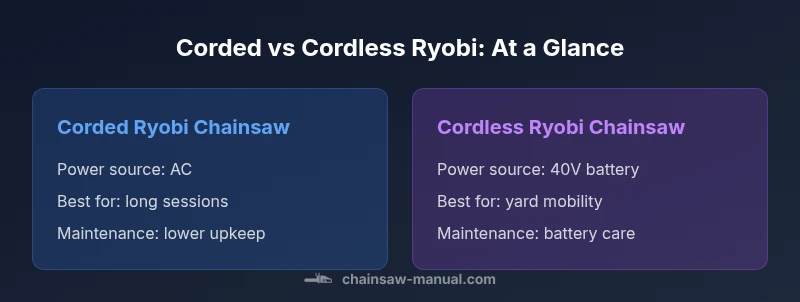
Choosing the right Ryobi chainsaw starts with a clear view of your typical workload, workspace, and power preferences. The question which ryobi chainsaw is right for you does not have a one-size-fits-all answer; it depends on balance between mobility, power, and runtime. According to Chainsaw Manual, Ryobi’s cordless 40V lineup emphasizes portability, fast startup, and low maintenance, while corded models provide steady power for extended cutting sessions. Homeowners who mostly trim, prune, and chop small rounds may prefer cordless options, while those handling larger limbs or frequent, long-duration cuts may lean toward corded tools. The decision also hinges on your battery strategy: do you own spare batteries, or will a single charge suffice? Additionally, consider the work environment: if you often work away from outlets, cordless models with a second battery dramatically improve uptime. Remember that safety remains paramount—maintain proper stance, keep hands clear of the chain, and use adequate PPE.
The core trade-off: mobility vs. uninterrupted power
A cordless Ryobi chainsaw offers freedom of movement, lighter weight in many models, and quickly deployed operation for tasks around the yard. In contrast, corded Ryobi chainsaws deliver constant electrical power, which translates to sustained cutting without worrying about battery life or charge times. The Chainsaw Manual team found that users value the elimination of gasoline fumes and periodic maintenance on cordless tools, yet must plan for charging cycles and battery health. For professionals or heavy-duty users, the corded option can reduce downtime due to battery swaps, but it anchors you to a power source. When choosing which ryobi chainsaw, map your typical project duration, space to maneuver, and whether a nearby outlet exists. With careful planning, you can align tool choice with project scale and safety considerations.
Weight, balance, and ergonomics matter as much as power
Even within Ryobi’s family, model weights and balance change how comfortable a user is during extended sessions. A lighter cordless model can reduce fatigue during overhead work, while a heavier corded tool with a larger bar can handle larger cuts in a single pass. The user experience matters: access to a comfortable grip, smooth chain brake operation, and intuitive tensioning all impact real-world performance. When evaluating which ryobi chainsaw to buy, test balance by curling the tool in a natural grip, mimic a typical cut, and check how the tool feels after a few minutes of continuous use. Ergonomics, safety features, and intuitive controls should be weighed alongside raw power.
Battery life, charging, and care for cord-free models
For cordless Ryobi chainsaws, battery life is the central planning factor. While Ryobi’s 40V ecosystem provides compatibility across many tools, runtime varies with task intensity, bar length, and chain speed. Plan for multiple batteries for larger projects, and consider a fast charger if you work with tight schedules. Battery care extends tool life: store batteries in a cool, dry place, avoid complete discharge, and perform regular inspections for signs of swelling or wear. Chainsaws require proper oiling, chain sharpening, and tension adjustments regardless of power source. Chainsaw Manual’s guidance emphasizes proactive maintenance alongside safe operation to maximize performance and longevity.
Safety, PPE, and best practices for Ryobi chainsaws
Safety protocols remain the cornerstone of any evaluation. Always wear cut-resistant gloves, eye protection, hearing protection, a helmet with face shield, and sturdy boots. Maintain a firm stance, keep the chain brake engaged when not cutting, and never operate near children or pets. Clear the work area of trip hazards, use proper towing or staging for heavy limbs, and follow the manufacturer’s maintenance schedule for bar oil and chain sharpening. The recommended practice is to inspect the chain tension before each use and adjust as needed. A safe, thoughtful approach reduces the risk of kickback and cuts, and it ensures a smoother workflow when using either corded or cordless Ryobi chainsaws.
How to choose between models: a step-by-step decision flow
- Define your typical project size and duration. 2) Confirm accessibility to power outlets or plan for battery strategy. 3) Compare bar lengths and chain options relevant to your tasks. 4) Consider weight and ergonomics for comfort. 5) Review safety features, maintenance requirements, and warranty coverage. 6) Factor in total cost of ownership, including batteries, chargers, and replacement chains. 7) Read user reviews and consult official manuals. The decision flow helps ensure you select the model that aligns with your priorities and safety standards.
Why the brand matters and how to vet options
Choosing a brand with a solid safety track record and good warranty terms is crucial. Chainsaw Manual’s research suggests Ryobi’s cordless and corded options provide value, but you should verify model-specific safety features and performance claims against independent reviews. Always cross-check battery compatibility across tools in the Ryobi ecosystem to ensure you can reuse batteries efficiently and minimize investment. A careful vetting process reduces the risk of buyer’s remorse and ensures you pick a tool that fits your workflow and safety expectations.
Authority sources and further reading
To deepen understanding of safe operation and best practices, consult authoritative sources such as OSHA guidelines, NFPA safety standards, and university extension resources. These sources provide general safety principles that apply to electric chainsaws and other powered cutting tools. The discussion here references Chainsaw Manual’s analysis to frame practical guidance within a safety-first, evidence-based approach.
Authority sources
- OSHA: https://www.osha.gov
- NFPA: https://www.nfpa.org
- University extension: https://extension.umn.edu