What Kind of Chainsaw Chain for Milling: A Practical Guide
Discover how to choose the right milling chain, including pitch, gauge, drive links, and tooth configuration. Practical tips for safe setup, skip versus standard chains, and field maintenance for smoother slabs.


By the end of this guide you will know how to choose a milling chain that matches your bar and mill setup, including pitch, gauge, and tooth configuration. You'll understand when to use skip-tooth versus standard chains, how to verify compatibility, and how to install and tension the chain safely before making first cuts. This knowledge helps prevent clogging, heat buildup, and kickback.
Why the right milling chain matters
According to Chainsaw Manual, the right milling chain matters more than many DIY tips suggest. When you mill timber, the chain must cooperate with your bar, log size, and milling method. The primary attributes you must align are pitch, gauge, drive links, and the tooth geometry. If any of these are off, you’ll experience excessive heat, accelerated wear, and slabs that drift or pinch as you cut. In practical terms, what kind of chainsaw chain for milling you choose determines cut quality, block stability, and how cleanly you can remove slabs without bogging down the bar and chain. For homeowners, DIY enthusiasts, and professionals, getting this alignment right is the first and most important step toward safe, efficient milling.
Key Terms and Why They Matter
To navigate milling chain choices confidently, you must grasp several core terms. Pitch is the distance between the drive links; gauge is the thickness of the drive links that sit in the bar groove; drive link count determines compatibility with the bar; and tooth configuration refers to whether the teeth are full-chisel, semi-chisel, or skip variants. In milling, the pitch and gauge must match the bar precisely, and the drive links must align with the bar groove so the chain tracks straight and doesn’t derail under load. Additionally, tooth geometry affects how aggressively the chain bites into wood and how much heat is generated during long passes. Understanding these terms helps you translate sawyer intuition into a safe, repeatable milling setup.
Tools & Materials
- Milling bar (longer than standard bar)(Choose a bar length appropriate for the log size and milling needs; ensure compatibility with your chainsaw model.)
- Milling chain (appropriate pitch/gauge for your bar)(Select a chain designed for milling; pitch and gauge must match the bar and drive sprocket.)
- Depth gauge tool(Set the depth gauges to proper height for consistent tooth engagement.)
- Bar oil (saw oil)(Keep lubrication steady to reduce heat and wear during cuts.)
- Tensioning tool or wrench kit(Ensure the chain runs smoothly with the correct tension before each pass.)
- PPE: helmet, eye protection, hearing protection, gloves, chaps(Never mill without full PPE; chainsaw work has high kickback and debris risk.)
- Log clamps or milling jig (optional but recommended)(Helps secure log stability for safe, accurate cuts.)
- Chain sharpening file set (optional but useful)(Carry a compact set for on-site touch-ups to maintain edge quality.)
Steps
Estimated time: Total time: 60-90 minutes (variable by log size and experience)
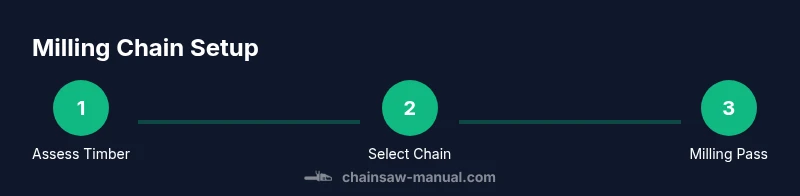
- 1
Assess timber and plan the cuts
Inspect the log diameter, check for knots and resin pockets, and sketch a simple plan of slab widths. Decide the first cut direction to minimize tear-out and choose a safe starting point. This planning reduces surprises mid-cut and helps you align milling chain choice with the log’s conditions.
Tip: Mark a clear cut line and test on a small section before longer passes. - 2
Check chain pitch and gauge
Measure the bar’s pitch and gauge and verify the milling chain matches. If you’re uncertain, compare the chain’s drive links to the bar groove and consult your bar manufacturer’s guidelines. Incompatibility can cause derailment and uneven slabs.
Tip: Use a pitch gauge if in doubt and verify with the bar if possible. - 3
Install milling chain and tension
Slip the chain onto the bar, align drive links with the groove, and set tension so the chain just snaps back to the bar after a gentle pull. Recheck after the first few minutes of cutting as heat can loosen tension.
Tip: Always keep a small gap between the chain tie strap and the bar tip to prevent binding. - 4
Secure the log and align the setup
Secure the log with clamps or a milling jig and align the bar so the chain will cut straight along your planned path. Check that the wood grain direction won’t pin the chain. A stable setup reduces drift and improves slab quality.
Tip: Work with the log at a comfortable height; improper posture increases kickback risk. - 5
Make a light test cut and adjust
Make a shallow pass to verify feed rate, bite, and slab quality. If the cut pulls or the chain dulls quickly, reduce feed rate or switch to a milder tooth geometry. Adjust depth gauges to prevent over-cutting.
Tip: If you see excessive smoke, back off and re-check chain sharpness and lubrication. - 6
Proceed with milling and finish
Proceed with the main milling passes, taking care to maintain consistent speed and tension. Periodically check bar oil and moisture buildup, and stop if heat becomes excessive. Finish with a final pass to smooth any rough edges and inspect slabs for warping.
Tip: Take breaks between passes to prevent heat buildup and chain glazing.
FAQ
What makes milling chains different from regular chains?
Milling chains are selected for their pitch, gauge, and tooth geometry to handle long, continuous cuts with reduced clogging and heat. They are often designed to work with longer bars and specific milling conditions, unlike standard wood-cutting chains used for felling or limbing.
Milling chains are chosen for long, controlled cuts and proper lubrication in milling setups.
Can I use a standard full-chisel chain for milling?
A standard full-chisel chain can work for milling, but milling-specific chains optimize heat dissipation and cut control. If your log is large or you’re making many passes, switching to a milling-optimized chain improves performance.
A milling-optimized chain often performs better for long slab cuts.
Which chain pitch is most common for milling?
3/8-inch pitch is a common choice for milling on many bars, balancing chain speed and stiffness. Always verify compatibility with your bar and drive sprocket before milling.
Most milling setups use 3/8-inch pitch when compatible with the bar.
Is skip-tooth better for milling than standard chains?
Skip-tooth chains reduce contact in the groove and can help with heat management on long passes, but they require planning because they leave fewer teeth in contact at once. Choose based on log size and desired surface finish.
Skip-tooth can help with heat, but plan for fewer teeth in contact.
How do I ensure the chain fits my bar?
Verify pitch, gauge, and drive link count. Check that the chain seats fully in the bar groove and tracks correctly around the drive sprocket. If in doubt, consult your bar or chainsaw manufacturer’s guidelines.
Check pitch and gauge; ensure it tracks smoothly on the bar.
What safety practices should I follow when milling?
Always wear full PPE, secure the log, and maintain stable footing. Start with a shallow cut to test feed rate and lubrication, and never force the saw. Stop immediately if there is unusual vibration or heat.
Wear PPE, secure the log, test cuts, and stop if anything feels off.
Watch Video
The Essentials
- Match pitch and gauge to your bar before milling.
- Choose tooth configuration appropriate for timber and log size.
- Maintain sharp, properly tensioned chain to reduce heat and wear.
- Prioritize PPE and a secure milling setup for safety.
- Test with a small cut before committing to full milling.