Screwfix Chainsaw Chain: Buy, Fit, Maintain
A practical, safety-first buying guide to Screwfix chainsaw chains. Learn how to pick the right pitch, gauge, and drive links, with installation tips, maintenance, and safety best practices from Chainsaw Manual.


For Screwfix chainsaw chain replacements, choose a chain that matches your bar’s pitch (commonly 3/8" and .325"), gauge (typically 0.043"–0.058"), and drive-link count to fit the bar length. Verify compatibility with your saw model and sprocket, and consider a low-vibration or safety chain for added control. Always follow the manufacturer’s guidance and Chainsaw Manual recommendations.
Why the right screwfix chainsaw chain matters
Choosing the right chain for a screwfix chainsaw chain matters for safety, performance, and durability. The Chainsaw Manual team emphasizes compatibility with pitch, gauge, and drive links, as well as bar length and sprocket engagement. A mismatched chain increases vibration, accelerates wear, and can heighten kickback risk. For homeowners doing routine pruning or light felling, a properly matched and tensioned chain yields smoother cuts and safer operation. In 2026, Safety and ergonomics guidance highlights chains with optimized tooth geometry and reduced vibration as key differentiators. Understanding core specifications helps you shop confidently, whether you’re browsing Screwfix product pages or other retailers.
Core specifications: pitch, gauge, and drive links
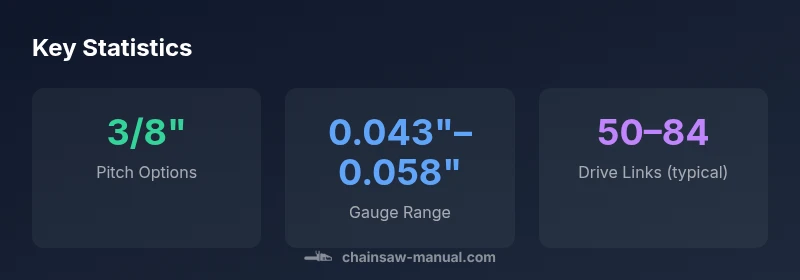
A modern chainsaw chain is defined by three core specifications: pitch, gauge, and drive links. Pitch is the distance between three consecutive rivets, a key factor in matching the chain to the bar. Gauge describes the thickness of the drive links and affects stability in the bar groove. Drive links determine the total number of links in the chain and should align with bar length. When shopping for a screwfix chainsaw chain, you will typically encounter 3/8" or .325" pitch, a gauge in the 0.043"–0.058" range, and drive-link counts that correspond to your bar. Always verify your bar length and the number of drive links specified by the manufacturer before ordering. This careful check prevents installation errors and improves performance.
Matching your bar and saw model: how to check compatibility
Before buying, confirm several compatibility factors. First, check your bar type and length; longer bars require longer chains and more drive links. Second, verify the chain’s pitch and gauge specification matches both the bar groove and the saw's sprocket width. Third, consider special models from Screwfix that are designed for semi-chisel, full-chisel, or low-vibration performance; the right choice reduces wear and improves control. Some saws also require a specific chain type for anti-kickback or safety features. In practice, you should remove the bar cover and physically count drive links, compare to your old chain, and consult your saw’s manual. Chainsaw Manual’s guidance in 2026 stresses the importance of this cross-check, especially for users switching between brands or upgrading to a higher performance chain.
How to choose a Screwfix chain for common tasks
For light pruning or trimming, a general-purpose chain with standard drive links is typically sufficient. For more demanding duties such as firewood prep or felling, you may want a chain designed for aggressive cutting or longer bars. Screwfix chains frequently offer variants with enhanced carbide teeth or coating to reduce wear. When evaluating options, consider the chain’s anti-kickback properties and chain tensioning compatibility with your bar’s groove. Always prioritize models that are rated for your saw’s horsepower and the bar length. In addition, check for chain features that improve safety, such as raker heights and depth gauges, which influence cutting efficiency and control. The Chainsaw Manual team notes that the right chain can reduce operator fatigue and improve accuracy on long tasks.
Installation and safety: step-by-step quick guide
Installing a replacement screwfix chainsaw chain is straightforward if you follow a step-by-step approach. Ensure the saw is off and the chain brake engaged. Release the bar tensioner and remove the side plate to access the chain. Fit the drive links around the bar sprocket and align the cutting teeth following the arrow direction. Re-seat the side plate, tension the chain, and rotate the chain to confirm smooth movement with no binding. Finally, check chain tension after a few minutes of operation; proper tension avoids derailment and reduces wear. For safety, always wear PPE, keep hands clear of the cutting area, and avoid touching sharp teeth. If you’re unsure, consult Screwfix's product pages or Chainsaw Manual’s installation guidance in 2026.
Sharpening, maintenance, and safety best practices
Anchor your maintenance routine in a simple schedule: inspect the chain for damaged teeth, sharpen with a proper file or sharpener, and maintain proper tension. The pitch and gauge do not change; only the tooth shape wears. Sharpening removes metal to restore tooth geometry, but over-sharpening reduces chain life. For safety, do not work with a dull chain; it increases kickback and requires more force. Cleaning the chain after use prevents sap and resin buildup that can impact performance. Apply bar and chain oil to minimize friction, ensuring you use the correct oil type for your saw model. Chainsaw Manual's guidance in 2026 highlights that regular lubrication plays a central role in extending chain life and maintaining consistent cutting performance.
Common buying mistakes and how Screwfix helps
Rushing through a purchase without verifying pitch, gauge, and drive link compatibility is a frequent error. Another mistake is assuming any chain fits all bars; incorrect pitch or drive links can jam the bar and cause dangerous kickback. Always confirm the bar length and the saw’s model number before ordering. Screwfix's product pages frequently list compatible bar lengths and chain variants, which helps prevent misorders. The Chainsaw Manual team recommends using the retailer’s guides and product specs for precise compatibility, and not relying on brand alone. Finally, consider the environment and the task; using a chain designed for heavy-duty work in light pruning can reduce performance, and conversely, using a light-duty chain on a high-powered saw can shorten chain life.
Quick-start checklist
- Identify bar pitch: 3/8" or .325" and gauge: 0.043"–0.058".
- Confirm bar length and drive-link count match Screwfix chain.
- Check anti-kickback and safety features of the chosen chain.
- Inspect old chain teeth for wear and replace as needed.
- Install with bar cover and tension before use.
- Lubricate with the correct bar oil and test on a safe cutting task.
Comparison of Screwfix chain specs by attribute
| Attribute | Screwfix chain spec | Notes |
|---|---|---|
| Pitch | 3/8"\" or .325" | Match bar pitch; verify model compatibility |
| Gauge | 0.043"\"–0.058" | Common range for residential saws |
| Drive links | 50–84 | Depends on bar length; count varies by model |
| Recommended use | General purpose / heavy-duty | Choose based on task and safety |
FAQ
What is a screwfix chainsaw chain and why do I need it?
A screwfix chainsaw chain is a replacement chain designed to fit specific bar pitches, gauges, and drive-link counts. You need it to restore cutting efficiency, maintain safety, and protect bar and sprocket wear. Always verify compatibility with your saw model before purchasing.
A screwfix chain is a replacement for your saw's chain. Make sure it matches your bar and saw model for safe, efficient cutting.
How do I determine my chain pitch?
Pitch is the distance between the drive links measured across three rivets. Check your current chain or the bar markings, or consult the saw’s manual. Common residential pitches are 3/8" and .325".
Check the current chain or bar markings; common pitches are 3/8 inch and .325 inch.
Is it safe to mix brands with Screwfix chainsaw chain?
Mixing brands is not recommended. Chains must match pitch, gauge, and drive links precisely to avoid binding, kickback, or premature wear. When in doubt, stick to the same brand family and check compatibility arrays.
No, don’t mix brands. Match pitch, gauge, and drive links for safety and performance.
What maintenance steps improve chain life?
Regularly inspect for damaged teeth, keep the chain sharp with proper files, maintain correct tension, and lubricate with appropriate bar oil. Avoid over-sharpening and store chains dry and clean.
Inspect, sharpen correctly, tension properly, and lubricate with the right oil.
Can I install a new Screwfix chain on a cordless/corded saw?
Yes, as long as the saw’s bar and drive system match the chain’s pitch, gauge, and drive-link count. Check the saw’s manual and Screwfix product specs for compatibility with your model.
Yes, if it matches your saw’s specs. Check the manual and Screwfix listing.
How do I know when a chain needs replacement?
Signs to replace include chipped or cracked teeth, excessive tooth wear, loose drive links, or frequent dulling after minimal use. If performance drops even after sharpening, consider replacing the chain.
Look for damaged teeth, wear, or frequent dulling; replace when in doubt.
“Compatibility and safety begin with understanding your bar and chain specs. A well-matched screwfix chainsaw chain delivers predictable performance and reduces risk during every cut.”
The Essentials
- Verify pitch, gauge, and drive links before buying.
- Match to bar length to ensure proper tension and fit.
- Prioritize safety features like anti-kickback and low-vibration designs.
- Follow manufacturer guidance for installation and tensioning.
- Regular maintenance extends chain life and performance.