Pros and Cons of Battery Chainsaws: A Practical Guide
Explore the advantages and trade-offs of battery chainsaws, including power, runtime, maintenance, and safety considerations, with practical guidance for homeowners and professionals.


This quick comparison highlights the pros and cons of battery chainsaws, focusing on runtime, power, weight, and maintenance. For homeowners, DIYers, and professionals, understanding how battery voltage, charge cycles, and blade performance translate into real-world results helps decide if a battery-powered saw fits pruning, limbing, and light cutting tasks. According to Chainsaw Manual, battery chainsaws have become viable alternatives for many non-industrial jobs, delivering clean operation with minimal setup and maintenance.
Why Battery Chainsaws Matter in Home and Professional Settings
Battery chainsaws have matured from niche tools to daily companions for many homeowners and professionals. The debate over the pros and cons of battery chainsaw matters because uptime, ergonomics, and environmental impact increasingly drive buying decisions. According to Chainsaw Manual, advances in lithium-ion chemistry and brushless motors have steadily increased available torque and run times, narrowing the gap with gasoline models. The core idea is simple: battery-powered saws are quiet, clean, and quick to start, but their performance can vary with battery capacity, temperature, and job size. For pruning, limbing, and light cutting, a fully charged battery can deliver reliable power with minimal maintenance; for heavy felling or long-duration work, you might reach the limits of runtime and weight.
In this section we’ll set the stage for a balanced comparison that keeps safety and practicality front and center. The Chainsaw Manual team emphasizes that the best choice depends on how you intend to use the saw, the typical job size, and the environment where you operate.
wordCountModeOnlyForTests":false},
bodyBlocks2
Core Pros: What Battery Chainsaws Do Well
Battery chainsaws offer several clear advantages that influence the pros and cons of battery chainsaw ownership. They tend to be lighter than most gas models, reducing user fatigue on longer jobs. With no fuel mixing or exhaust, startup is quick, predictable, and safer in enclosed spaces. Noise levels are substantially lower, which helps with early-morning pruning and neighborhood work. The absence of gas engine maintenance—carburetor cleaning, spark plug changes, and fuel stabilizers—translates into lower ongoing costs and simpler upkeep. For urban properties and homeowners who value simplicity, the combination of portability and low maintenance is compelling. The Chainsaw Manual analyses highlight how optimized battery management and high-efficiency motors have made these tools more capable for routine pruning, limbing, and light-cutting tasks. For professionals who value predictability and lower emissions on job sites, battery chainsaws provide a practical balance of power and efficiency.
wordCount":202}
Core Cons: Where Battery Chainsaws Fall Short
The downsides of battery chainsaws are often framed as part of the broader assessment of the pros and cons of battery chainsaw deployment. Runtime is the principal limitation for bigger jobs, as a single charge may not cover long sessions without swapping batteries. Despite rapid improvements, power delivery can taper under heavy loads or during hot or cold weather, which affects performance. Upfront costs for a high-quality battery, charger, and spare packs can exceed those of a corded electric or traditional gas saw, especially for larger properties or professional crews. Battery degradation over several years means eventual replacement, adding to lifetime cost if you don’t manage usage carefully. The weight of the battery adds to the tool’s overall heft, particularly on longer pruning sessions. Finally, cold weather can noticeably reduce battery efficiency, reducing available run time in winter work. Chainsaw Manual’s guidance suggests planning for battery reserve and considering climate when evaluating whether a battery saw meets your needs.
wordCount":211}
How They Compare with Gas and Corded Electric Saws
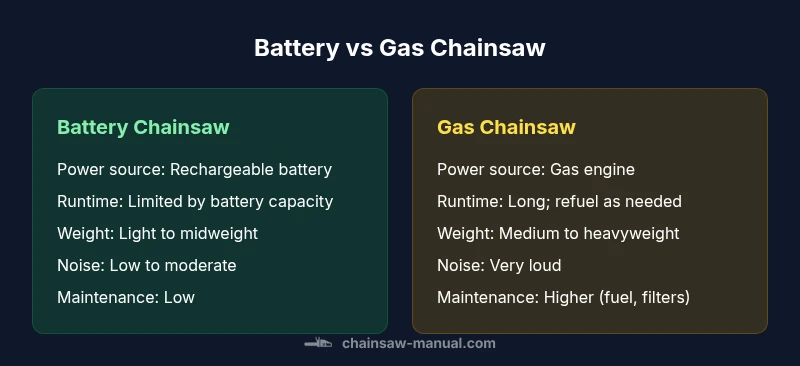
Understanding the pros and cons of battery chainsaw requires context. Gas-powered chainsaws deliver consistent raw power and long run times, especially for heavy-duty felling and firewood splitting, but they emit fumes, are louder, and require ongoing fuel and maintenance. Corded electric saws offer ready power and almost unlimited runtime but are restricted by cord length, limiting mobility in the field. Battery chainsaws sit between these extremes: they’re mobile and quiet, with near-silent startups, but their runtime depends on battery capacity and the job’s demands. For pruning and light cutting in residential settings, battery saws can outperform corded models due to portability, while for heavy logging, gas remains the go-to. The decision should hinge on job type, access, and how much downtime you can tolerate for charging or swapping batteries.
wordCount":190}
Battery Chemistry and Real-World Performance
Battery chemistry underpins the real-world capabilities of modern battery chainsaws. Advances in lithium-ion and solid-state concepts have increased energy density, cycle life, and safety features, enabling higher torque and consistent performance across a workday. Real-world performance depends on voltage class, battery chemistry, and the controller electronics that manage power delivery to the chain. Chainsaw Manual notes that higher voltage packs often yield smoother cuts and better stall resistance, particularly for medium-sized limbs and moderate cutting. They also caution that performance can dip in extreme temperatures or after many cycles if the battery has degraded. The key takeaway is that performance is not just peak power—it’s sustained power over the job’s duration, managed chemistries and thermal design, and intelligent battery management.
wordCount":176}
Runtime, Range, and Battery Management
Runtime depends heavily on battery capacity and the wood being cut. Two common strategies help extend work time: carry spare batteries and use efficient cutting techniques. The fastest way to minimize downtime is to have a second battery charged and ready, so you never wait for a charge before continuing. Smart charging schemes and battery management software in newer models help protect cells, extend life, and optimize temperature during operation. Operators should monitor charge levels and adapt cutting technique to the battery’s state of charge, avoiding aggressive full-throttle cuts when the battery is near empty. Chainsaw Manual emphasizes that planning job length and potential battery swaps can significantly reduce downtime on professional crews and serious DIY projects alike.
wordCount":180}
Maintenance and Longevity Tips for Battery Chainsaws
Maintenance for battery chainsaws focuses on keeping the chain sharp, the bar clean, and the battery connection free of debris. Regular chain tension checks, lubrication, and prompt replacement of worn sprockets help sustain performance. Store batteries in a cool, dry place away from direct heat to preserve capacity. Periodic inspection of the charging equipment and cables prevents heat buildup and ensures safe charging. Unlike gas saws, there’s no carburetor to clean or fuel to drain, which simplifies maintenance; however, battery health requires attention. Practically, rotating between batteries and performing gentle conditioning charges can prolong cycle life. The Chainsaw Manual team stresses that proper storage and care maximize uptime and minimize unexpected downtime.
wordCount":170}
Safety Considerations and PPE for Battery Chainsaws
Safety remains paramount when using any chainsaw, including battery-powered models. Wear cut-resistant chaps, eye protection, hearing protection, gloves, and sturdy boots. Check the chain brake, ensure the chain is sharp and properly tensioned, and inspect the battery contacts for corrosion. Because battery saws start quietly, double-check that you are in full control and have secure footing before starting. Maintain a firm grip and adopt a stance suitable for the cut, with a be mindful of kickback zones. The Chainsaw Manual guidance emphasizes routine inspection of PPE and tool condition as a foundation for safe operation, reminding users that safety gear is as important as the saw’s power supply.
wordCount":156}
Scenario-Based Buyer's Guide: When to Pick a Battery Chainsaw
Battery chainsaws shine in scenarios where mobility, noise, and quick startup matter most. Homeowners performing pruning, small-limb removal, or occasional wood processing benefit from the ease of use and minimal environmental impact. Urban or suburban properties with proximity to neighbors and shared spaces benefit from the reduced noise and fumes. For professional crews performing occasional maintenance or light- to mid-duty work, battery saws can still be a smart investment when paired with spare packs and rapid charging. However, for large-scale felling, thick hardwood, or long-term continuous running, a gas-powered option often delivers better efficiency and longer work hours per day. The Chain Saw Manual perspective is to align tool choice with the job profile, not just the advertised horsepower.
wordCount":205}
How to Choose the Right Battery Saw: Specs That Matter
When evaluating battery chainsaws, prioritize the core specs that influence real-world performance. Look at voltage class and current draw, which correlate with cutting power and stall resistance. Battery capacity (measured in amp-hours) influences runtime, so larger packs give longer cutting sessions before swapping. The chain speed and bar length determine the cut rate and reach, impacting suitability for different tasks. Weight matters for comfort on long jobs, so compare the tool with and without the battery installed. Consider the availability of spare batteries and charging options, as well as the warranty terms. In practice, aim for a balanced setup that delivers adequate runtime, manageable weight, and reliable safety features for the work you do. Chainsaw Manual recommends aligning your choice with your typical workflow and ensuring you have ready access to charging or spare batteries.
wordCount":184}
Storage, Care, and Lifespan Optimization
Proper storage and care can significantly extend the lifespan of a battery chainsaw. Store batteries at an appropriate partial charge (about 30-70%) in a cool, dry place, away from direct sunlight and temperature extremes. For long-term storage, avoid leaving batteries fully charged or fully discharged for extended periods. Regularly inspect contact points and clean dust from the bar area to prevent debris buildup. Charge batteries with compatible chargers and avoid fast-charging if you don’t need rapid turnover. Periodic checks of battery health and performance help predict when a pack is nearing end of life, enabling proactive replacement rather than unexpected downtime. Chainsaw Manual highlights that proactive maintenance and thoughtful storage practices translate into consistent performance and longer tool life.
wordCount":173}
Common Misconceptions and Real-World Use Cases Preview
A frequent misconception is that battery chainsaws cannot handle anything beyond light pruning. In reality, modern battery saws can perform a wide range of tasks when matched with the right bar length and battery capacity. Real-world use cases include backyard tree maintenance, limb removal, small storm cleanup, and occasional firewood preparation. The Chainsaw Manual team notes that user technique and battery strategy often determine success more than the saw alone. By investing in a higher-capacity pack and using efficient cutting methods, many users can complete most common yard tasks with a battery saw, reserving gas models for the most demanding workloads.
Comparison
| Feature | Battery chainsaw | Gas-powered chainsaw |
|---|---|---|
| Power source | Rechargeable battery | Gasoline engine |
| Runtime (typical) | Dependent on battery capacity; multiple charges possible | Longer run times; refuel as needed |
| Weight | Light to midweight | Midweight to heavyweight depending on model |
| Maintenance | Low maintenance; no fuel system | Regular fueling, carburetor, and spark plug maintenance |
| Noise | Low to moderate | Very loud |
| Emissions | Zero emissions during operation | Emissions from exhaust |
| Cost of operation | Higher upfront for battery and charger, low ongoing cost | Lower upfront? often high maintenance and fuel costs over time |
| Best for | Residential pruning and light cutting | Heavy-duty cutting and professional use |
Strengths
- Low noise and vibration for user comfort
- No fuel mixing or exhaust; easy start
- Low ongoing maintenance and running costs
- Immediate readiness with charged batteries (with spare packs)
Drawbacks
- Limited runtime per charge for larger jobs
- Higher upfront cost for batteries and charger
- Performance can dip in extreme temperatures or with degraded batteries
Battery chainsaws excel for light- to mid-duty work and urban pruning; gas saws remain superior for heavy-duty tasks.
For typical home use, battery saws offer mobility, low noise, and simple maintenance. For demanding professional workloads, gas engines may still win on endurance and raw power. The best choice depends on your job profile and available charging options.
FAQ
Are battery chainsaws as powerful as gas chainsaws?
In many cases, battery chainsaws deliver adequate power for pruning, limbing, and light cutting. For heavy-duty felling or dense hardwood, gas models generally offer more sustained power and longer run time. The right choice depends on job size and battery capacity.
Battery saws are powerful enough for pruning and light cutting; for heavy-duty work, gas is often better.
How long does a full charge last for a typical battery chainsaw?
Charge duration varies by battery capacity and model, but most mainstream packs provide a working window of a few tens of minutes to a couple of hours for lighter tasks. Efficient cutting and spare batteries can extend overall productivity.
It depends on the battery; expect shorter runs for big jobs and longer runtimes with larger packs.
Can battery chainsaws cut hardwood effectively?
Yes, but effectiveness depends on bar length, chain speed, and battery capacity. For very large hardwoods or thick logs, a gas saw may perform more consistently without frequent battery swaps.
Yes, but for large hardwoods you might prefer gas or a higher-capacity setup.
What maintenance is required for battery chainsaws?
Maintenance is generally simpler than for gas saws: keep the chain sharp, lubricate properly, and store batteries correctly. Inspect connectors and chargers regularly for wear.
Minimal maintenance beyond keeping the chain sharp and battery care.
Do battery chainsaws perform well in cold weather?
Cold temperatures can reduce battery efficiency and runtime. Warmer storage and pre-warming the battery can help, but performance may still decline compared with temperate conditions.
Cold weather can reduce runtime; keep batteries warm when possible.
Is it worth buying a second battery for a battery chainsaw?
If you have frequent pruning or longer sessions, a second battery is worth the investment to minimize downtime. Rapid-charge options can further reduce idle time.
Having a spare battery often makes sense for bigger jobs.
The Essentials
- Assess job size to gauge battery capacity needs
- Keep spare batteries to minimize downtime
- Prioritize voltage and bar length for the intended tasks
- Plan for cold-weather performance and storage
- Weigh upfront costs against long-term savings