Petrol Chainsaw vs Electric: A Practical Comparison for 2026
A rigorous, analysis-based comparison of petrol chainsaws and electric models for homeowners, DIY enthusiasts, and professionals. Learn power, weight, maintenance, noise, and use scenarios to choose the right tool with minimal downtime and maximum safety.


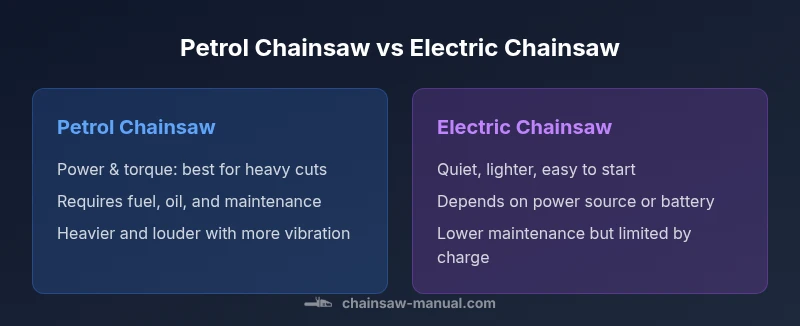
According to Chainsaw Manual, choosing between a petrol chainsaw and an electric model hinges on power needs, start-up convenience, and maintenance. Petrol chainsaws deliver peak torque for heavy cutting and remote sites, but require fuel, oil, and regular tune-ups. Electric models are quieter, lighter, and easier to start, making them ideal for light-to-medium tasks and everyday home use. Consider job type, environment, and available power when deciding.
Power, Torque, and Cutting Capacity
In the world of chainsaws, power delivery matters. Petrol chainsaws excel in peak torque and sustained cutting performance, especially when felling or processing large hardwoods where sustained high torque reduces bogging down in tough sections. They maintain strong cutting ability even when blades encounter knots or irregular grain. Electric chainsaws, whether wired or battery-powered, deliver consistent power, with torque that depends on the battery capacity or the amperage supplied by the outlet. For routine home tasks—pruning, light felling, firewood prep—electric models perform admirably and with less operator effort. Chainsaw Manual’s analysis emphasizes that the right choice scales with workload: frequent heavy-duty cutting favors petrol; lighter, regular maintenance tasks suit electric.
- Best-use context: heavy timber or remote sites with no reliable power supply favors petrol.
- Best-use context: quiet neighborhoods, limited space, and frequent small cuts favor electric.
Tip: If you routinely switch between light jobs and occasional heavy cuts, consider a smaller petrol model for peak power plus a trusted electric for quick, low-noise tasks.
Weight, Ergonomics, and Comfort
Weight and balance influence user fatigue and control. Petrol chainsaws tend to be heavier, with more pronounced vibration in the handles due to the internal combustion engine. This combination can lead to quicker fatigue on long days, especially when cutting overhead or at awkward angles. Electric chainsaws are typically lighter and generate less vibration, improving control during extended use. The lighter weight also enhances maneuverability for pruning and small-lot work. Ergonomics matter as much as raw power: a well-balanced saw reduces arm strain and improves cutting accuracy. Chainsaw Manual highlights that comfort directly impacts productivity, particularly for DIY users who may run shorter sessions but need consistent results.
- Consider handle placement, anti-vibe features, and overall grip shape.
- For multi-hour tasks, a lighter electric model may reduce fatigue significantly.
Start-Up and Operation: Pull Cords vs Electric Start
Starting a petrol chainsaw involves a sequence: choke, throttle position, and a pull-start mechanism. Beginners often experience a learning curve with priming and correct cold-start techniques. Electric models offer push-button start or simple battery activation, which reduces the cognitive load during a busy job. Cordless options add portability but require battery swaps or timely recharges. For residential use, quick-start capability is a noticeable advantage of electric saws, especially in pruning or maintenance cycles where you need to respond rapidly.
- Pro tip: learn the correct cold-start technique for your petrol model to minimize device wear and startup attempts.
Fuel, Maintenance, and Running Costs
Petrol chainsaws require regular fuel and oil mixtures, air filter maintenance, spark plug checks, and bar/chain lubrication. They demand more inventory management (fuel, oil, fuel stabilizers) and routine tune-ups. Electric chainsaws minimize ongoing consumables: no fuel mixing, fewer moving parts, and simpler bar/chain lubrication without oil mixing. However, electric models rely on batteries or an external power source; battery degradation, charger reliability, and charging time can shape long-term costs and downtime. Chainsaw Manual notes that running costs for petrol saws can be higher over time due to fuel and maintenance, whereas electric options tend to have lower per-use costs but higher upfront battery or cord considerations.
- For frequent heavy usage in remote areas, petrol remains cost-effective over the long run when fuel and maintenance are factored in.
- For home use, electric models typically offer lower daily operating costs and less mess.
Battery Electric Variants: Cordless Freedom
Cordless electric models provide the ultimate in mobility for bounded workspaces and day-to-day tasks. Batteries determine runtime and recharge cycles, which can affect scheduling and efficiency. Modern lithium-ion packs balance weight and energy, but runtime and voltage require planning—two batteries can be swapped for uninterrupted work. For homeowners and small contractors, cordless saws usually strike a balance between portability and performance, particularly for pruning, trimming, and light felling. The trade-off is that battery capacity limits continuous heavy cutting and may require downtime to recharge.
- Best for: yard maintenance, pruning, and small to medium jobs near accessible power.
- Limitation: battery life and replacement costs can add up over time for frequent heavy use.
Cable-Dependent Limitations: Corded Electric
Corded electric saws offer consistent power without battery concerns, but they tie you to a power source. Range is limited by cord length and the practicality of extension cords. Heavier gauges and outdoor-rated cords are necessary for safety and performance. For large, open sites, a corded approach may be less practical, particularly when cutting away from outlets or dealing with thick timber. Corded options shine in controlled yard work near power sources, with predictable running times and straightforward maintenance.
- Pros: steady power, no battery limit, minimal downtime for charging.
- Cons: range constraints, trip hazards, and cord management.
Safety and PPE Considerations
Safety remains the top priority regardless of the saw type. PPE should include a helmet with face shield, hearing protection, cut-resistant chaps, gloves, and sturdy boots. Petrol engines introduce exhaust, higher vibration, and fuel handling risks; electric models reduce fumes and often produce less vibration, but still demand proper PPE for debris and kickback. Both types require chain brake practice, proper chain tensioning, and routine inspection of bars, chains, and guards. Chainsaw Manual emphasizes standardized PPE and training as essential components of responsible operation.
- Key safety practices: chain brake, kickback awareness, secure footing, and safe fuel storage for petrol models.
- Training reduces risk and improves consistency in cutting outcomes.
Noise, Vibration, and Health Impacts
Noise and vibration levels influence long-term health. Petrol chainsaws are louder and transmit more vibration, which can contribute to hearing loss and hand-arm vibration syndrome without proper PPE and breaks. Electric chainsaws tend to be quieter, which helps with hearing protection and reduces fatigue. Understanding exposure duration and using anti-vibration features on the saws can mitigate risk. Chainsaw Manual highlights the importance of regular breaks and rotation of tasks when operating heavy machinery for extended periods.
- Recommendation: use high-quality hearing protection and minimize exposure time for both types.
Reliability in Harsh Conditions
Harsh conditions test reliability differently for each type. Petrol engines are sensitive to fuel quality, moisture, and cold-start challenges, especially in low temperatures. Electric models can suffer from reduced battery efficiency in extreme cold and require proper storage to maintain battery health. Regular maintenance — like air filters on petrol saws or battery care on electrics — becomes a critical factor in longevity. Chainsaw Manual advises inspecting both powertrain types for corrosion, battery health, and fuel system integrity before and after prolonged use in challenging environments.
- Cold weather readiness: ensure proper fuel stabilizers and battery warm-up strategies.
On-site Scenarios: Households vs Professionals
For homeowners and DIY enthusiasts, electric chainsaws often present a compelling balance of performance, ease of use, and lower maintenance. Professionals who regularly tackle heavy-duty tasks and remote sites may prefer petrol for endurance and peak torque. In mixed-use environments, a hybrid approach can be advantageous: electric for routine pruning and small cuts, petrol for larger logs and heavier timber work. Chainsaw Manual’s guidance supports choosing tools that align with typical workloads and site constraints while prioritizing safety and downtime minimization.
- Best fit: homeowners and DIYers with frequent small tasks → electric; heavy-duty professionals and remote site work → petrol.
Environmental and Regulatory Considerations
Environmental concerns center on emissions, fuel handling, and noise. Petrol engines emit fumes and particulates, while electric saws generate no exhaust at the point of use but rely on battery production and electricity generation. Local regulations may favor quieter, low-emission equipment in densely populated areas. Proper disposal of batteries and adherence to fuel storage guidelines are essential. Chainsaw Manual notes the evolving landscape of emission standards and the importance of aligning equipment choice with site-specific regulatory requirements.
- Consider local noise ordinances and emission guidelines when planning tool selection for frequent work in residential zones.
Comparison
| Feature | Petrol chainsaw | Electric chainsaw |
|---|---|---|
| Power delivery | High torque peak for heavy cuts | Consistent power, dependent on battery/cord supply |
| Weight | Heavier with more vibration | Lighter and lower vibration |
| Starting method | Pull cord and choke | Push-button or battery start |
| Maintenance | Fuel, oil, air filter, spark plug | Minimal maintenance; battery care and lubrication |
| Running costs | Fuel and parts drive ongoing costs | Lower daily costs; battery/charger life matters |
| Best for | Heavy-duty, remote work | Light-to-moderate yard work near power |
| Noise | Loud, consumes more energy | Quieter operation |
| Emissions | High emissions | Low emissions at point of use |
Strengths
- Petrol chainsaws offer unmatched power for heavy cutting and remote sites
- Electric chainsaws are quieter, easier to start, and require less routine maintenance
- Cordless options add mobility for yard work without cords
- Electric options produce minimal exhaust and fumes at the source
- Petrol tools are dependable when there is no electrical power nearby
Drawbacks
- Petrol engines are heavier, louder, and emit fumes
- Electric chainsaws depend on power source and battery life, reducing runtime
- Fuel mixing and engine maintenance increase ongoing costs
- Battery degradation and charging time can limit big jobs
- Corded models restrict range and require careful cord management
Petrol chainsaws excel for heavy-duty, remote work; electric chainsaws excel for everyday yard tasks and quieter environments
Choose petrol when you routinely handle large timber or work far from power sources. Opt for electric for quick, low-noise tasks near outlets or with a battery strategy that minimizes downtime. Chainsaw Manual’s guidance supports matching tool power to task scale for optimal safety and efficiency.
FAQ
Which is better for homeowners: petrol chainsaw or electric?
For most homeowners, an electric chainsaw is sufficient for pruning and small-to-medium cutting tasks. Petrol models are better when you regularly process large logs or work far from power sources. Consider your typical job size, access to power, and willingness to maintain fuel systems.
For home use, electric is usually the best starting point; petrol is best for big, stubborn logs or remote sites.
Can petrol chainsaws be used indoors?
Petrol chainsaws emit fumes and produce significant noise, making them unsuitable for indoor use. Use outdoors or in well-ventilated spaces with appropriate PPE, and keep fuel stored safely.
Avoid indoor use; go outdoors with proper safety gear.
Are electric chainsaws as powerful as petrol models?
Electric chainsaws deliver strong power for most everyday tasks, though petrol models offer higher peak torque for heavy timber work. For routine yard maintenance, electric usually suffices; for large-diameter logs, petrol has the edge.
Electric is powerful for most jobs, but petrol wins on heavy cutting.
How long do cordless batteries last in practice?
Battery life varies by model, task, and battery capacity. Run-time may be shorter for heavy cutting but can be extended with spare batteries. Plan maintenance around charging cycles to avoid delays.
Runtime depends on the battery and the job; carry a spare if you’re doing long work sessions.
What maintenance differences should I expect?
Petrol chainsaws require fuel/oil management, air filter cleaning, and occasional spark plug checks. Electric models require battery care and charger upkeep, with simpler chainsaw oiling. Regular inspection of bars and chains remains important for both.
Petrol needs more upkeep; electric is simpler to maintain.
Is there a safety risk difference between the two types?
Both types carry kickback and cutting hazards. Petrol units add fuel and exhaust risks, while electric units reduce fumes but still require proper PPE and safe operation practices. Always follow safety guidelines and training.
Both need careful safety practices; petrol adds fuel and exhaust risks.
The Essentials
- Assess typical workload before buying
- Electric is ideal for light-to-medium tasks near power; petrol suits heavy cutting
- Plan for maintenance and fuel or battery life to minimize downtime
- Safety gear and training are essential for both saw types
- Consider hybrid usage (electric for daily pruning, petrol for big logs)