Old Chainsaw for Sale: Safe Buying Guide for 2026
A practical guide to evaluating an old chainsaw for sale, focusing on safety, maintenance history, and parts availability. Learn testing tips and pricing ranges for 2026.


According to Chainsaw Manual, evaluating an old chainsaw for sale requires focusing on safety, maintenance history, and parts availability. Expect older models to need more upkeep, and look for a clear safety brake, undamaged bar, responsive chain tensioner, and accessible replacement parts. Price typically ranges from modest to mid-range depending on condition and brand.
Understanding the market for old chainsaw for sale
The market for old chainsaws is highly segmented. Homeowners and DIY enthusiasts often chase bargains, while professionals seek reliable, durable older models that still meet safety and performance needs. The term 'old' can span from well-maintained two-stroke workhorses to neglected units that require major attention. Before you buy, establish a baseline for pricing by considering brand reputation, condition, and the availability of replacement parts. Chainsaw Manual's 2026 analysis notes that competition among sellers, limited parts for certain brands, and local warranty expectations can influence price and desirability. Always compare multiple listings and verify the saw's service history, including recent maintenance, bar oil history, and chain condition. A cautious buyer will allocate funds for unexpected repairs and consider whether the saw aligns with your intended usage, be it light-duty property maintenance or occasional professional tasks.
Key safety concerns with used chainsaws
Safety should be non-negotiable when evaluating any 'old chainsaw for sale'. Prioritize intact safety features such as chain brakes, hand guards, ignition safety switches, and an undamaged clutch cover. Inspect for warped bars, cracks in the chassis, loose handles, oil leaks, and fuel-system contamination. A worn chain can derail or snap during operation. Check the chain tensioning mechanism for smooth operation and confirm that the bar oil delivery is functional. A test run with PPE is ideal, but only in a controlled environment; never operate a saw indoors or near bystanders. Damaged spark plugs or carburetor issues can cause kickback or unpredictable starts. If in doubt, consult a professional or decline the listing. The emphasis on safety aligns with Chainsaw Manual Team guidance that prioritizes risk reduction and safe operation.
Pre-purchase evaluation checklist
Before negotiating a price, run through a detailed checklist: confirm model and serial numbers, verify the year if listed, assess engine type (two-stroke vs four-stroke, etc.), and review maintenance records. Check chain pitch, gauge, and whether the chain brake, spring mechanism, and finish on the handle are intact. Inspect the air filter, fuel cap, carburetor cover, and muffler for corrosion. Request photos or videos that show the saw starting and running under light load. Ask whether spare parts or additional bars/chains are included. Document impressions with notes and photos to support a fair offer. If the listing lacks documentation, treat it as a red flag and proceed with caution.
Mechanical health indicators to inspect
Assess mechanical health by observing compression, spark quality, and exhaust deposits. A healthy unit should exhibit steady idle and smooth throttle response with minimal smoke. Look for excessive exhaust residue, blue smoke indicating tuning issues, or oily residue on the filter that suggests fuel management problems. Check the bar mounting bolts and the anti-vibration mounts for looseness. Evaluate worm gear wear in the clutch drum and inspect the chain tensioner for smooth operation. Remember that some issues may require professional servicing; weigh this against the asking price and your ability to perform repairs.
Testing and starting a used saw safely
A controlled start test helps reveal hidden problems. Fit proper PPE, including eye protection, gloves, and steel-toed boots. Ensure the chain brake engages correctly and the chain spins freely when engaged. Start with the choke, then move to run after a few seconds, listening for unusual knocks or backfires. Verify oil flow by idling the saw with the bar supported and watching for oil on the tip. Stop immediately if you detect unusual vibrations, smoke, or a strong fuel smell. If you cannot perform a test safely, decline and seek a demonstrable video from the seller.
Maintenance needs and parts availability
Old models often require ongoing maintenance: bar oil and fuel system care, air filter cleaning, chain sharpening, and occasional carburetor adjustments. The availability of parts is model-dependent; some popular brands have robust aftermarket support, while others have scarce spares. Consider whether you are comfortable sourcing replacement bars, chains, and wear items like sprockets. Factor in potential costs for following the manufacturer’s recommended service intervals: cleaning the cooling fins, checking the muffler, and replacing filters. If parts are limited, you may need to adapt by using compatible components or seeking salvage units.
Sourcing channels and red flags
To find old chainsaws for sale, explore local classifieds, estate auctions, and reputable service centers that offer tested used gear. Always request a recent demonstration or video; if the seller cannot provide evidence of a safe start or operation, walk away. Watch for missing serial numbers, inconsistent photos, or pressure to close the deal quickly. Be wary of unusually low prices that could indicate hidden issues. Compare listings across sellers to determine fair market value and ensure you’re not overpaying for a problem unit.
Scenario-based buying guide
- Homeowner with light property needs: look for a mid-range model with reliable safety features and easy access to spare parts. Prioritize a compact, lighter saw that handles occasional pruning and minor cutting tasks.
- DIY enthusiast with weekend projects: seek a well-maintained unit from a known brand with readily available replacement bars and chains; plan for moderate maintenance.
- Small contractor on a budget: consider a proven, serviceable model with a documented maintenance history and a plan for routine servicing; verify that the saw’s performance meets job requirements. Each scenario benefits from a seller-supplied service history and third-party inspection where possible.
Storage, transport, and long-term care for old saws
Store in a cool, dry place away from moisture to prevent rust. Empty fuel and run stabilizer through the carburetor before storage. Clean the saw and lubricate moving parts, including the chain and bar, to prevent seizing. For transport, use a sturdy case or sheath, and secure the saw to prevent tipping. Schedule annual inspections, especially for older models, and replace worn components as needed. With proper care, an old saw can remain usable for property work or light contracting.
Representative categories of old chainsaws for sale
| Model Type | Typical Age | Common Issues |
|---|---|---|
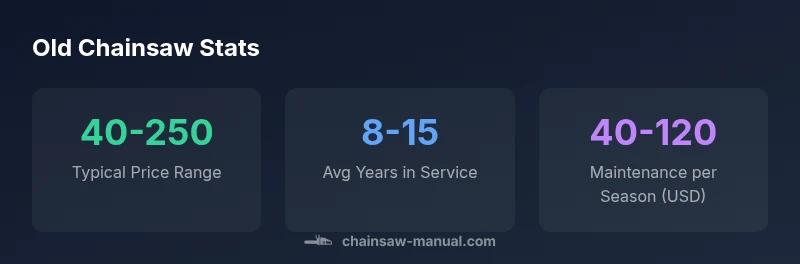
| Used consumer grade | 8-15 years | Bar wear; carburetor grime; chain tensioner wear |
| Vintage professional | 15-25 years | Hard-to-find parts; safety switch wear |
| Remanufactured/modified | Varies | Safety components wear |
FAQ
Is it safe to buy an old chainsaw for sale?
Safety is paramount when evaluating any used chainsaw. Look for an intact chain brake, proper guards, and a solid ignition system. If any critical safety component is damaged or uncertain, pass on the listing.
Safety comes first; check brakes and guards before buying.
What should I inspect first on an old chainsaw?
Begin with safety features (brake, guards), then check the chain, bar, and muffler. Review maintenance records and look for signs of oil flow and clean air filtration.
Start with safety, then mechanics and maintenance history.
Are parts available for popular older models?
Parts availability varies by brand and model. Some older models have robust aftermarket support; others may require salvage parts or substitutions. Always verify availability before purchase.
Parts availability varies—check model before buying.
How do I estimate total ownership cost?
Include purchase price, ongoing maintenance, replacement parts, and fuel costs. Add potential professional servicing costs if you’re not doing repairs yourself.
Add up purchase plus ongoing upkeep.
What warning signs indicate a dangerous old saw?
Cracked housing, bent bars, excessive smoke, unusual vibrations, or hard starting are red flags. If any alarm bells go off, walk away and seek a safer option.
Watch for cracks, vibrations, smoke.
Where’s the best place to buy an old chainsaw?
Look for reputable sellers, service centers, and local classifieds with verifiable demos. Avoid pressure sales and listings lacking serial numbers or service history.
Buy from reputable sellers with a demo when possible.
“When buying an old chainsaw, safety features and the availability of replacement parts are the best predictors of reliable performance.”
The Essentials
- Verify safety features before any purchase.
- Inspect maintenance history and parts availability.
- Test start and brake function in a controlled area.
- Budget for potential repairs and consumables.
- Compare total ownership costs across models.