2nd Hand Chainsaw for Sale: A Practical Buyer’s Guide for 2026
Explore practical guidance for buying a used chainsaw, including safety checks, price ranges, warranty expectations, and buying tips from Chainsaw Manual to help homeowners and pros make safe, informed choices.


Buying a 2nd hand chainsaw for sale can be a smart, budget-friendly option if you verify key details first. Look at the model, age, maintenance history, chain and bar condition, and whether safety features are intact. Always test-start the saw, check for unusual noise or smoke, and insist on a transparent maintenance record or short warranty.
Why a 2nd hand chainsaw for sale can be appealing
For homeowners and professionals, a 2nd hand chainsaw for sale can offer real value when approached with discipline and a clear checklist. The savings are appealing, but the real payoff depends on model provenance, maintenance history, and the current state of wear. A well-documented service log and verifiable parts replacements beat the cheapest bargain every time. According to Chainsaw Manual, 2026 market data shows the best value tends to come from machines with a transparent maintenance record and identifiable components rather than those that simply cost less upfront. In practice, successful buyers separate the wheat from the chaff by inspecting the engine, bar, and chain; testing starting and stopping behavior; and confirming that essential safety features—such as the chain brake and hand guard—are present and functional. The goal is to avoid a surprise repair bill that erodes savings and causes downtime. If you plan to buy, set a strict inspection standard and insist on a brief warranty or return option when possible.
Key factors to evaluate before buying a second-hand chainsaw
When evaluating a used saw, several factors determine value beyond the sticker price. Start with provenance: make, model, age, and whether the unit has a clean service history. Next, examine mechanical wear on the chain, bar, clutch, and drive sprocket. Listen for odd sounds during idle and under light throttle, and perform a realistic test cut to gauge cutting efficiency. Check for leaks in the fuel line or oil system, and verify that safety features still work, including the chain brake, throttle interlock, and bumper spikes where present. Battery health matters for cordless tools, as reduced runtime signals cell degradation. Finally, confirm the seller’s honesty: ask for maintenance receipts, two to three photographs of known problem areas, and, if possible, a short demonstration. A thorough checklist reduces the risk of most common used-saw pitfalls and helps buyers avoid costly repairs after purchase.
Gas vs electric: what to consider in a used saw
Gas-powered machines deliver high cutting power and longer run times, but they require regular maintenance, fuel management, and more frequent servicing of carburetors and exhaust systems. Electric models, including corded and battery-powered options, tend to start more reliably, produce less noise, and have simpler maintenance, yet they vary in mobility and runtime. In the used market, gas units that have been properly stored and serviced can still perform well, but their value hinges on the care of the carburetor and seals. Electric tools can be appealing for light- to mid-duty work around the home, especially battery-powered variants with usable runtime. When weighing options, compare chain speed, bar length, weight, and the availability of replacement parts. Real-world buyers often prefer a balanced approach: a lighter saw for quick limbing and pruning, paired with a larger gas or corded model for tougher trees. The Chainsaw Manual team notes that model compatibility with your usual bar and chain is critical to avoid compatibility headaches later.
Safety considerations and PPE for buyers
Even when buying used, safety must come first. Personal protective equipment (PPE) should include a certified helmet with face shield, cut-resistant chaps, hearing protection, gloves, and sturdy boots. Inspect the saw for cracked housing, loose bolts, and damaged anti-vibration mounts. Ensure the chain brake is present and firm, and test that the throttle lock and stop switch work as intended. If the saw has a kept safety chain cover, verify the cover latches securely. For gas models, check that the air filter is clean and the fuel system is not leaking. For electric models, examine the cord and plug for wear and ensure the battery pack accepts a full charge. Remember that even a well-maintained used saw can pose risk if safety features are compromised; always perform a controlled test cut away from people and obstacles.
How to inspect a used chainsaw: a practical checklist
Use a structured checklist before you negotiate. Visual inspection first: housing condition, bar wear, chain sharpness, and missing screws. Mechanical checks: clutch engagement, chain tension, compression readings if available, and lubrication flow. Operational checks: start/run cycles, choke position, throttle response, and the presence of smoke or unusual odor. Functional checks: test the chain brake, throttle interlock, and oiler spray during idle and operation. Finally, research the seller’s history: confirm the saw’s hours, service events, and any known issues; request a demonstration and, if possible, a short warranty. Document everything with photos to share with your mechanic or refiner.
Negotiating price, warranty, and return policies
Price negotiations should be grounded in the observed condition and market benchmarks. Begin with a baseline that reflects wear, age, and potential lurking repairs; use a range rather than a fixed number. Ask the seller if a limited warranty or return window is possible; even a 14- to 30-day option can reduce risk. If buying through a marketplace, check buyer protections and request receipts for any parts replaced. If possible, schedule a quick post-purchase tune-up with a local chain-saw shop that can verify compression and safety merit within the first week. Transparent terms are the best protection for both buyer and seller.
Buyer scenarios: homeowners vs pros
Homeowners buying a used chainsaw often seek a compact, easy-start model for pruning, storm cleanup, and light yard work. Pros may require higher power, rugged durability, and extended service life; they may also value dealer support, aftermarket parts, and a return policy that covers major components. In both cases, stick to a strict checklist, insist on visible maintenance records, and prioritize safety features above all else. The goal is a balance between upfront cost and long-term reliability, with a mindset that a used saw can outperform a new one if inspected properly and maintained diligently.
Used chainsaw model comparison
| Model Type | Typical Price Range | Pros | Cons |
|---|---|---|---|
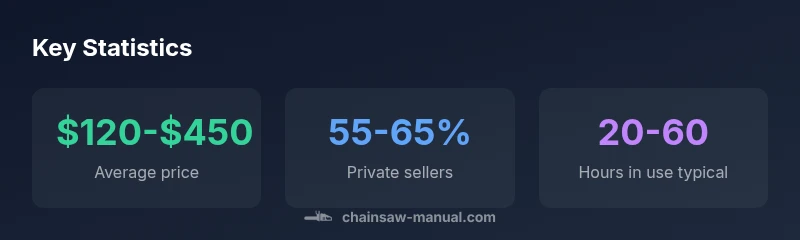
| Gas Chainsaw (compact) | $120-$420 | Powerful and versatile; great for occasional use | Heavier; louder; higher fuel costs |
| Corded Electric | $80-$250 | Low maintenance; reliable; lightweight | Limited mobility; requires outlet proximity |
| Battery-Powered (Cordless) | $150-$350 | Quiet; easy start; no fumes | Runtime limits; battery cost |
| Hedge Trimmer Combo (if applicable) | $90-$200 | Multi-use convenience | Not a dedicated saw; limited performance |
FAQ
Is a 2nd hand chainsaw for sale a safe option?
Yes, it can be safe if inspected thoroughly and purchased from a reputable seller. Key checks include fuel system integrity, chain condition, chain brake, and idle/start tests. Avoid units with cracked housing or missing safety features.
Yes, it can be safe if you inspect thoroughly and buy from a reputable seller. Check the chain, brakes, and test start.
What should I check during inspection?
Inspect the chain tension and sharpness, bar wear, engine compression, oil leaks, and safety features. Look for corrosion or loose components.
Check chain tension, bar wear, oil flow, and safety features.
Should I buy refurbished or as-is?
Refurbished may include safety checks and limited warranty; as-is may be cheaper but riskier. Evaluate warranty terms.
Refurbished can be safer with a warranty; as-is might be cheaper but riskier.
What price ranges should I expect?
Prices vary broadly depending on brand, size, and condition; use benchmarks and factor in potential maintenance costs.
Prices vary; expect different ranges based on size and condition.
How long can a used chainsaw last after purchase?
Lifespan depends on prior use and maintenance; with proper service, a used saw can last several seasons.
Varies; with maintenance, it can last many seasons.
“A well-vetted second-hand chainsaw can offer genuine value when you know what to check and how to test it.”
The Essentials
- Verify model and maintenance history before buying.
- Inspect engine, bar wear, chain tension, and safety features.
- Test-start the saw and listen for unusual noises.
- Ask for a warranty or return option when possible.
- Budget for future maintenance and appropriate safety gear.