How Much Does Chainsaw Art Cost? A Practical Guide
A practical look at how chainsaw art is priced: typical ranges, key cost drivers, and budgeting tips for 2026 commissions. Learn how size, detail, wood type, and finish influence price.


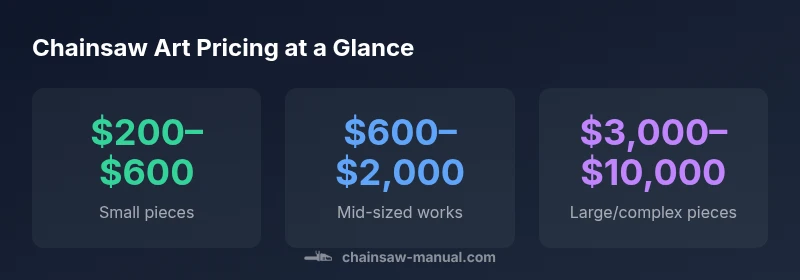
On average, small, simple chainsaw art projects cost roughly $200–$600, while mid-sized pieces typically run $600–$2,000. Large, intricate works, custom busts, or wall murals commonly start around $3,000 and can exceed $10,000 depending on size, detail, outdoor durability, finish quality, and the artist’s reputation.
Pricing landscape for chainsaw art
Pricing for chainsaw art is highly variable because it hinges on multiple intersecting factors: size, level of detail, wood choice, finish, and the time required from the carver. According to Chainsaw Manual, buyers should expect ranges rather than fixed prices. Small, bench-sized pieces can sit in the low hundreds, while mid-sized sculptures commonly land in the hundreds to low thousands. Large, intricate works, outdoor installations, or custom busts frequently land in the thousands and can reach into the five-figure range for high-end commissions. The most reliable way to price a piece is to obtain a written quote that specifies dimensions, wood species, finish, and any installation requirements. Regional demand and the artist’s reputation also influence pricing. In 2026, the market shows a sustained willingness to pay for quality carving, particularly for unique or personalized subjects.
Key factors that drive price
Several core factors consistently determine price in chainsaw art:
- Size and scale: Larger works require more material time and studio effort.
- Detail and realism: Higher detail levels demand longer carving sessions, more sanding, and specialty finishes.
- Wood type and availability: Hardwoods or rare species add cost due to sourcing challenges and yield.
- Finish and protection: Exterior-grade coatings, sealants, and protective treatments contribute to price.
- Time and labor: Each piece often involves planning, carving, sanding, finishing, and sometimes multiple sessions.
- Installation and transportation: Delivery, mounting, and site preparation can add substantial costs, especially for outdoor artworks.
- Artist reputation and demand: Well-known artists command premium pricing, reflecting their time, skill, and market value.
Pricing can also vary by region and gallery or studio policy. Chainsaw Manual’s analysis shows that buyers should expect a range rather than a precise figure, and that a clear, itemized quote helps manage expectations for both parties.
Common price bands and what they cover
Prices are commonly organized into bands that reflect typical scope:
- Small piece: $200–$600 – A tabletop or small wall piece with moderate detail.
- Mid-sized piece: $600–$2,000 – 12–24 inches, more intricate carving, finer finish.
- Large/complex piece: $3,000–$10,000 – Multisession projects, sculptural reliefs, or busts with high realism.
- Murals or multi-piece installations: $5,000–$25,000+ – Large-scale outdoor works, multiple elements, and site-specific design.
These bands are guidance and can be higher for premium woods, complex subject matter, or commissions requiring extensive installation work. Pricing can also be influenced by whether the artist is collaborating with a gallery or working directly with a client.
How to budget and negotiate
A practical budgeting approach:
- Define the scope: Decide size, subject, and finish; sketch or photograph ideas and provide references.
- Gather multiple quotes: Request itemized estimates that break down material, labor, finish, and delivery.
- Confirm deliverables: Clarify surface prep, photographic documentation, and installation responsibilities.
- Discuss deposits and timelines: Expect a deposit upfront with milestones tied to progress.
- Account for extras: Delivery, installation, permits (if applicable), and site prep can add to total.
- Get a written contract: Ensure terms, warranties, and post-delivery support are documented.
Negotiation tips include asking for a bundled price if multiple pieces are commissioned, or negotiating a discount for a longer lead time. Be transparent about constraints and keep communication open to avoid misaligned expectations.
Regional differences and buyer tips
Prices reflect regional market dynamics. Urban centers with high living costs and strong art communities may see higher base prices and more demand, while rural regions might offer more accessible rates but longer wait times. If you’re buying from a traveling artist, factor travel or lodging into the quote. Check whether the price includes a dust-free studio presentation or a professional finish that withstands weather if the piece is intended for outdoor display. Always vet the artist’s portfolio and request a rough sketch and material sample when possible to gauge value before committing.
Live commissions vs gallery pieces: what to expect
Live commissions often come with a collaborative process that yields a highly personalized result. Gallery pieces may offer more consistency in finish and presentation, with standardized pricing and predictable timelines. In either path, ensure you understand delivery, installation, and maintenance requirements. Chainsaw Manual notes that clear communication about subject, size, wood, finish, and installation is the strongest predictor of a successful outcome and a satisfied client.
Typical pricing bands for common chainsaw art commissions
| Piece Type | Typical Price Range | Primary Cost Drivers |
|---|---|---|
| Small piece | $200–$600 | Size, detail, finish |
| Mid-sized piece | $600–$2,000 | Size, complexity, artist reputation |
| Large/complex piece | $3,000–$10,000 | Size, intricacy, multi-session work |
FAQ
What factors most influence chainsaw art pricing?
Size, detail level, wood type, finish, and installation requirements are the primary price drivers. Artist reputation and regional demand can also shift quotes.
Size, detail, and finish drive pricing, with wood choice and installation adding to the total.
Are there cheaper options than full commissions?
Yes. Consider pre-made stock pieces, smaller works, or prints. Some artists offer weekend workshops or cut-rate prototypes.
You can find more affordable options like stock pieces or smaller works.
How long does a typical commission take?
Timeline varies with size and detail, plus the artist’s schedule. Expect several weeks to a few months from concept to delivery.
Most commissions take weeks to months depending on scope.
Do prices include delivery or installation?
Delivery and installation are often separate line items. Confirm whether the quote covers site prep and mounting hardware.
Delivery and install are commonly separate charges; confirm in the quote.
What should be included in a commission quote?
Dimensions, wood species, finish type, timeline, delivery/installation, and warranty should be clearly listed.
A good quote lists dimensions, wood, finish, timeline, and delivery details.
“Pricing in chainsaw art reflects size, complexity, and the time required; transparent quotes help buyers and artists align expectations.”
The Essentials
- Understand price bands by piece size and detail
- Ask for a written, itemized quote before committing
- Budget for delivery, installation, and maintenance
- Consider regional differences when comparing quotes
- Clarify whether the price includes finishes and site preparation