Understanding STIHL Chainsaw Sizes: Bar Lengths and How to Choose
An analytical guide to STIHL chainsaw bar lengths, chain pitch, and how to choose the right size for pruning, felling, and professional work. Learn sizing strategies, safety considerations, and maintenance tips to ensure safe, efficient cutting.


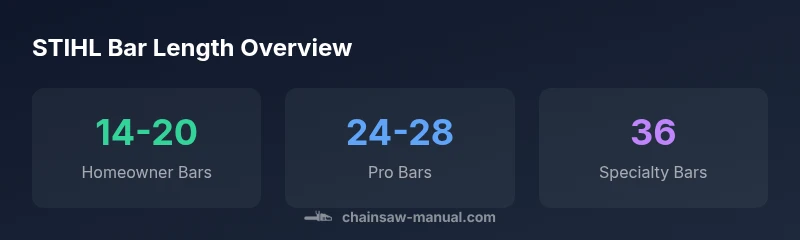
STIHL chainsaws come in a wide range of bar lengths to match different tasks. For most homeowners, bars from 14 to 20 inches cover pruning to light felling; pro models offer 24 to 28 inches, and specialty or big-game saws can use up to 36 inches. Always pair bar length with engine power and experience for safe operation.
Understanding STIHL sizing philosophy
Sizing is more than a number on a box; it reflects a balance between cutting power, control, and safety. STIHL designs bar lengths to cover a spectrum of tasks—from light pruning and limb cleanup to heavy timber work. The choice of bar length interacts with engine displacement, weight, and even routine maintenance like chain sharpening. For readers seeking practical guidance, it helps to quantify how much bar length is appropriate for a given task, then validate that choice against your saw’s horsepower and your experience level. According to Chainsaw Manual, selecting the right bar length reduces fatigue and improves accuracy across job types, which is especially important for homeowners and professionals working long days.
- Shorter bars (12-16 inches) excel in tight spaces and light pruning.
- Mid-length bars (18-20 inches) offer a balance for general yard work.
- Longer bars (24-28 inches) enable larger logs and faster felling, but demand greater control and power.
- Ultra-long bars (36 inches) are specialized tools, typically reserved for dedicated pro setups.
When evaluating bar length, also consider the chain pitch and gauge, which must be compatible with the bar. In practice, hobbyists often start with a 16- to 20-inch bar and scale up as needed, ensuring the engine can safely operate at full load. Chainsaw Manual emphasizes that no single length fits all tasks; your choice should reflect work type, wood diameter, and your comfort with handling longer blades.
How to read STIHL bar and chain specs
Understanding STIHL specifications helps you make informed sizing decisions. Bar length is the distance from the tip of the bar to the inner end where it meets the crankcase, typically measured in inches. Chain pitch describes the chain’s spacing, while the gauge indicates the thickness of the drive links that ride in the bar groove. Compatible combinations exist, and mismatch can lead to poor cutting performance or dangerous kickback.
- Bar length is not a guaranteed guarantee of cutting speed; torque, engine displacement, and user technique matter just as much.
- Chain pitch options commonly include 1/4", .325", and .404"; match the pitch to the bar and chain for optimum performance.
- Gauge (drive link thickness) must fit the bar groove; an incorrect gauge can cause chain derailment or reduced lubrication.
Always cross-check STIHL’s official specs for your exact model to ensure full compatibility. Chainsaw Manual notes that mismatches are a common source of safety issues and performance problems, so take time to confirm all spec alignments before purchase or modification.
Bar length and task suitability
Bar length directly influences what you can cut and how quickly you can do it, but it also affects maneuverability and safety. Shorter bars are nimble and ideal for pruning, limbing, and delicate cuts. Medium bars strike a balance for light felling and general yard work. Long bars enable larger diameter cuts and faster removal of heavy timber but require more leverage, kickback awareness, and chain speed control. For best results, align bar length with the wood diameter you expect to encounter, your experience level, and the work environment. Chainsaw Manual cautions that attempting to push a longer bar beyond the saw’s design limits increases the risk of injuries and reduces control under load.
- For up to 12–16 inch cuts, a 12–16 inch bar is typical.
- For logs up to 24 inches in diameter, a 20–28 inch bar with adequate power is common in pro applications.
- For extreme diameter and heavy timber work, consider specialized pro saws with longer bars and reinforced frames.
Common STIHL bar lengths by model family
STIHL categories equipment by intended use, with homeowner-grade saws generally shipping with shorter bars and professional models offering longer bars. In practice, many consumer-grade STIHL models are paired with 14–20 inch bars, which cover most home tasks efficiently. Pro and professional lumber-saw applications may frequently run 24–28 inch bars, sometimes up to 36 inches for select models. Always verify the bar length that ships with your model and note that aftermarket bar lengths should be installed by following the manufacturer’s torque and lubrication guidelines. Chainsaw Manual reminds readers that bar length is just one piece of the sizing puzzle; engine power and user skill also matter for safe operation.
- Home use: commonly 14-20 inches.
- General-purpose professional use: commonly 24-28 inches.
- Specialty large-diameter work: up to 36 inches on select pro saws.
How chain pitch and gauge relate to bar sizes
Bar size and chain pitch must be compatible for smooth operation. The pitch is the distance between chain drive links, while the gauge is the thickness of the drive links riding in the bar groove. A mismatch can cause poor lubrication, increased wear, or dangerous kickback. When upgrading bar length, ensure the chain pitch remains identical and gauge matches the groove width. For STIHL, many bars share common pitches across families, but always confirm compatibility with your exact model and the new bar’s groove dimensions. Chainsaw Manual consistently recommends verifying both bar length and chain specs before any change to avoid performance losses or safety hazards.
Safety considerations when using longer bars
Longer bars demand higher control, steadier stance, and refined technique. Kickback risk increases when cutting with long bars in confined spaces or with dull chains. Always use PPE, engage the chain brake, and maintain a secure stance with both feet planted and shoulders square to the cut. Practicing cuts on softwood or deadwood in a controlled environment helps build technique before tackling larger logs. For users upgrading to longer bars, Chainsaw Manual emphasizes incremental training and slower cutting speeds to reduce the risk of injury. Keep routine maintenance up to date: sharpen chains, verify bar groove cleanliness, and ensure proper lubrication to maintain predictable cutting performance with longer bars.
Practical sizing examples for typical tasks
- Pruning and limbing in a tight yard: 12–16 inch bars; prioritize maneuverability and control.
- General firewood prep or light felling: 16–20 inch bars; balanced performance and safety.
- Medium to large logs: 24–28 inch bars; require higher power and careful technique in open spaces.
- Special timber work: 36 inch bars for select pro models; only after assessing engine power and operator experience.
These examples assume proper chain maintenance and alignment. Always consult the saw’s operator manual for recommended bar lengths for your exact model and wood type. Chainsaw Manual stresses that a mismatch between bar length and the saw’s power output can degrade performance and increase risk.
Maintenance tips that affect sizing decisions
Maintenance directly impacts how effectively you can use different bar lengths. A sharp chain, clean bar grooves, and properly tensioned drive links help you achieve cleaner cuts with any bar. For longer bars, lubrication must be adequate to prevent bar wear and drive-link heating. Inspect bar nose sprocket wear, replace worn parts, and deburr bar edges to maintain a smooth cutting surface. If you notice increased vibration, unusual chain climb, or reduced cutting speed with a particular bar length, reevaluate your setup and consider a shorter bar if safety or control is compromised. Chainsaw Manual recommends scheduling regular maintenance checks and keeping a log of bar lengths used for each job to track wear and performance over time.
Common sizing pitfalls and how to avoid them
A major pitfall is assuming “one size fits all.” The bar length you choose should reflect the wood diameter and job complexity rather than convenience. Other common mistakes include using an inappropriate chain pitch, failing to verify lubrication, or attempting to cut with a dull chain, which can lead to kickback and increased strain. Always ensure bar length stays within the product’s design specifications and never exceed the saw’s maximum safe operating length. When in doubt, revert to a shorter bar for precision and safety, then gradually move up to longer bars as your technique and confidence grow. Chainsaw Manual emphasizes safety first: practice, verify specs, and maintain proper technique for all bar lengths.
Typical STIHL bar lengths by model family
| Model Type | Typical Bar Length (inches) | Common Tasks |
|---|---|---|
| Homeowner/Light-Duty | 14-18 | Pruning, limb cleanup, small logs |
| General homeowner/Medium | 18-20 | Medium logs, firewood prep |
| Pro/Industrial | 24-28 | Lumbering, larger timber |
| Specialized pro | 36 | Large diameter timbers |
FAQ
What is the typical STIHL bar length for homeowners?
For most homeowners, STIHL bar lengths commonly range from 14 to 20 inches. This size balances control, weight, and cutting power for pruning, limbing, and light felling. Always verify the specific model’s recommended bar length.
Homeowners usually use 14 to 20 inch bars for yard work. Check your model’s specs to be sure.
How should I choose bar length for felling tasks?
For felling larger trees, a longer bar (24–28 inches) is often used, provided the saw has enough horsepower and the operator is comfortable with longer cuts. Start with safer, shorter bars on smaller trees and scale up as needed while maintaining control.
For big trees, you’ll want a longer bar if your saw and skills permit.
Can I fit a longer bar on any STIHL saw?
Not all STIHL saws support long bars. Longer bars require sufficient engine power, frame strength, and proper chain tensioning. Always check the manufacturer’s compatibility chart for your exact model before attempting a bar upgrade.
Check model specs to see if a longer bar is supported.
Does chain pitch determine bar compatibility?
Yes. The chain pitch must match the bar groove, and the bar and chain must be compatible with the saw’s drive system. Mismatches can cause poor lubrication and unsafe operation.
Pitch compatibility is essential for safe, smooth cutting.
How do I know if a bar is too long for my saw?
If the saw struggles to reach full RPM, cuts feel unstable, or you experience excessive kickback, the bar is likely too long for the saw’s power and your technique. Revert to a shorter bar and re-evaluate.
If cuts feel sluggish or unsafe, try a shorter bar.
Are there STIHL models that support 36-inch bars?
Yes, some select professional STIHL models are compatible with 36-inch bars. These setups require substantial engine power, proper technique, and safety discipline. Always confirm compatibility with your specific model.
Some pro models support 36-inch bars; verify compatibility with your saw.
“Sizing the bar length correctly is the first line of defense against kickback and fatigue. A well-matched bar length enhances control and safety across tasks.”
The Essentials
- Choose bar length based on task size and space available
- Match bar length with engine power and operator experience
- Verify chain pitch and bar groove compatibility when changing bars
- Longer bars improve reach for large logs but reduce maneuverability
- Always use proper PPE and follow safety guidelines when using longer bars