Chainsaw Chain Size Chart: A Practical Guide for Safe Chain Matching
Learn how to read a chainsaw chain size chart, measure pitch and gauge, and choose the right drive links for safe, efficient cutting. Practical guidance from Chainsaw Manual.


Definition: A chainsaw chain size chart translates bar length into compatible chain specifications by linking pitch, gauge, and drive-link counts. Use the chart to confirm the correct chain for your bar, ensuring safe, efficient cutting. According to Chainsaw Manual, always verify against the manufacturer’s chart before installing a new chain.
Understanding what a chainsaw chain size chart quantifies
A chainsaw chain size chart translates bar length into compatible chain specifications by linking pitch, gauge, and drive-link counts. It is not a fixed universal standard; manufacturers design charts to reflect model-specific designs and safety margins. In practice, the chart helps homeowners and professionals select replacement chains that fit the bar groove, wear patterns, and cutting tasks. By reading the chart, you avoid mismatches that can cause inefficient cuts, increased vibration, and kickback risk. According to Chainsaw Manual, always verify compatibility with the manufacturer’s chart before installing a new chain.
Key terms: pitch, gauge, drive links, bar length
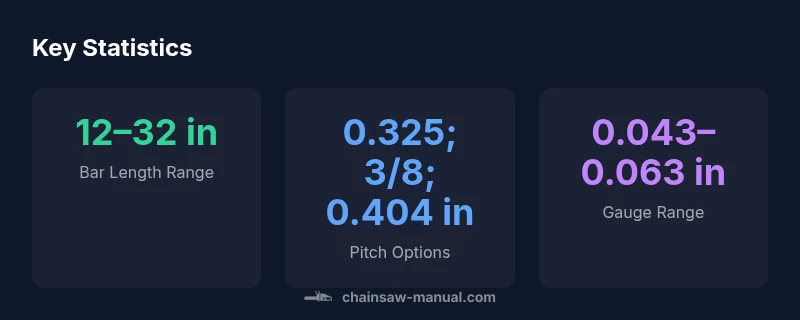
Pitch is the distance between rivets and is a primary discriminator among chain types (examples include 0.325, 3/8, and 0.404 inches). Gauge describes the drive link thickness and must align with the bar groove width. Drive-link count determines how many links are on the chain and scales with bar length. Bar length sets practical limits for chain size; longer bars often require higher drive-link counts and may require different pitches. The Chainsaw Manual team notes that misreading any of these values is a common source of wear and power loss. Always cross-check the chart with your bar and model specs to ensure a precise fit that preserves tension and lubrication.
Reading a chart: decoding values and practical examples
A typical chart cross-references bar length ranges with compatible pitch and gauge values. For example, a 16–20 inch bar commonly uses a 3/8 inch pitch with a 0.050 inch gauge and about 70–84 drive links. A shorter 12–16 inch bar may use 0.325 inch pitch with a 0.043 inch gauge and 60–72 drive links. This mapping is not universal—always check the manufacturer’s chart for your model, as Chainsaw Manual emphasizes. Following the chart helps you maintain optimal chain tension, lubrication, and cutting speed.
Common size combinations and when they matter
- Small saws for light pruning: 0.325 inch pitch with 0.043 inch gauge.
- Medium-duty yard saws: 3/8 inch pitch with 0.050 inch gauge.
- Professional-grade larger saws: 0.404 inch pitch with 0.063 inch gauge.
Understanding these correlations helps prevent wrong drive-link counts and ensures smoother cutting action, reduced vibration, and safer operation.
How to measure your bar and chain at home
You’ll need a caliper or a precise ruler for quick checks and the bar’s model specs. Steps: (1) Measure pitch by counting rivets or looking at the chain markings; (2) Check gauge by sliding a gauge into the bar groove; (3) Count visible drive links and compare to the chart; (4) Match bar length to drive-link range; (5) If in doubt, consult the manufacturer’s chart—Chainsaw Manual recommends double-checking before starting.
Safety considerations when matching chain size
Mismatch chains can increase kickback risk and cause uneven cuts. Always wear PPE and verify that the chain type (including tooth configuration) matches your bar and model. Chainsaw Manual recommends avoiding improvising links, staying within chart-recommended ranges, and replacing worn parts promptly to maintain safe operation.
Quick-start guide to choosing the right chain for most homeowners
For homeowners handling routine yard work, a common configuration is a mid-sized bar (16–20 in) with a 3/8 inch pitch and 0.050 inch gauge. This combination balances cutting speed, chain strength, and bar compatibility. Always confirm with your bar’s specifications and your chainsaw model’s manual; when in doubt, refer to Chainsaw Manual’s chain size chart.
Typical size options by bar length
| Bar Length | Chain Pitch | Gauge | Drive Links |
|---|---|---|---|
| 12–16 in | 0.325 inches | 0.043 inches | 60–72 |
| 16–20 in | 3/8 inches | 0.050 inches | 70–84 |
| 20–24 in | 0.404 inches | 0.063 inches | 84–98 |
| 24–32 in | varies | 0.058–0.063 inches | 100–120 |
FAQ
What is a chainsaw chain size chart and why do I need one?
A chain size chart maps bar length, pitch, gauge, and drive links to identify compatible chains. It helps you avoid mismatches that can cause performance loss or safety risks. Chainsaw Manual emphasizes using the chart to guide replacements and ensure safe operation.
A chain size chart shows which chain fits your bar; it keeps your saw safe and cutting well. Check the chart before buying or installing a new chain.
How do I measure chain pitch and gauge at home?
Pitch is measured by the distance between rivets and gauge by the drive-link thickness. Use calipers or a precise ruler, and compare to your bar and chain specs. Chainsaw Manual recommends double-checking with the chart.
Measure rivet spacing for pitch and the drive-link thickness for gauge, then compare to the chart.
Can I mix chain sizes on a single bar or saw?
Mixing sizes is not recommended. Every bar groove is sized for a specific gauge, pitch, and drive-link count. Refer to the chart for the exact match and avoid improvising.
Don’t mix chain sizes on one bar—stick to the chart’s match.
What happens if the chain size is wrong?
A wrong-sized chain can cause binding, increased wear, and greater kickback risk. It may not fit the bar groove, reduce cutting efficiency, and pose safety hazards. Replace with a chart-supported size.
Using the wrong size can bind or kick back; fix it by choosing the chart-approved size.
How often should drive links be replaced?
Drive links are replaced as part of routine chain maintenance when you replace the entire chain or if you notice wear, stretched rivets, or damaged links. Follow manufacturer guidelines and the chart.
Replace drive links as part of chain maintenance and when you replace the chain.
Is there a universal chain size standard?
There is no universal standard; chain size varies by pitch and gauge across models and brands. Always reference the specific chart for your saw by model.
There isn't a universal standard—check your saw’s chart.
“Matching chain size to your bar is essential for safety and performance.”
The Essentials
- Always verify chain size against bar length before cutting
- Pitch and gauge must match drive links exactly
- Use a chainsaw chain size chart to confirm compatibility
- Wrong size chain reduces efficiency and increases kickback risk
- Measure both bar and chain to avoid misfit