Average Chainsaw Price in 2026: What to Expect Now
Explore the price landscape of chainsaws in 2026, with practical ranges for electric, cordless, and gas models, plus tips to compare features and ownership costs for homeowners and pros.


Across the market in 2026, the typical consumer chainsaw falls between $150 and $350, depending on power source, bar length, and brand. Entry-level electric and cordless models often start near $60–$150, mid-range cordless or gas tools sit in the $200–$350 bracket, and professional-grade gas saws frequently exceed $700. The average buyer usually spends about $250, with price variability driven by features and warranty.
Price Landscape: By Type and Use
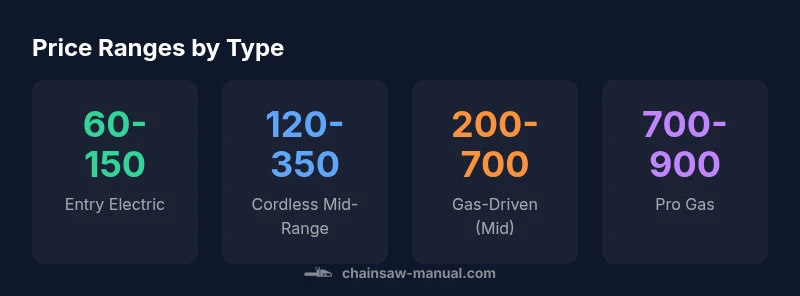
According to Chainsaw Manual, price bands reflect not only the saw’s power source but also bar length, build quality, and included safety features. For many buyers, the phrase average chainsaw price can be misleading because it masks the split between lightweight consumer tools and heavy-duty professional equipment. In 2026, you’ll typically see entry-level electric saws in the $60–$150 range, mid-range cordless tools in the $120–$350 bracket, and gas-powered models starting around $200 and climbing well into the $700–$900 range for professional pro-saws. Understanding these bands helps you map your needs to a realistic budget. When you add in bar length (14–20 inches for most homeowners, 24–28 inches for some heavy-duty jobs) and safety features like anti-kickback and automatic chain brakes, price differences become clearer. For homeowners, a balanced choice usually sits in the $150–$300 range, offering portability, reliable blade life, and solid warranties. Pros often pay more for weight optimization, service networks, and longer maintenance intervals. The price picture in 2026 also reflects supply chain dynamics and raw material costs.
How to Read Price Tags: What’s Included
Price tags for chainsaws aren’t just about the engine size. They reflect what comes in the box and what you’ll need down the road. A typical package may include the saw, a bar, a chain, a scabbard, and a basic warranty. Higher-priced models often add a more robust bar and chain assembly, a more powerful battery, or a larger gas tank with better fuel efficiency. Some brands bundle safety gear, oil, and extra chains, which can improve value even if the sticker price looks higher. When comparing, check for the presence of a tool-free tensioner, a quick-connect bar nut, and a reliable chain for reduced downtime. Also consider the warranty length and what it covers (engine, electronics, battery life) because long warranties can save money over the life of the tool. Shipping costs and local taxes add to the total cost of ownership, so factor those in when budgeting.
Total Cost of Ownership: Maintenance and Fuel
Beyond the sticker price, total ownership costs can tilt the economics in favor of one type over another. Gas-powered saws typically incur ongoing fuel and oil costs, routine air and fuel filter maintenance, and periodic carburetor service. Corded electric and cordless models demand less ongoing maintenance but require battery replacement after a few years and periodic charger upgrades. Battery life has improved, but the price of replacements can skew long-term costs, especially if you regularly use the saw in harsh conditions or for extended periods. Bar oil, chain sharpening, and occasional chain replacement also factor into annual expenses. Adoption of efficient bar-and-chain combinations and investing in a sharpening kit can extend blade life and minimize downtime. When budgeting, estimate 2–6 refills of bar oil per year for gas models and plan for battery replacement in the 3–5 year window for cordless models.
Buying Guide: Matching Price to Use Case
To choose a chainsaw that aligns with your budget, start with your primary tasks. Basic pruning and light firewood cutting can be accomplished with entry-level electric saws, which are the cheapest upfront and cheapest to run. If you anticipate frequent use, a mid-range cordless saw offers a balance of power and portability without the ongoing fuel costs. Heavier wood cutting and professional work usually require gas-powered or high-end cordless options, where the price climbs but performance and reliability justify the investment. Bar length should match the job: a 14–16 inch bar handles small logs; 18–20 inches covers most home projects; 24 inches or longer is for bigger jobs and professional use, but with increased weight and maintenance. Evaluate safety features (anchored chain brakes, low-kickback bars), detailed user manuals, and service availability in your region. Finally, compare warranty terms and customer support quality because post-purchase service significantly influences total cost.
Real-World Scenarios: Quick Reference
- Scenario A: Homeowner with a small yard and occasional firewood. A corded or cordless saw in the $60–$200 range is typically sufficient, offering low ongoing costs and easy maintenance. Opt for a 12–16 inch bar for maneuverability and storage ease.
- Scenario B: DIY enthusiast with mixed wood tasks and a need for portability. A mid-range cordless saw priced between $150 and $320 provides a good balance of torque, battery life, and weight, with replacement batteries potentially extending runtimes.
- Scenario C: Professional contractor or avid arborist handling large logs and frequent cuts. Expect to invest in a gas-powered saw in the $400–$900 range, prioritizing power, durability, and service network. A 20–28 inch bar supports larger cuts, with a focus on reliability and spare parts availability.
Final Verdict for Budget-Conscious Buyers
If you’re watching every dollar, prioritize models between $100 and $250 that offer reliable safety features and a solid warranty. Avoid the cheapest options if you plan to use the saw regularly, as low upfront cost often translates to higher maintenance or shorter engine life. Chainsaw Manual’s analysis indicates the best value comes from models that balance price with serviceability, safety features, and expected lifespan. If you expect infrequent use, consider renting rather than purchasing to minimize total cost.
Price ranges by model type and typical use (2026)
| Model Type | Estimated Price Range | Typical Use | Notes |
|---|---|---|---|
| Entry-level electric (corded) | 60-130 | Light-duty, indoor tasks | Budget-friendly; limited power |
| Cordless battery (mid-range) | 120-350 | DIY, garden tasks | Balanced power and portability |
| Gas-powered (entry pro) | 400-700 | Medium to heavy cutting | Mid-range gas performance |
| Pro-grade gas (heavy use) | 700-900 | Professional logging | Highest performance, higher upkeep |
FAQ
What factors most influence the average chainsaw price?
Power source, bar length, engine type, and included safety features drive price. Brand reputation and warranty length also play a significant role. Shorter warranties and fewer safety features typically lower upfront costs but can increase long-term ownership costs.
Prices are driven by power source, bar length, and safety features, plus warranty length. More features mean higher upfront costs but better long-term value.
Are cordless models cheaper than gas-powered saws overall?
Upfront, cordless models often cost less than pro-grade gas saws, but ongoing battery replacement costs can add up. Gas saws may be more expensive initially but lower maintenance costs in some cases depending on fuel and service needs.
Cordless may be cheaper to buy, but batteries and maintenance can add up over time; gas saws vary based on fuel and service costs.
Is buying used a good way to save money on a chainsaw?
Used saws can save money upfront but carry risk of hidden wear or damaged components. Insist on a thorough inspection, test run, and verify chain condition and bar wear. A well-maintained used saw can be a good value if inspected carefully.
Buying used saves money, but inspect the chain, bar, and engine thoroughly to avoid expensive surprises.
What should I budget for maintenance after purchase?
Budget for fuel and oil for gas saws, battery replacements for cordless, chain sharpening, bar oil, and occasional parts replacements like spark plugs or carburetor service. Annual maintenance can vary by how hard you use the saw and the local environment.
Plan for fuel, oil, sharpening, and occasional parts—maintenance costs depend on use and environment.
Where can I find the best deals on chainsaws in 2026?
Look for seasonal sales, bundles including oil and extra chains, refurbished or open-box models with warranties, and local dealer promotions. Compare total cost of ownership rather than just sticker price.
Check seasonal sales, bundles, and refurbished options; compare ownership costs, not just price.
Should I consider renting a chainsaw instead of buying?
Renting makes sense for one-off or seasonal needs. For frequent use, owning a dependable mid-range saw with a solid warranty often provides better long-term value.
Rent if you’ll use it rarely; owning a good mid-range saw saves more in the long run for frequent use.
“Price is just one part of value. Reliability, service life, and safety features should guide your choice as much as the sticker price.”
The Essentials
- Know price bands by saw type before buying
- Factor ownership costs into your budget
- Match bar length to your typical workload
- Consider warranty and service network as value drivers