Chainsaw 72cc Price Guide: What You Pay in 2026
Explore current pricing for 72cc-class chainsaws, including consumer vs professional ranges, key price drivers, and strategies to maximize value in 2026.


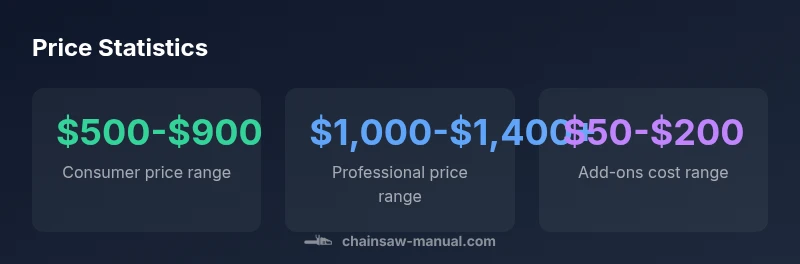
Current chainsaw 72cc price ranges from about $500 to $900 for most consumer-grade models, while professional units typically run $1,000 to $1,400, influenced by power output, bar length, and included features. Promotions, dealer pricing, and warranties can shift these numbers, and ongoing maintenance costs should be considered when evaluating total ownership expense.
Market snapshot for 72cc class chainsaws
The 72cc class sits at the intersection of portability and power, often chosen by professional arborists and serious homeowners who need more torque for demanding woodcutting tasks. These engines balance fuel efficiency with robust mid-range torque, making them suitable for longer work sessions. When evaluating the chainsaw 72cc price, buyers should consider not only the sticker price but also regional taxes, dealer incentives, and after-sale service networks. According to Chainsaw Manual, the price landscape in 2026 reflects a mix of traditional brands and newer entrants offering enhanced warranties and streamlined maintenance. This means buyers can encounter a broader spread between entry-level models and premium configurations, especially when optional bars, chains, and anti-vibration systems are bundled.
Key price drivers for 72cc chainsaws
Price is driven by several core factors that interact in complex ways:
- Power output and displacement stability affect how much torque is available for heavy cutting and prolonged use.
- Bar length and chain quality influence cutting efficiency and maintenance costs, often pushing price higher for longer bars.
- Build quality, anti-vibration, chain brake, and safety systems add to upfront cost but can reduce fatigue and maintenance over time.
- Included accessories (case, extra chain, wrench set) and warranty length can shift the effective price by hundreds of dollars.
- Brand reputation and dealer network affect both price and after-sales support, especially for spare parts and service intervals.
- Environmental and regional factors, such as fuel efficiency standards and import duties, can sway final price in different markets.
For context, the Chainsaw Manual analysis indicates that total ownership cost is not driven by the initial sticker price alone; maintenance, fuel, and parts pricing often determine the true long-term value.
Price bands by buyer segment
Understanding buyer segments helps set expectations:
- Consumer-grade (entry): typically in the $500-$900 range, with a focus on reliability and basic safety features. Ideal for light professional tasks and homeowners with occasional heavy-duty needs.
- Prosumer/mid-range: roughly $700-$1,200, offering longer bar options, better vibration control, and improved durability for regular use.
- Professional: commonly $1,000-$1,400+ with premium build quality, extended warranties, faster service access, and options like higher torque and larger bar length.
Prices can overlap across segments depending on brand, bundled accessories, and regional promotions. Always compare total value, not just upfront price.
Region, retailer, and seasonal effects on price
Prices for 72cc-class chainsaws vary by region due to taxes, duties, and supply chains. Big-box retailers may offer seasonal promotions, while authorized service centers may include extended warranties or bundled maintenance tools. Independent dealers often provide flexible financing or discounts on bundled packages (saw plus bar oil and spare chain). In some markets, importing a model mid-year can land better exchange rates, lowering the effective price. Chainsaw Manual notes that availability can swing quickly with supply chain conditions, making timing an important factor when evaluating the 72cc price.
Features, add-ons, and how they affect price
Extra features add cost but can improve long-term value:
- Anti-vibration systems, quick-release tensioners, and tool-less bar mounting raise upfront price but reduce fatigue and downtime.
- Longer bars (e.g., 20 inches or more) increase cutting efficiency but cost more and require more torque handling.
- Starting mechanisms (manual pull vs. auto choke) and safety systems influence reliability in cold starts and rugged conditions.
- Quality bars and chains, along with a sturdy carrying case and lubricants, push the price up but can extend service life.
If you buy a unit with fewer bundled extras, plan a separate budget for essential add-ons to ensure safety and performance.
Total cost of ownership: maintenance, fuel, and service
Upfront price is only part of the picture. A realistic ownership cost includes:
- Fuel and bar oil consumption based on usage intensity. Heavier use increases recurring costs.
- Replacement chains and wear parts; premium chains last longer but cost more upfront.
- Regular maintenance: air filter replacement, spark plug checks, and anti-vibration mount inspections.
- Service and parts availability: local dealer proximity affects repair cost and downtime.
- Warranties: longer warranties add value if you expect frequent use or rough terrain work.
A well-maintained 72cc saw can deliver consistent performance over many seasons, offsetting higher initial costs through longer service life and lower downtime.
Brand impact and dealer differences
Brand reputation matters for both price and post-purchase support. Established brands commonly command higher prices, reflecting long-standing dealer networks, parts availability, and service infrastructure. Newer entrants may offer aggressive pricing to gain market share but can differ in after-sales support. When evaluating the chainsaw 72cc price, consider not just the published price but the quality of local service options, accessibility to spare parts, and the availability of trained technicians in your area. The value of service access can eclipse small upfront savings over time.
Shopping checklist and practical examples
Before buying, use this checklist:
- Define your expected workload and bar length needs.
- Compare at least three sources (brand websites, authorized dealers, and reputable retailers).
- Check warranty terms and what portion of service is covered.
- Calculate total cost of ownership: upfront price plus maintenance and fuel costs for 3-5 years.
- Inspect safety features and verify compatibility with your preferred chains and bars.
Example: A homeowner expecting heavy weekend cutting might choose a mid-range model around $850 with a 20" bar, bundled chain, and a 2-year warranty. If maintenance costs average $60 per year and fuel costs $120 annually, plan for roughly a $1,000-$1,600 total cost over 5 years.
Practical shopping scenario: deciding between two 72cc models
Model A: $800, 18" bar, standard anti-vibe system, 2-year warranty. Model B: $1,150, 20" bar, advanced anti-vibe, quick-release tensioner, 4-year warranty, bundled maintenance kit.
If you cut regularly and value faster maintenance, Model B offers longer-term value despite higher upfront cost. If your workload is occasional and you want lower initial expense, Model A remains a solid choice. Always weigh the total cost of ownership and service access.
Price tiers for 72cc-class chainsaws
| Tier | Typical 72cc price | Notes |
|---|---|---|
| Budget/entry | $480-$900 | Consumer-grade, limited features |
| Mid-range | $700-$1,200 | Balanced features and reliability |
| Professional | $1,000-$1,400+ | Top-tier power, durability, dealer support |
FAQ
What factors influence the price of a 72cc chainsaw?
A 72cc chainsaw’s price is driven by power output, bar length, build quality, safety features, and the inclusion of extras like spare chains or cases. Brand and dealer network also influence price and after-sales service. Seasonal promotions can shift the final amount paid.
Price is driven by power, bar length, build quality, and included extras, plus brand and dealer networks for service.
Are higher-priced 72cc models worth the extra cost?
Higher-priced models usually offer longer warranties, better components, and more durable construction. If your work is frequent or intensive, the reliability gains can justify the premium. For light use, a mid-range option often provides the best balance of cost and performance.
If you use the saw a lot, higher-priced models often pay off through better reliability and longer warranties.
Should I consider buying a used 72cc chainsaw?
Used units can save money, but verify compression, chain condition, bar wear, and safety features. Ensure the seller provides provenance or service history. Expect higher risk of hidden wear compared to new models.
Used saws can save money, but inspect for wear and safety feature integrity.
What add-ons commonly affect price (bars, anti-vibe, chains)?
Longer bars, high-quality chains, anti-vibration tech, and easy-start systems commonly raise upfront cost but improve cutting efficiency and comfort. Consider whether these features align with your typical workload.
Longer bars and better safety features raise price but improve performance and comfort.
How do brands impact the price of 72cc chainsaws?
Well-known brands often command higher prices due to stronger dealer networks and service support. Lesser-known brands may offer competitive prices but could have limited parts availability or shorter warranty coverages.
Brand strength affects price and after-sales support; bigger brands usually cost more but offer better service networks.
Where can I find the best deals on 72cc chainsaws?
Look for seasonal promotions, bundle offers, and authorized dealer discounts. Compare bundled items — a higher upfront price may come with longer warranties or included maintenance supplies.
Check seasonal sales and dealer bundles for better overall value.
What maintenance costs should I plan for after purchase?
Plan for regular fuel, bar oil, chain replacements, and scheduled servicing. Maintenance costs vary with usage; heavier workloads increase ongoing expenses and can justify choosing a higher-priced model with longer service intervals.
Budget for fuel, oil, chains, and regular servicing based on how hard you work the saw.
“The 72cc class offers a practical balance of power and portability; prioritize reliability, service access, and total ownership cost over upfront price alone.”
The Essentials
- Know the price bands before shopping
- Factor total ownership cost into decisions
- Budget for add-ons and service access
- Compare lifetime value, not just sticker price
- Shop during promotions and leverage dealer bundles