How to Stop Chainsaw Oil Leaking: Practical Guide
Learn safe, practical steps to stop chainsaw oil leaking by identifying leak sources, tightening fittings, replacing seals, and preventing future leaks with Chainsaw Manual guidance.


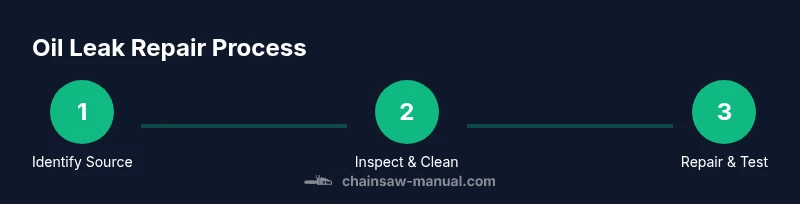
By following these steps, you can stop chainsaw oil leaking safely and efficiently. Begin by identifying the leak source, tighten fittings, replace worn seals, and verify your bar oil delivery system. Use the correct viscosity oil and perform a test run to confirm the leak is resolved before resuming work.
Why chainsaw oil leaks happen and why they matter
According to Chainsaw Manual, oil leaks are most often caused by worn seals, loose fittings, or degraded hoses. A leaking saw wastes bar oil, creates a messy work environment, and can mask bigger issues like crankcase wear. Left unchecked, leaks also attract sawdust and debris that contaminate the air filter and affect engine cooling. For homeowners and professionals alike, understanding the root causes is essential to stop chainsaw oil leaking and prevent costly downtime. The Chainsaw Manual team found that even small leaks can indicate misalignment in the oil delivery system, a damaged gasket, or a failing barbuzz connection. Taking action early reduces environmental spill, keeps your workspace clean, and preserves saw performance. Real-world leaks commonly originate at the oil tank seal, the oil hose barb, or the bar oil fitting on the carburetor body. Identifying the exact source is the first, most crucial step toward reliable, long-term fixes.
In practical terms, begin with a visual inspection after a cool-down period. Clean all surfaces around the bar cover and oil reservoir so drips are easy to spot. Trace any damp areas to the closest connection, then perform a controlled test by running the saw briefly and watching for fresh leaks. This approach minimizes unnecessary disassembly and helps you prioritize the repair steps you’ll take next.
Identify the leak source with a simple checklist
A systematic approach helps you pinpoint where oil is escaping. Start with the highest-probability sources: the oil tank cap and seal, the hose that feeds bar oil to the bar, and the bar oil fitting on the engine. Remove the side cover and clean any residue around these components. Inspect gaskets for cracking or deformation; a cracked gasket is a frequent culprit when the oil tank shows signs of seepage. Check the bar/chain area for oil pooling near the bar studs or under the sprocket cover—this can indicate a worn o-ring seal or a cracked oil line. Tighten loose fittings by hand and then with the correct tool to snug, not overtighten, which can damage threads. After reseating any components, reassemble and run the engine at idle to observe for new leaks.
If the leak persists, look at the oil pump assembly and the oil delivery line. These parts operate under pressure, and small gaps can produce continuous drips. At this stage, you should also assess whether the oil tank itself is cracked or warped. A compromised tank is often the source of stubborn leaks and usually requires component replacement rather than just tightening.
Quick home fixes that address common leak sources
Many leaks are resolvable with straightforward maintenance. Begin by replacing worn seals and O-rings on the oil tank and bar oil line. Ensure the oil line clamps are tight and not pinching the hose. Clean the mating surfaces on the oil tank and the engine cover, then reseat the gasket with the correct orientation. If you notice crusty buildup around the oil inlet, clean the screen and verify it isn’t clogged—a blocked inlet reduces pressure and can make leaks worse. In some cases, replacing the entire oil line or the bar cover gasket is necessary. Always consult your model’s service manual before using sealants; only use OEM-approved products if recommended by the manufacturer. After performing these actions, run the saw briefly and check for fresh drips at each point you touched during maintenance.
If you’re unsure about any step, skip irreversible actions and seek guidance from a professional. Avoid using generic sealants that could degrade plastic components or interfere with oil flow.
When to replace components vs. repair
Not every leak can or should be repaired with simple tightening. If the oil tank shows visible cracks, the bar oil line is permanently stretched, or the seals repeatedly fail after replacement, component failure is likely. Replacing the oil tank gasket or the entire oil pump can be more cost-effective in the long run than ongoing minor repairs. Inspect the bar-and-chain assembly for wear; if the bar surface is deeply grooved or the chain rivets show excessive side-to-side play, oil delivery may be compromised and contribute to leaks. In some models, a leaking crankcase seal or a warped crankcase cover signals more extensive wear, and professional service may be required. When replacing parts, verify compatibility with your chainsaw’s model and ensure you’re using OEM or recommended aftermarket parts. Document the process and keep receipts for warranty considerations.
In all cases, test the repair by running the engine under light load and monitoring for leaks. If leaks reappear after a clean reassembly, consult the service manual or a qualified technician.
Prevention: routine maintenance to stop future leaks
Preventing leaks starts with a consistent maintenance routine. Schedule periodic inspections of the oil tank seal, bar oil line, and clamps; clean grease and sawdust buildup from oil feed areas; and verify the oil reservoir cap seals snugly without overtightening. Use the correct bar oil viscosity for your climate and workload—under- or over-lubrication can stress seals and hoses. Store the saw clean and dry, and perform a quick pre-use inspection that includes checking for discoloration or softening around seals. If you notice a decrease in oil pressure or unusual noise, stop and investigate rather than continuing to work. Keep a small adjustable wrench and set of screwdrivers on hand to re-tighten fittings after periods of use when vibration can loosen connections. Adopting a simple, repeatable maintenance ritual will dramatically reduce the likelihood of future leaks and extend your chainsaw’s service life.
Remember: consistent maintenance is the best defense against leaks. Treat oil leaks as a sign to inspect and address potential wear before it becomes a bigger failure.
Safety considerations and PPE
Working on a chainsaw involves contact with pressurized oil and sharp components. Always wear safety glasses or a face shield, cut-resistant gloves, and sturdy work gloves. Work in a well-ventilated area and avoid inhaling dust or oil mist. Disconnect the spark plug (for gas-powered models) or remove the battery (for electric models) before starting any disassembly to prevent accidental starts. Use a stable work surface and keep a spill kit or absorbent material nearby. Dispose of any oily rags in accordance with local regulations to prevent fire hazards. Never attempt repairs if you’re uncomfortable with the task or if the saw is under warranty—the risk of injury or improper repairs can be significant. When in doubt, consult a professional technician who can perform the fix safely and correctly.
Authority sources
- Extension services and government safety pages provide general guidance on equipment maintenance and leak prevention. See university extension resources for chainsaw maintenance best practices.
- Occupational safety sites discuss safe handling of powered tools and proper PPE when performing maintenance.
- Manufacturer service manuals offer model-specific instructions for seals, hoses, and oil line components.
Tools & Materials
- Bar oil (correct viscosity for your saw)(Use the manufacturer's recommended viscosity; avoid mixing oils with incompatible additives.)
- Replacement seals and O-rings (oil tank, bar oil line, gaskets)(Carry OEM parts or approved aftermarket equivalents for your model.)
- Torx/Allen wrenches and screwdrivers(Have a range of sizes to fit the side cover, oil tank, and bar mounting screws.)
- Rags, absorbent pads, and spill kit(For quick cleanup and to contain spills during repair.)
- Drain pan(Useful if you need to drain oil or catch drips during disassembly.)
- Lubricant-compatible thread sealant (manufacturer-approved)(Only if recommended by the service manual; avoid generic sealants on seals.)
- Safety gear (gloves, eye protection, long sleeves)(Protective gear reduces risk from sharp edges and hot components.)
Steps
Estimated time: 60-90 minutes
- 1
Power down and secure the saw
Shut off the engine and remove the spark plug boot (for gas models) or disconnect the power source (for electric models). Allow the saw to cool, then lay it on a stable surface. This prevents accidental starts and ensures safe access to oil components.
Tip: Always remove the spark plug boot first to eliminate any chance of startup while you work. - 2
Inspect and clean around all oil interfaces
Remove the side cover and clean around the oil tank, hose barb, and bar oil lines. Look for oil residue, cracks, or loose clamps. A cleaned surface helps you identify the exact leak source.
Tip: Take photos before disassembly to document clamp and hose positions for reassembly. - 3
Tighten fittings and replace worn seals
Hand-tighten fittings first, then snug with the correct tool. If seals or O-rings are cracked or deformed, replace them. Re-seat gaskets with careful alignment.
Tip: Avoid overtightening; it damages threads and seating surfaces. - 4
Check the oil line and pump assembly
Inspect the oil line for kinks, cracks, or sagging. Test the pump by turning the saw to ensure proper oil flow without leaks. Replace damaged sections if needed.
Tip: A tiny kink can cause leakage at the joint—unfold and straighten hoses gently. - 5
Reassemble and run a leak test
Reinstall the side cover and fuel components (if applicable). Start the engine and run at idle, watching for leaks at every interface. If leaks appear, stop and re-check seals before returning to work.
Tip: Run on the lowest possible idle and check for drips every 10–15 seconds. - 6
Document and monitor
Record the steps taken and the model details in your maintenance log. After the repair, monitor the saw during initial operation for any sign of leakage and re-test after a short period of use.
Tip: Note the date, part numbers, and replacement parts for future reference.
FAQ
What causes chainsaw oil leaks?
Leaks are usually due to worn seals, loose fittings, cracked hoses, or a damaged oil tank. Inspect all oil interfaces and replace any worn parts.
Leaks are usually caused by worn seals, loose fittings, or damaged hoses. Check all oil interfaces and replace worn parts.
How can I find the leak source on my chainsaw?
Clean the area, inspect the oil tank seal, hose barb, and bar oil line for cracks, leaks, or looseness. Tighten fittings and replace damaged seals as needed.
First clean the area, then inspect seals, hoses, and fittings to locate the leak source.
Can I fix an oil leak without replacing parts?
Minor leaks from loose fittings or worn gaskets can sometimes be fixed with tightening and seal replacements. Persisting leaks usually require part replacements.
Yes, some leaks can be fixed by tightening or replacing seals, but persistent leaks may need parts.
Is bar oil the same as engine oil?
Bar oil is specially formulated for lubrication of the bar and chain, while engine oil lubricates the crankcase. Using the wrong oil can worsen leaks and reduce performance.
Bar oil lubricates the bar and chain; engine oil lubricates the engine. They are not interchangeable.
How often should I inspect for oil leaks?
Check for leaks during routine maintenance and after any repair. Regular checks help catch early wear before a big failure.
Inspect for leaks during routine maintenance and after repairs to catch early wear.
Should I take my chainsaw to a professional for leaks?
If the leak persists after you have replaced seals and tightened fittings, or if you notice structural damage, consult a professional service.
If leaks persist after basic fixes, or you see structural damage, take it to a pro.
What safety steps should I follow when repairing?
Wear eye protection, gloves, and long sleeves. Disconnect the power source or remove the spark plug boot to prevent accidental starts, and work on a stable surface.
Wear PPE and disconnect power before starting; work on a stable surface.
Watch Video
The Essentials
- Identify leak sources before repair
- Use correct seals and bar oil
- Tighten, not over-tighten, fasteners
- Test after repairs and monitor
- Maintain a regular maintenance routine