Fuel Line Diagram for Poulan Chainsaws: A Practical Guide
Learn to read and apply a fuel line diagram for Poulan chainsaws. Identify lines, diagnose leaks, and safely replace components with our step-by-step guide and safety-focused tips.


This guide shows you how to read a fuel line diagram for Poulan chainsaws, locate every line in the fuel system, and diagnose common issues. You’ll learn identification, safe replacement, and verification steps, with safety checks and tool recommendations. Work in a ventilated area, disconnect the spark plug, and use proper protective gear.
Anatomy of the Poulan fuel system
Poulan chainsaws, like most two-stroke units, rely on a compact fuel system that delivers a precise air/fuel mixture from the tank to the carburetor. A typical Poulan setup includes a fuel tank, a main fuel line, a primer line (where equipped), a fuel filter, clamps, and the carburetor inlet. Diagrams of this system show the path of gasoline from the tank, through the line to the carburetor, and any return or vent lines that keep the system primed and pressure-stable. Understanding this anatomy helps you read a diagram more accurately and locate every potential failure point. When you study the diagram, confirm model-specific variations with the Poulan manual and note where the lines route around the starter housing, recoil assembly, and cylinder area. The aim is to anticipate typical weak spots such as cracked hoses, aged clamps, or a restricted filter that can mimic diagram-based issues. Safety first: never work on a powered saw, and always disconnect the spark plug before inspection. According to Chainsaw Manual, a systematic approach to the fuel system minimizes unexpected engine behavior and keeps maintenance safe and straightforward.
Reading a Poulan fuel line diagram: symbols and flow path
A fuel line diagram uses standardized symbols and arrows to show the direction of fuel flow and the physical routing of lines. Look for arrows indicating flow direction, color-coded lines in some diagrams, and labeled components like the fuel tank, primer bulb, filter, and carb inlet. In Poulan diagrams, you’ll typically see the path from the tank outlet to the fuel filter, into the carburetor, and sometimes a return line or vent path back to the tank. Diagrams may also show clamps and quick-disconnects. Recognize that the same model family can have subtle variations, so cross-check with your specific model number. Interpreting the diagram helps you predict how a damaged line would affect starting, throttle response, or idle quality. Chainsaw Manual emphasizes the value of reading diagrams as a diagnostic tool, not just a reference image, to guide hands-on inspection and safe repair decisions.
Safety and planning before you start
Before you touch any parts, set the work area for safety and gather the required tools. Drain or secure fuel to minimize spills, wear eye protection and gloves, and keep a fire-safe routine (no open flames, proper ventilation). Have a lightweight flashlight or inspection mirror on hand to verify line routes behind housings. Preparing a clean workspace reduces the risk of losing small clamps or line segments. Verify you have the correct replacement fuel line kit for your Poulan model and the right diameter, wall thickness, and color (if applicable) to ensure a proper seal. Finally, review the diagram one more time to identify where each line should route so you can spot deviations during reassembly. Chainsaw Manual recommends documenting any model-specific changes during repair to support future maintenance and troubleshooting.
Locating lines on a Poulan chainsaw: a practical guide
To locate fuel lines, remove the side panel or air-filter cover according to your model’s manual. Identify the tank outlet, the line that runs toward the primer area (if equipped), and the line that enters the carburetor inlet. Check for a filter inside the tank neck and verify clamps at each connection. Use a mild soapy water solution to test for leaks around connections during a gentle pressurization check (do not run the engine during this test). Visual inspection will reveal cracks, hardening, or swelling of hoses, as well as loose clamps. Documenting the exact routing helps you compare it to the diagram and find any discrepancy quickly. Chainsaw Manual notes that precise routing during reassembly prevents fuel from leaking or misrouting into the crankcase or air intake during operation.
Common failures shown on diagrams and how to spot them
Diagrams often reflect failures that homeowners encounter in the field: cracked hoses from age, brittle clamps that fail to seal, corroded metal fittings, and blocked fuel filters that restrict flow. Leaks are easiest to spot when you observe staining around the hose connections or a faint gasoline smell near the carburetor. A clogged fuel filter will cause reduced starting power and lean running symptoms. When you examine the diagram, compare each line’s position to the actual saw. If a line sits too close to the exhaust or rail, it may overheat and degrade. The diagram can guide you to suspect a problem even before physically inspecting every segment. Chainsaw Manual emphasizes confirming the diagram’s orientation against the physical saw to ensure accurate repairs and prevent rework.
Replacing a damaged line: selecting and installing the correct segment
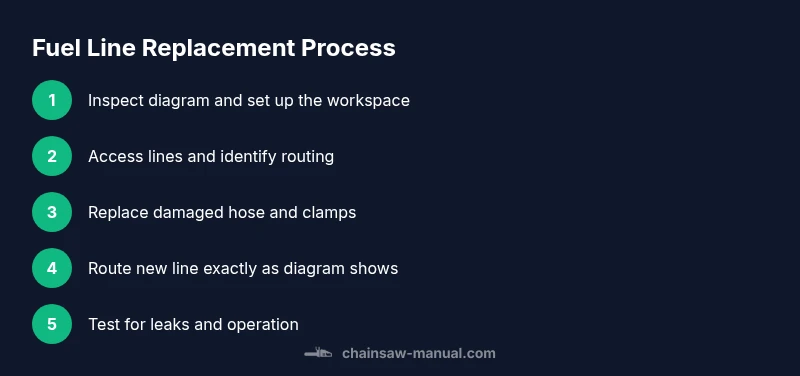
Start by selecting the correct length and diameter of fuel line from a reputable Poulan-compatible kit. Avoid generic hoses that do not match the interior lining or clamp sizes. When routing the new line, follow the diagram sequence exactly and use new clamps where the old ones show fatigue. Keep clamps and hoses aligned with their original path to prevent kinks that interrupt fuel flow. After securing the line, gently pull the line to verify there are no twists or sharp bends that could restrict flow. Do not overtighten clamps, which can cut into the hose and cause leaks. Finally, inspect every connection for a clean seal before attempting to start the engine. Chainsaw Manual recommends verifying fitment by comparing the new layout with the diagram to confirm correct routing and secure connections.
Testing and troubleshooting after service
With safety gear in place, perform a leak test by applying a soapy solution at all fittings while gently pressurizing the system away from ignition sources. If bubbles appear, tighten clamps or reseat the line, then re-test. Reconnect the spark plug and start the saw in a controlled environment; listen for unusual noises or sputtering that could indicate air leaks or fuel-starved operation. If the engine runs but exhibits rough idle, re-check line routing and the fuel filter condition. Keeping a log of observed issues and the corrective actions taken helps with future maintenance and reduces repeat problems. Chainsaw Manual underscores patience and methodical verification as keys to durable repairs and reliable starting performance.
Authority sources
For further safety guidelines and general fuel system concepts, consult authoritative sources such as OSHA and CDC/NIOSH safety guidelines, as well as EPA safety recommendations on handling gasoline and engine maintenance. These sources provide foundational safety practices that support practical, hands-on work with Poulan saws while reading diagrams and performing maintenance.
Practical takeaway: model-specific diagrams matter
Always reference the exact Poulan model’s diagram when performing any fuel-line work. Even small deviations in routing or hose size can create leaks or backflow that disrupt engine operation. This block consolidates the practical takeaways from the steps above: verify model compatibility, inspect all clamps and lines for wear, route lines as shown in the diagram, replace damaged components, and test thoroughly for leaks before running the saw under load.
Tools & Materials
- Safety glasses or face shield(Essential for eye protection against fuel spray and debris)
- Mechanic gloves(Grip and protect hands during hose removal and installation)
- Screwdrivers (flathead and Phillips)(To remove covers and clamps)
- Small pliers and hose clamps (new)(New clamps ensure a reliable seal)
- Replacement Poulan-compatible fuel line kit(Match diameter and length to model; includes line and fittings)
- Rubbing alcohol or contact cleaner(Clean fittings before installing new hose)
- Flashlight or inspection mirror(Better visibility behind covers)
- Fire extinguisher or water nearby(Have on hand as a precaution when working with flammable fuel)
- Rags or absorbent pads(Contain spills and keep the work area clean)
Steps
Estimated time: 60-90 minutes
- 1
Prepare workspace and safety checks
Put on PPE, disconnect the spark plug, and move to a well-ventilated area away from open flames. Drain or secure any residual fuel to minimize spills. Have a replacement fuel line kit and clamps ready before disassembly.
Tip: Double-check the model number to ensure you’re using the correct fuel line size. - 2
Access the fuel system
Remove the side cover or air-filter housing to access the fuel line routing. Lightly depress any clamps and locate the line from the tank outlet, primer (if present), and the carburetor inlet.
Tip: Keep track of each clamp position for accurate reassembly. - 3
Trace the diagram path
Compare the diagram with the saw’s current routing. Mark or photograph the route for reference as you identify each segment.
Tip: Use a flashlight to illuminate hidden lines behind covers. - 4
Remove damaged line and clamps
Loosen and remove clamps, carefully detach the damaged line, and inspect the fittings for wear. Replace any cracked clamps or ferrules and clean mating surfaces.
Tip: Do not force hoses through tight bends; replace with appropriate-radius sections. - 5
Install the replacement line
Slide new line into position, route it exactly like the diagram, and fasten new clamps securely. Ensure there are no twists and that lines aren’t kinked near the carburetor or exhaust.
Tip: Tug test each connection after tightening clamps. - 6
Test and verify
Reconnect the spark plug, start in a safe area, and watch for fuel leaks. Recheck clamps after the first few minutes of operation and inspect for any signs of fuel seepage.
Tip: If you smell fuel, stop and recheck the connections immediately.
FAQ
Can I run my Poulan chainsaw with a damaged fuel line?
No. A cracked or loose fuel line can leak fuel, cause lean running, and create a fire risk. Replace damaged lines before operating the saw.
No, damaged lines are unsafe. Replace them before use.
How can I tell if a fuel line is failing besides visible cracks?
Signs include hard or stiff hoses, a cracked or swollen appearance, fuel leaks at connections, or difficulty starting due to air leaks. Inspect the line along its entire length and test for leaks with a soap solution.
Look for stiffness, swelling, leaks, and difficult starts.
Do I need a Poulan-only fuel line kit, or will generic hoses work?
Using a Poulan-compatible kit is strongly recommended to ensure correct diameter, wall thickness, and clamp fit. Generic hoses may not seal properly and can fail under pressure.
Stick with model-specific fuel line kits for reliability.
What safety steps should I follow after replacing the fuel line?
Re-check all connections for leaks, ensure clamps are secure, and perform a controlled leak test before startup. Always work in a well-ventilated area away from flames.
Double-check for leaks and start in a safe area.
Where can I find official diagrams for my Poulan model?
Consult the Poulan manual for your exact model number. If unavailable, contact Poulan customer support or visit authorized service centers for model-specific diagrams.
Check the model manual or authorized services for diagrams.
Watch Video
The Essentials
- Read the diagram to confirm safe, correct routing.
- Inspect and replace aging hoses and clamps before running the engine.
- Test for leaks in a controlled, ventilated space.
- Document model-specific routing for future maintenance.