Wood Carving Chainsaw Bar: Safe & Precise Guidance
Learn how to choose and use a wood carving chainsaw bar safely, with setup, technique, and maintenance tips from Chainsaw Manual. Detailed steps help hobbyists and professionals carve clean relief work with confidence.


A wood carving chainsaw bar enables precise relief carving while maintaining control and safety. This concise answer highlights essential setup, safe operation, and maintenance tips, with a full step-by-step guide available in the article.
Understanding the wood carving chainsaw bar
A carving bar is a specialized guide bar designed for relief carving and figure work with a chainsaw. Unlike general purpose bars, carving bars often have a narrower, smoother nose and a flatter face to reduce caught wood and improve blade alignment. The kerf is optimized for fine detail, so you can remove material precisely without creating excessive waste. Some carving bars feature interchangeable tips or reinforced noses to handle hardwoods, while others emphasize reduced vibration and smoother feed through irregular stock. The overall balance of the tool matters; heavier bars can slow you down on small blocks, while longer bars provide reach for tall pieces but demand steadier control. According to Chainsaw Manual, choosing the right bar length and geometry for the task at hand dramatically affects both the quality of the relief and the operator’s safety. For novices, starting with a shorter bar (around 12–14 inches) on small logs helps build control before stepping up to larger pieces. Experienced carvers may opt for 16–20 inch bars for broader relief and deeper cuts, bearing in mind that longer bars demand stronger stance, more deliberate pull cuts, and careful path planning. Before you begin any carve, inspect the bar and chain for burrs, dings, or cracks. A damaged bar can steer the cut unpredictably and dramatically increase kickback risk. Ensure the bar is properly lubricated and that the chain tension is correct; a loose chain or a dry bar heats quickly and dulls the chain.
Choosing the right bar for carving
Choosing the right bar for carving starts with matching length to the stock and the sculpture’s profile. Shorter bars (roughly 12–14 inches) excel on small blocks, tight concave contours, and beginners learning body positions. Heavier, longer bars (up to about 20 inches) offer reach for larger relief sections but require more deliberate control and a steady stance. Pay attention to the bar’s nose geometry; a rounded or flattened nose can influence how material feeds and how easily you can guide the cut around curves. Look for a bar with a smooth contact face and replaceable nose tips to minimize downtime if you nick the nose. Anti-kickback features and a well-supported bar rail help keep the cut predictable when you encounter knots or dense grain. Chainsaw Manual’s guidance emphasizes testing balance, vibration, and chain tension in your setup. Always verify that the chain tension is correct and that you can rotate the chain freely by hand when the bar is engaged. If the bar shows signs of excessive wear, such as burrs on the rails or a cracked nose, replace it before continuing. The right bar choice improves precision, reduces fatigue, and lowers the risk of accidents during carving.
Safety gear and workspace setup
Safety starts before you pick up the saw. Wear a properly fitting helmet with a face shield, impact-rated gloves, hearing protection, and cut-resistant chaps. Protective footwear, eye protection, and a snug-fitting long-sleeve shirt reduce injuries from flying debris and wood chips. Create a stable, well-lit carving zone with a solid work surface, clamps, and a log-ready setup that prevents stock from rolling or tipping. Clear the floor of tripping hazards and keep a dedicated waste area for chips and bark. Position the stock so your body is out of the direct line of the cut, and always use both hands with a firm grip. Engage the chain brake when you pause, and never remove safety devices while the bar and chain are near work. Refer to credible sources for safety guidance as you plan each session, including NIOSH and OSHA recommendations. The Chainsaw Manual team recommends a deliberate warm-up: check the chain tension, lubricate the bar, and confirm that your PPE is in place before starting the engine.
Carving workflow fundamentals
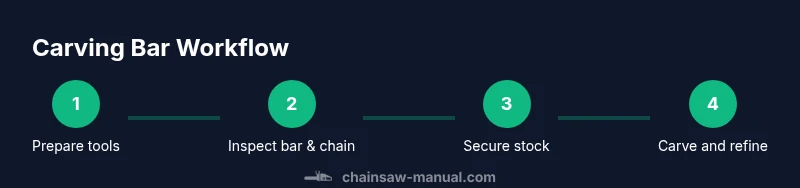
Relief carving with a carving bar emphasizes gradual material removal and careful contouring. Begin with rough shaping to establish major planes, then work toward finer details and textures. Move the bar steadily along the grain, watching for tear-out in soft or end-grain areas. Keep the saw’s RPM under control to avoid burning the wood or overheating the bar. Regularly pause to inspect your work, adjusting angles, depth, and line weight as needed. Use light, consistent pressure and short strokes to minimize bar chatter. Remember to rotate the piece as you work to maintain balanced cuts and reduce fatigue. As you refine features, switch to micro-relief passes that define edges without consuming excessive material. The goal is to reveal form while preserving structural integrity. The process is iterative: step back, evaluate, and revise before making deeper cuts. All carving should be performed with the understanding that wood responds differently depending on species, moisture content, and the presence of knots or checks.
Maintenance and care for carving bars
Carving bars require regular cleaning and inspection. After sessions, wipe away sawdust, resin, and wood fibers that can impede lubrication or cause rust. Inspect the bar rails for burrs or wear, and run a thumbnail along the edge to detect imperfections. Keep the bar well-lubricated with high-quality bar oil; ensure the oil channel isn’t blocked by debris. Check chain tension frequently, and re-tension if the chain appears loose or slow to move; a tight chain reduces heat and dulling. Replace worn-out anti-kickback dogs or wear plates as needed to sustain smooth feed and controlled steering. Store bars in a dry, clean environment away from moisture and rust-prone tools. When you replace a bar, follow the manufacturer’s torque specs for bar nuts and verify the chain is sharp. Regular maintenance reduces downtime and extends the life of both bar and chain.
Troubleshooting common issues
Common problems include balky starts, chain derailment, and bar tip wear. If the chain derails or binds, stop and inspect the chain tension, bar groove cleanliness, and wood grain direction. A dull chain creates extra resistance and heat, leading to accelerated bar wear; sharpen or replace the chain as needed and re-check tension. Bark or pitch buildup can clog the oil passages, so clean the bar oil holes and roller hubs regularly. If you notice excessive vibration or crooked cuts, check bar wear, chain alignment, and engine throttle control. Kickback danger increases when you cut with the bar nose too close to solid wood knots; adjust stance, cutting angle, and depth to maintain a safe path. For persistent issues, consult a service technician and review safety guidelines from credible sources. Chainsaw Manual emphasizes gradual progress, careful inspection, and consistent maintenance to ensure reliable performance and safety during carving.
Tools & Materials
- Carving chainsaw bar (wood carving bar)(Choose a length for your stock; 12–20 in is common.)
- Chainsaw with appropriate chain(Sharp, properly tensioned chain; match chain type to wood hardness.)
- Bar oil(Quality oil; keep reservoir full during carving to reduce wear.)
- PPE set (helmet with face shield, hearing protection, cut-resistant gloves, chaps)(Full protection for head, eyes, ears, and legs.)
- Bar tensioning tool/wrench(For adjusting bar nuts and tension.)
- Clamps or log supports(Stabilize stock for safer carving.)
- Rags and degreaser(For cleaning and maintenance.)
Steps
Estimated time: 90-120 minutes
- 1
Inspect equipment and PPE
Power off the saw, inspect chain tension and sharpness, check brakes, and verify that PPE is in place. Confirm you have a clear escape path and a stable work surface before starting.
Tip: Test chain motion by hand with the engine off; address any stiffness before powering up. - 2
Secure the log and workspace
Clamp the stock firmly to prevent rolling. Clear the area of bystanders and debris. Position yourself so the next cut is within a safe arc of motion.
Tip: Stand with feet shoulder-width apart and keep hands well clear of the cut line. - 3
Establish initial relief cut
Make a shallow relief cut to define the carving plane and establish reference lines. Avoid hogging material on the first pass to minimize stress on the bar and wood.
Tip: Review grain direction first; teeny initial bites yield cleaner results. - 4
Carve with controlled strokes
Work along the grain with measured pulls and pushes, maintaining consistent bar angle. Pause to check tear-out and adjust depth as needed.
Tip: Keep the chain sharp; dullness causes wider cuts and more heat. - 5
Refine details
Switch to lighter passes to define edges, textures, and fine lines. Use micro-movements and small, deliberate cuts to avoid gouging.
Tip: Read the wood as you go; adjust pressure to prevent chipping. - 6
Maintain bar and chain
Periodically re-oil and re-tension; inspect rails for burrs and wear. Wipe excess oil to prevent gum buildup on wood and bar.
Tip: Check chain tension every 15–20 minutes during longer sessions. - 7
Finish and safety checks
Turn off the saw and perform a final safety sweep around the work area. Store tools securely and note any bar wear for future maintenance.
Tip: Document observations about bar wear or chain performance for your next session.
FAQ
What is a carving bar?
A carving bar is a specialized guide bar designed for relief carving with a chainsaw. It usually has a narrower nose and smoother face to improve control during detailed work. Use a sharp chain and steady technique for best results.
A carving bar is a specialized guide for relief carving that helps you work precisely. Use a sharp chain and steady technique for best results.
Small project bar length?
For small projects, a shorter bar around 12 to 14 inches offers better control and quicker recovery between cuts. As you gain experience, you can move to longer bars for larger pieces.
For small projects, choose a 12 to 14 inch bar for control; longer bars are possible as you gain experience.
Bar oil needs?
Use high-quality bar oil and keep the reservoir full to minimize friction and wear. Regularly clean oil passages to prevent buildup that hinders lubrication.
Use good bar oil and keep the reservoir full to reduce wear.
Prevent kickback?
Kickback risk is reduced by keeping the bar nose away from solid wood, using the chain brake, and maintaining a stable stance. Avoid aggressive angles that bring the nose toward the wood.
Keep the bar away from the wood nose-first and use the chain brake often.
Using any chainsaw for carving?
Carving with a wood carving bar works best with a saw that has solid ergonomics, a tuned chain, and good vibration control. Hobbyists can start with standard saws equipped with the right bar and chain.
A common saw with the right bar and chain works for most hobby carving; scale up as needed.
Chain sharpening during carving?
Check chain sharpness regularly and sharpen when you notice resistance. For longer sessions, re-sharpen every couple of hours of cutting and inspect for missing teeth.
Check the chain often and sharpen when you notice resistance. Re-sharpen as needed during long sessions.
Watch Video
The Essentials
- Choose the right bar length for your stock.
- Wear full PPE and follow safety guidelines.
- Maintain bar and chain regularly to prevent damage.
- Carving requires patient, controlled strokes and plan ahead.