What to Do If Chainsaw Falls in Water
Learn safe, practical steps to recover a chainsaw after it falls in water, including drying, inspection, fuel considerations, and when to seek professional help.


Expect to act quickly: switch off power, remove the battery or unplug, and keep people away. Rinse and wipe away debris, then dry the saw thoroughly with clean towels and absorbent media. Do not attempt to start until it’s fully dry and inspected for corrosion or damage. According to Chainsaw Manual, thorough drying and cautious inspection are essential before reuse.
Immediate Safety Steps After Water Exposure
A chainsaw that falls into water is a safety-critical event. The priority is to prevent injury, avoid fuel spills, and protect the tool from corrosion. According to Chainsaw Manual, begin with power-down and area control, then assess external and internal moisture before attempting any restart. Start by turning off the engine or disconnecting the power source, and removing the battery for electric models. Move the saw to a dry, well-ventilated area away from ignition sources. If the saw is still wet, do not prime, choke, or attempt to start it. Document the incident and inspect for obvious damage, such as bent bars, compromised handles, or cracked housings. After securing, gather your safety gear and basic tools to begin a careful drying and inspection sequence. The goal is to minimize moisture intrusion into the carburetor, ignition, and electronics, which can cause costly failures or unsafe performance later.
Tools & Materials
- Safety gloves(Insulated and chemical-resistant if possible; wear during all handling.)
- Rags or absorbent towels(Keep several handy for soaking and blotting water.)
- Soft-bristled brush(Optional for loosening debris around the cooling fins and air intakes.)
- Screwdriver or tool set(Useful for removing battery panels or covers if needed.)
- Isopropyl alcohol (70% or higher)(For gentle surface cleaning after drying.)
- Drying media or fan(Non-heat options like a small fan or a drier set on low airflow.)
- Basic fuel and oil kit(Only if you need to flush or replace contaminated fuel or bar/oil.)
Steps
Estimated time: 8-12 hours active work; 24-48 hours drying
- 1
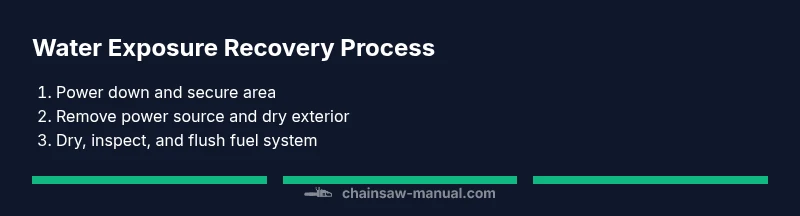
Power down and secure the area
Power down the saw and disconnect the power source (unplug for electric models or remove the battery). Move the unit away from people and any ignition sources. Engage the chain brake if possible to prevent movement. This initial step minimizes risk of accidental starts or injury.
Tip: Do this before touching any part of the saw or attempting to drain water. - 2
Remove water-contaminated components
If you can safely access, remove the battery or unplug, and drain any visible fuel if you use a gas chainsaw. Do not reassemble or replace parts until you finish the drying and inspection process.
Tip: Work in a ventilated area and have a container ready for any fluids. - 3
Clean the exterior and wipe away moisture
Gently wipe the exterior with a clean, damp cloth to remove dirt and salt residues. Avoid forcing water into the air intake or cooling fins. Dry all exposed surfaces with a clean towel.
Tip: Keep the cloth dry and change towels as they become saturated. - 4
Begin thorough exterior drying
Pat the saw dry with towels, then set it in a dry, airy space. If possible, position the bar readers so air can circulation around the chain and guide bar. Do not apply heat directly to any internal components.
Tip: No heat guns or open flames—moisture inside seals will expand with heat. - 5
Wait for complete interior drying
Allow moisture to evaporate from internal cavities. If you can, run a small fan nearby for air circulation, but do not operate the engine during this period. Depending on conditions, this can take many hours.
Tip: Patience is key; rushing the process invites corrosion. - 6
Inspect for water intrusion into critical systems
Check the ignition area, spark plug, carburetor seals, fuel lines, and air filter for moisture or corrosion. Look for signs of rust, swelling, or moisture in the spark plug well. If you see any moisture in these areas, proceed with professional inspection before reuse.
Tip: Water in the carburetor or ignition system is a common cause of post-exposure failures. - 7
Flush or replace contaminated fuel and oil
If fuel has been contaminated, drain and replace it. Replace bar oil if moisture has entered the reservoir. Ensure fresh fuel/oil ratios comply with manufacturer guidelines.
Tip: Dispose of old fuel responsibly and in accordance with local regulations. - 8
Test restart only after full safety checks
After ensuring complete dryness and no visible corrosion, reinstall components, then perform a cautious test starting away from combustibles. Observe for abnormal sounds, smells, or smoke. If anything seems off, stop and seek service.
Tip: Start with the lowest risk scenario—outside, away from flammables—and be prepared to stop immediately.
FAQ
What should I do first if my chainsaw falls in water?
First power down and disconnect the power source, then move the saw to a dry area and begin external inspection. Do not start the engine until you have dried and checked for damage.
First power down and disconnect the power source, then move the saw to a dry area and begin external inspection. Do not start the engine until you have dried and checked for damage.
Can I start the chainsaw after it dries?
Only after complete drying and a careful inspection for corrosion or internal damage. If you have any doubt, seek professional assessment before reuse.
Only after it’s completely dry and checked for damage. If you’re unsure, get a professional assessment before reuse.
Which parts are most at risk from water exposure?
Carburetor seals, ignition components, electronic modules, spark plug area, and fuel lines are especially vulnerable to moisture and corrosion.
The carburetor seals, ignition parts, electronics, spark plug area, and fuel lines are especially vulnerable to moisture and corrosion.
Should I use heat to speed up drying?
No. Heat can warp components and drive moisture into seals. Use air drying and fans instead.
No. Heat can warp parts and push moisture into seals. Use air drying and a fan instead.
How long should I wait to dry before restarting?
Drying times vary with conditions, often 24-48 hours for thorough interior drying. If moisture remains, do not restart.
Dry for 24 to 48 hours, depending on the environment. If you still see moisture, don’t restart.
Is professional service always required after water exposure?
If you notice corrosion, fluid leaks, or any abnormal performance after drying, it’s wise to have a professional inspection before reuse.
If you see corrosion, leaks, or unusual performance after drying, have a professional inspect it before using again.
Watch Video
The Essentials
- Power down and secure the saw before handling
- Dry thoroughly before attempting restart
- Inspect ignition, carburetor, and fuel systems for moisture
- Flush or replace contaminated fuel/oil as needed
- Store properly and plan a professional check if unsure