Using a Chainsaw in a Residential Area: Safe Practice Guide
A comprehensive, safety-first guide for homeowners and professionals on using a chainsaw in residential settings. Learn planning, PPE, zoning, cutting techniques, emergencies, and maintenance to protect neighbors while completing pruning or light tree work.


You will learn to safely perform controlled limb removal and yard pruning with a chainsaw in a residential area. The guide covers planning, PPE, exclusion zones, safe cutting techniques, handling emergencies, and post‑work checks to protect bystanders, pets, and property while minimizing noise and disruption. This article emphasizes Chainsaw Manual's safety-first approach.
Legal and Safety Foundations
According to Chainsaw Manual, operating a chainsaw in a residential area requires more than basic cutting skill; it demands awareness of local regulations, neighbor considerations, and strict safety protocols. Many municipalities impose quiet-hours, noise limits, and set-back rules for yard work. You must also create a clear exclusion zone to keep bystanders at a safe distance. Before the first cut, review property lines, overhead hazards, and any nearby structures or utilities. This foundation helps you protect yourself, neighbors, and property, and it aligns your work with best practices used by professionals. Remember: safety is a responsibility shared with the community, not a solo task.
Pre-Operation Planning in a Residential Area
Effective work in tight spaces starts with planning. Map out a safe work zone, identify wind direction, nearby structures, and potential fall routes. Notify neighbors if sounds or odors may be noticeable, and choose daylight hours when visibility is best. Confirm that pets and children are kept away from the work area, and establish a clear escape path in case of sudden shifts in wind or limb movement. A written plan, even for small jobs, reduces reactive decisions and keeps you in control when conditions change. Chainsaw Manual stresses the importance of proactive risk assessment as a core element of safe practice.
Equipment and Setup for Safety
Safety begins with the right gear and a well-prepared tool. Wear a hard hat with a face shield, hearing protection, cut-resistant pants or chaps, sturdy gloves, and steel-toed boots. Ensure the saw has a functioning chain brake, proper chain tension, and sharp teeth. Check fuel and oil levels (for gas-powered saws) or battery charge (for electric models), and inspect hoses and the spark plug or battery connections. Have a first-aid kit, a fire extinguisher, and a means to communicate in an emergency. Keep a rope or strap handy to control limbs as needed and a means to lower them safely. Spares, such as extra bars or chains, can save time if a replacement is required.
Safe Cutting Techniques in Limited Space
Cutting in a residential area requires deliberate technique to keep bystanders safe and property intact. Stand with feet shoulder-width apart, knees slightly bent, and your weight evenly distributed. Keep both hands on the saw handles, and engage the chain brake when repositioning. Avoid cutting above shoulder height to reduce kickback risk, and use a relief cut to control limb movement before making the final cut. Plan the cut direction so the limb falls toward an unobstructed area away from structures or people. Work slowly, make small, controlled cuts, and stop if stability is lost or if the limb binds. Always maintain a clear escape route, so you can step back rather than twist your body into danger.
Handling Refusals and Emergencies
If bystanders appear unexpectedly, pause work and reassess the scene. Communicate clearly with others about where to stand and how long the process will take. In case of an injury, stop immediately, apply first aid, and call emergency services if needed. If there is a fuel leak, leave the area and ventilate before re-entering. Maintain clear, calm instructions to any helpers, and never attempt risky maneuvers under stress. A well-rehearsed plan for emergencies reduces delays and prevents panic.
Maintenance, Storage, and Neighbor Considerations
When work is done, clean up thoroughly to minimize disruption. Store fuel and oily rags away from heat sources, and dispose of branches and debris promptly to avoid attracting pests or creating hazards for neighbors. After use, inspect the chain for wear and looseness, and perform routine maintenance per the manufacturer’s guidance. If you share a boundary with others, consider weather conditions that could push wind-blown debris toward nearby yards, and plan future work to respect quiet hours or shared space. Proper maintenance and thoughtful scheduling protect both your equipment and the community.
Common Mistakes and Quick Fixes
Common errors include working without a defined exclusion zone, cutting from unstable positions, and neglecting PPE. Always verify chain tension and brake function before starting, and never assume a limb will fall where you expect. If a cut binds or the limb shifts unexpectedly, stop, reassess the plan, reposition safely, and call for help if needed. Keeping a short, practical checklist reduces missteps and speeds up the job while maintaining safety.
Quick Review: Key Techniques for Safe Residential Cutting
A successful residential cut hinges on planning, protection, and posture. Keep your stance steady, maintain two-handed control, and limit cut height to minimize kickback risk. Use relief cuts to guide the limb’s fall and avoid obstacles like fences, vehicles, or decking. Always maintain a clear exit path and keep neighbors informed about work within reach of their property.
Tools & Materials
- chainsaw (with chain brake)(Ensure chain tension and sharpness; verify brake engages fully)
- PPE ensemble(Hard hat with face shield, hearing protection, cut-resistant pants, gloves, boots)
- first-aid kit(Fully stocked for minor injuries)
- fire extinguisher(Keep within easy reach in case of fuel flare)
- rope or webbing(For securing branches and guiding drops)
- spare chain and tools(Fuel and bar oil according to saw model)
- bar and chain oil(Check oil delivery; refill as needed)
- fuel mix (gas saw)(Follow manufacturer mix ratio)
- battery charger or spare battery(For electric chainsaws)
- marker tape or chalk(Mark exclusion zones and fall lines)
Steps
Estimated time: 45-90 minutes
- 1
Survey site and establish exclusion zone
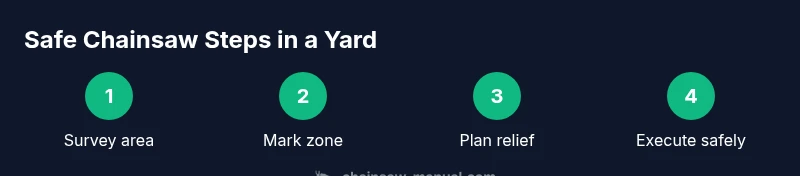
Walk the area to identify people, pets, vehicles, and structures within the fall and swing zones. Mark a clear exclusion zone with tape or cones and communicate with nearby neighbors about expected activity and duration. Confirm that weather and lighting allow safe visibility.
Tip: Set a minimum safe distance (e.g., 10 meters) between the cut area and bystanders. - 2
Inspect equipment and PPE
Check the chainsaw’s chain tension, lube, and brake. Put on full PPE, including helmet, face shield, ear protection, gloves, and cut-resistant pants. Do a quick test start away from people to ensure the saw runs smoothly.
Tip: If PPE or equipment is damaged, postpone work and replace or repair before resuming. - 3
Plan cut direction and relief cut
Decide the safest fall line away from structures and utilities. Plan a relief cut on the side opposite the fall direction to reduce the chance of pinching or bar binding.
Tip: Relief cuts should be shallow and completed before final cuts. - 4
Position yourself and secure the limb
Stand with feet shoulder-width apart, weight balanced, and body to the side of the limb. Use ropes or wedges to secure or guide joints if needed. Maintain a clear escape path in case of limb shift.
Tip: Never stand directly in line with the cutting area. - 5
Make the relief cut
Start with the top-side relief cut to control the limb’s movement. Keep the saw steady and avoid twisting your wrists. Stop if the limb binds or shifts unexpectedly.
Tip: A shallow relief cut reduces kickback risk during the final cut. - 6
Make the back cut
With control, complete the back cut keeping tension on the limb. Cut until you feel the limb free to drop, then step back along your exit path.
Tip: Do not cut completely through until you’ve confirmed the limb’s weight direction. - 7
Lower and guide the limb safely
As the limb begins to fall, ease the bar past the obstacle and guide the piece down with the rope if needed. Keep hands and body clear of the path of the falling limb.
Tip: If the area is tight, lower the limb in sections rather than in one drop. - 8
Cleanup and debris management
After the limb is removed, clear branches and debris promptly to reduce trip hazards. Inspect the area for nails, wires, or other hazards and remove them safely. Top off fuel and oil as needed and check the tool for any wear.
Tip: Dispose of debris according to local regulations and leave the site tidy. - 9
Post-work inspection and safety check
Review tool condition, ensure all PPE is accounted for, and confirm neighbors were informed of the completed work. Note any maintenance needs for the next session and store equipment properly.
Tip: Document any issues so you can address them before the next use.
FAQ
Is it legal to operate a chainsaw in a residential area without a permit?
Permit requirements vary by locality. In most residential settings, you do not need a special permit to prune with a chainsaw, but you must follow safety rules, noise limits, and property setbacks. Check your city or county code and homeowners association guidelines for specifics.
Permit requirements differ by location, so check local codes. In most homes, chainsaw pruning is allowed with safety compliance and noise limits.
What PPE is mandatory when using a chainsaw in a yard?
At minimum, wear a helmet with face shield, hearing protection, cut-resistant pants, gloves, and sturdy boots. Eye protection and a sturdy jacket can further reduce risk from debris.
Wear a helmet with face shield, hearing protection, cut-resistant pants, gloves, and sturdy boots.
What should I do if the saw kicks back or a limb binds?
If kickback or binding occurs, stop cutting, reposition safely, and perform a new relief cut before continuing. Never force the bar through a binding limb.
If it kicks back or binds, stop, reposition safely, and re-evaluate before continuing.
Can I use an electric chainsaw in a quiet neighborhood?
Electric chainsaws are generally quieter than gas models and can be suitable for residential work. Ensure you have a suitable power source and be mindful of cord management to avoid hazards.
Yes, electric chainsaws are often suitable for home yards if you handle cords safely.
How do I notify neighbors before starting work?
Inform neighbors about the planned work, duration, and any noise that might occur. Post a brief notice if many properties are affected and offer to pause during late hours or sensitive times.
Tell neighbors what you’re doing, when you’ll work, and offer to adjust timing if needed.
What basic maintenance should I perform after a residential job?
Clean the saw, inspect the chain for wear, refuel if necessary, and store it safely. Check oil levels and dispose of debris to prevent pests.
Clean and inspect the saw, refill what’s needed, and store properly.
Watch Video
The Essentials
- Plan the job and establish a safe zone.
- Wear full PPE and verify equipment before cutting.
- Use proper cutting technique to minimize kickback.
- Cease work if conditions change and prioritize safety.