Supersaw Chainsaw Safety and How-To Guide
Learn how to safely operate a supersaw chainsaw with practical steps, PPE guidance, maintenance checks, and techniques for efficient cutting. Perfect for homeowners, DIYers, and pros seeking safety-first guidance from Chainsaw Manual.


Learn how to safely operate a supersaw chainsaw from prep to finish. This guide covers PPE, pre-use checks, starting procedures, cutting techniques, and post-use maintenance—designed for homeowners, DIYers, and professionals who want to work efficiently while minimizing risk.
What is a supersaw chainsaw and when to use it
According to Chainsaw Manual, a supersaw chainsaw is a high-powered tool designed for heavy-duty cutting with a longer bar and increased torque. It excels in felling large trees, bucking substantial logs, and performing demanding cleanup tasks where speed and reliability matter. While it shares core operation with standard chainsaws, the supersaw’s power band is tuned for steady performance under load, which can reduce stalling and heat buildup when used correctly. Homeowners, DIY enthusiasts, and professionals who routinely handle large-diameter wood will benefit from understanding its capabilities, limitations, and best-practice handling. The goal is to maximize productivity while maintaining safety and control in challenging environments.
This section sets the stage for safe practice by distinguishing when a supersaw is appropriate and how it fits into your workflow. It’s not a toy; treat it as a professional tool that requires discipline, planning, and adherence to safety protocols. With the right approach, you can complete demanding jobs faster without compromising on safety or quality. Chainsaw Manual emphasizes preparation and technique as the two pillars of safe operation.
-1.1e-9?null?0?0?0?1
Tools & Materials
- Supersaw chainsaw(Ensure the model is in good mechanical condition with a sharp chain and functional safety features.)
- Bar and chain oil(Use clean oil suitable for your climate; keep the oil reservoir full for consistent lubrication.)
- Fuel mix container(Mix according to manufacturer specs (usually gasoline with 2-stroke oil in the correct ratio).)
- PPE kit(Helmet with face shield, hearing protection, cut-resistant chaps or pants, gloves, and sturdy boots.)
- Wedges and tool for felling(Wood wedges and a rubber mallet can help control felling direction.)
- Spare chain and sharpening file(Carry a spare chain and a file or quick sharpen kit for on-site maintenance.)
- Tool kit(Screwdrivers, sockets, and a chain tensioning tool for on-site adjustments.)
Steps
Estimated time: 45-75 minutes
- 1
Inspect safety gear and environment
Before starting, verify your PPE is correctly worn and undamaged. Scan the work area for tripping hazards, nearby people, and potential kickback sources. Clear a safe retreat path and establish an escape direction in case of a chain catch or stall.
Tip: Wear chaps or cut-resistant pants and boots with good traction to minimize injury risk if you slip or a kickback occurs. - 2
Check the machine and buffer fluids
Inspect the fuel level, bar oil reservoir, and chain tension. Ensure the air filter is clean and the chain brake engages when you apply the front hand guard. Lubricate the bar and chain as required and verify there are no leaks.
Tip: When in doubt, perform a quick diagnostic: idle, engage the chain brake, and gently rev to ensure the chain moves smoothly. - 3
Prepare fuel and chain condition
Mix fuel using the correct ratio and ensure the chain is sharp. If you’ve been running a dull chain, replace it or sharpen before attempting significant cuts. Store fuel away from heat sources and open flames.
Tip: Never run on old or contaminated fuel; a fresh mix reduces engine damage and improves performance. - 4
Start the engine safely
Engage the chain brake, set the saw on a stable surface, and use a proper starting stance. Use the correct choke and throttle settings according to your model, and never start the saw while holding it with one hand.
Tip: Always start with the spark plug primer clean and the throttle locked in the correct position to avoid kickback on startup. - 5
Adopt the correct cutting stance
Stand with feet shoulder-width apart, one foot slightly behind the other for balance, and keep both hands on the saw. Keep the bar tip slightly above belt level to reduce kickback risk during initial cuts.
Tip: Maintain a relaxed grip and avoid overreaching; reposition your body instead of twisting the torso during cuts. - 6
Make controlled cuts
Begin with a shallow notch to guide the cut, then steadily feed the wood while maintaining a stable stance. Keep the saw parallel to the ground to prevent pinching and reduce the chance of kickback.
Tip: Use wedges for large-diameter rounds to prevent the bar from binding and to guide the cut safely. - 7
Shut down and clean up
Turn off the engine, engage the chain brake, and let the chain come to a complete stop. Clean the bar and chain, remove debris, and inspect for wear or damage. Store the saw in a dry, secure location.
Tip: Document any issues you found and schedule maintenance before the next use.
FAQ
What is a supersaw chainsaw and how does it differ from a regular chainsaw?
A supersaw chainsaw is a high-powered version designed for heavy-duty cutting with a longer bar and higher torque. It maintains standard safety features but requires stricter discipline and better technique to handle the extra power safely.
A supersaw is a heavy-duty saw with more power and a longer bar; use the same safety rules but be extra cautious with handling.
How can I prevent kickback when using a supersaw chainsaw?
Kickback is prevented by maintaining a firm grip, keeping the bar tip away from your body, using proper stance, engaging the chain brake during prep, and avoiding pinching with the bar. Use wedges for large cuts and cut in controlled passes.
Hold the saw with both hands, keep the bar away from you, and use the chain brake when repositioning.
How often should I sharpen or replace the chain on a supersaw?
Sharpen the chain as soon as you notice reduced cutting efficiency or rise in heat. Replace a damaged or worn chain promptly to avoid derailment or kickback and to maintain safe cutting angles.
Keep the chain sharp; replace if damaged or excessively worn.
Is it safe to operate a supersaw chainsaw in wet conditions?
Wet conditions increase risk due to reduced traction and wood slipperiness. Slow down, maintain grip, use slip-resistant boots, and avoid overhead cuts in slippery weather.
Be extra cautious—the ground and wood can be slick when it’s wet.
What maintenance should I perform after each use?
Wipe down the saw, clean the cooling fins, inspect the chain tension, and ensure the bar is clean and properly oiled. Store in a dry place and log any worn components for replacement.
Clean and check the saw after use, then store it safely for next time.
Watch Video
The Essentials
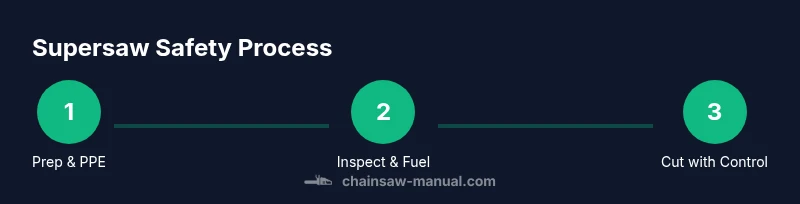
- Inspect PPE and surroundings before every use
- Maintain proper stance to prevent kickback
- Keep chain sharp and lubricated for safe cuts
- Use wedges for large-diameter wood when necessary
- Always finish with proper shutdown and maintenance