Is It Bad for a Chainsaw to Rain? A Safety Guide
Explore whether rain damages a chainsaw and how to protect and restore your tool after exposure. Practical guidance from Chainsaw Manual on safe maintenance, storage, and post-rain checks.


Rain exposure is not instantly fatal to a chainsaw, but it increases the risk of rust, fuel issues, and moisture-related electrical problems in many models. If your saw gets wet, dry it thoroughly before use, check the air intake and spark plug, and perform a quick maintenance check afterward to ensure safe operation.
Why Rain Exposure Matters
Rain is not a magical solvent for metal, but moisture accelerates corrosion, especially on exposed components like the bar rails, fasteners, and any uncoated metal surfaces. In many chainsaws, rain can funnel into the cooling fins, air intake, and spark plug area if the machine is left open or not properly shielded. According to Chainsaw Manual, the most important thing is rapid moisture management and a disciplined post-exposure inspection routine. The key idea is that you’re protecting both the metal hardware and the fuel- and ignition-related systems from moisture damage. Homeowners, DIY enthusiasts, and professionals should treat a rain exposure event as a maintenance cue rather than a show-stopper for weather: with prompt action, you can prevent costly repairs and downtime.
What Happens When Water Touches Critical Components
Water can affect multiple systems on a chainsaw. The carburetor and fuel lines may gum up or corrode, causing hard starting or idle instability. The air filter can become waterlogged, reducing engine efficiency, while moisture around the spark plug can cause intermittent firing or misfires. Electrical models add another layer of risk: moisture in connectors or the ignition coil can lead to poor ignition or short circuits. Even dried-out, a saw that has been wet may develop rust on screws, bar nuts, and chain brake components. The takeaway is to inspect and dry these areas first, then perform a cautious test after drying. Chainsaw Manual emphasizes thorough drying and a cautious, staged test rather than a full throttle startup straight away.
Immediate Actions If Your Saw Gets Wet
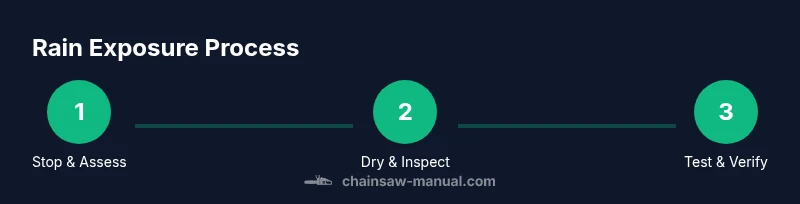
If rain knocks your chainsaw to the ground or otherwise wets it, stop using it immediately. Remove the battery on electric models if accessible and unplug any power source. Wipe down the exterior with a dry cloth to remove surface moisture, then use compressed air or a gentle air flow to dry hard-to-reach gaps. Do not use heat to dry the saw; high temperatures can warp seals or drive moisture deeper into sensitive parts. After drying, inspect the air intake, spark plug, and fuel lines for moisture or corrosion. If water has entered the fuel system or carburetor, consider a priming run with fresh fuel and, if in doubt, consult a professional.
Best Practices to Prevent Rain-Related Damage
Prevention starts with storage. Keep the saw in a dry, elevated location with a lightweight rain cover or a purpose-built chainsaw case that allows ventilation but limits direct rain exposure. When working outdoors, position the saw under a canopy or tarp that won’t trap water around the housing. Lubricate the bar rails and chain with a thin coat after exposure to rain to prevent rust. Periodically check seals and gaskets for wear, particularly around the recoil housing on petrol models and around the starter on electric models. A simple post-work wipe-down can make a big difference in longevity and performance.
Maintenance Checks After a Rain Incident
After any rain exposure, perform a quick but thorough maintenance check: inspect the spark plug for moisture or fouling, replace the air filter if it’s damp, and inspect the fuel system for moisture. If the saw has a fuel/oil mix, ensure the fuel is fresh and properly mixed; stale fuel can varnish or gum up carburetors. Check the cooling fins for debris that moisture may have accelerated, and ensure the chain brake and clutch areas are free of moisture and corrosion. For electric models, verify battery contacts are dry, and inspect for corrosion on terminals. A short post-exposure test in an upright, stable position helps confirm everything runs smoothly.
Common Myths vs. Realities
Myth: Water can suddenly destroy a chainsaw in a single moment. Reality: Most damage happens through slow corrosion and moisture intrusion over time if not addressed. Myth: You must completely dry a saw before any use. Reality: A quick dry, followed by a proper inspection and test, is often enough, but never skip checking critical parts like the spark plug and air intake.
Weather-Ready Accessories and Storage Solutions
Invest in a weather-resistant storage solution and protective covers designed for chainsaws. Look for breathable, water-repellent cases that shed water but avoid trapping moisture. Consider a simple outdoor shelter with a raised platform and a dedicated tool rack to keep the saw off the ground. For long-term storage, add a rust-inhibiting spray to metal surfaces and maintain a consistent lubrication routine for the bar and chain. A small maintenance kit with a rust remover, spare parts, and sealing lubricant makes on-the-fly fixes easier.
Troubleshooting After Rain: Quick Scenarios
Scenario A: The saw starts but runs roughly after a rain. Action: Dry and inspect the air intake and spark plug, then replace a damp air filter if necessary. Scenario B: The chain is stiff and slow to move. Action: Check bar oil and lubricant; a wet chain can seize if not lubricated. Scenario C: The ignition is weak or intermittent. Action: Inspect electrical connections for moisture and clean as needed. If in doubt, consult a professional.
Case Studies: Real-World Rain Scenarios and Lessons
In field reports collected by Chainsaw Manual, a professional logger once left a rain-soaked saw on a damp trailer overnight. The next day, rust had formed on exposed screws and the air filter was damp. After replacing the filter and applying rust protection, the saw operated normally. Another homeowner found that rain caused a carburetor to flood; replacing the fuel line and draining the carburetor resolved the issue. These cases underscore the value of prompt drying, thorough inspection, and appropriate maintenance after rain exposure.
When to Service or Replace Following Rain Exposure
If a chainsaw shows repeated starting problems, persistent corrosion, or fuel system symptoms that don’t improve after drying and basic maintenance, schedule service with a qualified technician. Persistent moisture in electrical components or seals can indicate deeper problems that merit professional attention or part replacement. Chainsaw Manual recommends documenting any rain-related issues and maintaining a proactive maintenance schedule to extend tool life and ensure safety.
Tools & Materials
- Dry microfiber cloths or absorbent rags(Keep multiple on hand for rapid moisture removal)
- Compressed air or blower (low pressure)(Use to dry hard-to-reach gaps safely)
- Rust inhibitor or light lubricant (non-volatile)(Apply to metal surfaces after drying)
- Screwdriver set (Flat/Phillips)(For quick fastener checks)
- Spark plug wrench(Inspect and replace if fouled or wet)
- Air filter replacement or cleaning kit(Have spare filters on hand)
- Carburetor cleaner (fuel system safe)(If accessible moisture is suspected)
- Bar and chain oil(Re-lubricate after drying)
- Battery charger or spare battery (for electric models)(Ensure dry storage and safe charging area)
Steps
Estimated time: 25-40 minutes
- 1
Stop, power down, and disconnect
Immediately cease operation when rain exposure occurs. For electric models, unplug and remove the battery to prevent accidental starts. This initial pause minimizes the risk of short circuits or injury.
Tip: Do not attempt to start a wet saw; moisture in the ignition system is unsafe. - 2
Wipe surface moisture
Use a dry microfiber cloth to remove surface water from the housing, bar, chain, and handles. Focus on the air intake, muffler cover, and any exposed electrical connectors. This reduces the chance of rust forming before you inspect interior parts.
Tip: Work from top to bottom to avoid dripping water onto areas you’ve already dried. - 3
Dry hard-to-reach areas
Blow air into gaps around the spark plug, carburetor cover, and throttle housing if applicable. Avoid forcing moisture deeper into the engine; use a low-pressure stream and keep the saw upright.
Tip: Keep the engine level to prevent pooling in critical cavities. - 4
Inspect critical components
Check the spark plug for moisture and fouling, inspect the air filter for dampness, and look for rust on screws and fasteners. Replace damp parts before attempting operation to avoid poor performance or damage.
Tip: If in doubt, replace questionable parts rather than risk a failure. - 5
Reassemble with care and re-lubricate
Reinstall any removed parts, reassemble the air intake area, and apply a light coat of rust-inhibiting lubricant to exposed metal and fasteners. Refill with fresh fuel if applicable and ensure bar oil reservoir is topped up.
Tip: Don’t oversaturate seals; a light, even coat is sufficient. - 6
Test in a safe environment
Start the saw in a controlled area, gradually applying throttle after a observed idle. Listen for unusual sounds, check for smoke, and watch for excessive exhaust or misfiring. If anything seems off, stop and reassess.
Tip: If you hear grinding or see sparking, shut down immediately.
FAQ
Is it safe to operate a chainsaw after it has rained on it?
Not immediately. Dry and inspect essential components, then perform a cautious test run. If you detect moisture in the fuel system or ignition, do not operate until resolved.
You should not operate immediately after rain. Dry and inspect first, then test carefully.
Which parts are most at risk when a chainsaw gets wet?
Key areas include the spark plug, air filter, carburetor, fuel lines, and exposed fasteners. Moisture can cause misfires, starting problems, and rust.
Spark plug, air filter, carburetor, and fuel lines are most at risk.
Can rain damage the carburetor or fuel lines?
Yes, prolonged exposure can introduce moisture or cause corrosion, affecting fuel delivery. If you suspect contamination, inspect and replace affected components.
Rain can affect the carburetor and fuel lines; inspect and replace if needed.
Should I run the chainsaw after drying it?
Only after a thorough dry, inspection, and confirmation that all critical parts are free of moisture. Start with a brief idle and observe for abnormal behavior.
Yes, but only after drying and confirming everything looks normal.
What if the air filter is soaked?
Do not reuse a soaked filter. Replace it and dry the housing to prevent re-contamination. An air filter in good condition is essential for proper combustion.
If the air filter is wet, replace it and dry the housing.
How often should I service a saw after rain exposure?
Follow a post-rain inspection routine and schedule a professional check if you notice ongoing performance issues or corrosion. Regular maintenance should be targeted at areas most touched by rain.
Schedule a check if issues persist; otherwise maintain routinely.
Watch Video
The Essentials
- Dry thoroughly after rain exposure
- Inspect and replace damp critical parts
- Lubricate and test before next use
- Store chainsaw in a dry, protected location
- Use rain-ready accessories for protection