How to Make a Paper Chainsaw: Safe Craft Guide
Learn a step-by-step, safe approach to making a paper chainsaw using cardboard, paper, and glue. Perfect for classrooms and home crafts, with safety tips, templates, and decorative finishes.


Looking for a safe, educational craft? This quick guide shows how to make a paper chainsaw using everyday materials like construction paper, cardboard, scissors, glue, and markers. You’ll learn a simple, kid-friendly design that demonstrates the concept of a saw without any real blades. Follow the step-by-step approach for a sturdy model, clear instructions, and decorative finishing touches.
The Concept: What a Paper Chainsaw Is and Why It Makes Sense
A paper chainsaw is a kid-friendly craft that simulates a tool using paper, cardboard, and adhesives. In this section we explore the idea of a paper chainsaw and explain how to make a paper chainsaw as a safe classroom project. The goal is to teach creativity, basic mechanical thinking, and the importance of design without introducing hazardous materials or real blades. By replicating the silhouette and moving parts with simple components, you can discuss how a real chainsaw works—without risks. The project emphasizes safety, planning, and patience, and it rewards careful construction with a tangible, shareable model. When you start, decide on a scale that suits your audience, whether it’s a tabletop display for a science fair or a hands-on activity during a safety lesson. Keep expectations realistic: a paper model won’t cut, but it can spin its decorative “bar” and demonstrate movement through simple, safe mechanisms.
Safety and Age-Appropriate Guidelines
Safety comes first, even with paper crafts. For younger participants, limit the project to pre-cut shapes and glue-based assembly to avoid sharp edges. If scissors are used, choose blunt-tipped safety scissors and supervise every cut. Establish clear rules about what is allowed on the work surface, such as no real blades, no metal sinks, and no hot glues for kids under a certain age. Use kid-friendly tools like safety scissors, kid-safe glue sticks, and washable markers. When teaching about tools, frame the activity as an exploration of mechanism and motion rather than production of a functional tool. Finally, set a time allowance and break opportunities; extended sessions can lead to fatigue and mistakes.
Materials, Design, and Planning
Before you start, gather essentials and optional add-ons. Core materials: construction paper or cardstock in multiple colors, sturdy cardboard for the body, safety scissors, school glue or glue sticks, tape, a ruler, a pencil, and decorative markers or stickers. Optional items: a small, simple “pivot” made from a paper fastener or brad to simulate motion, string or yarn for a hanging display, and printed templates to speed up layout. Plan the design by sketching a simple silhouette of a chainsaw and a decorative blade. Decide whether your model will have a rotating “bar” or a stationary blade; for most classrooms, a stationary blade with a movable chain is easiest to simulate using layered shapes.
Designing Your Paper Chainsaw: Templates and Assembly
Design is the bridge between concept and craft. Start with a basic template for the body, guide bars, and decorative chain links. Print or draw shapes on paper, then cut them out with care. Use the ruler to ensure straight edges and the glue to assemble layers securely. Glue the main body first, then attach the bar so it can hold the chain. If you want a working “motion,” consider a simple pivot with a paper brad to rotate a chain rung, but keep the mechanism light and safe. Label parts for teaching purposes, so learners can discuss where motion occurs and how forces transfer through the model.
Understanding the Build: Step-by-Step Assembly Concepts
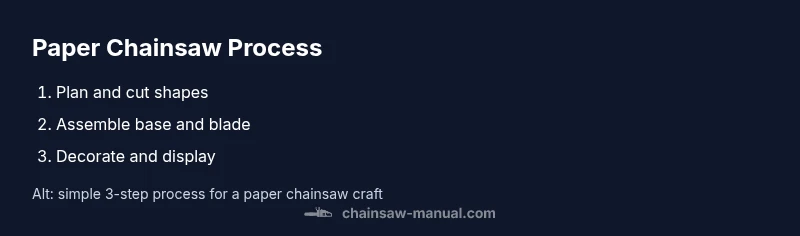
Breaking the project into small, safe steps keeps learners engaged. Start by assembling the base body from a single piece of cardstock, then layer the decorative blade and bar. Attach any pivot points with brads or paper fasteners so parts move without hazards. Finish by adding the chain links as overlapping circles or ovals glued along the bar. Ensure all pieces are firmly glued and allow glue to dry before handling. This section emphasizes planning, measurement accuracy, and deliberate sequencing.
Finishing Touches and Personalization
Finish the model with color, texture, and labeling. Use markers to draw grooves on the “blade” and apply label stickers to explain major parts: handle, bar, chain, and safety guards. Add a clear varnish or a light coat of school glue to smooth edges and reduce exposed paper edges; let dry completely. Personalization options include choosing color schemes to resemble real brands or designing fictional logos. Display ethics: ensure the final piece is clearly a craft—not a real tool—so viewers understand its educational purpose.
Troubleshooting Common Issues
If pieces don’t align, re-measure parts with a ruler and trim gently with scissors. If the glue dries lumpy, use a thin layer and let it cure fully before moving the model. For weak joints, reinforce with tape on the back or a dab of glue at contact points. If the decorative chain doesn’t lay flat, adjust the spacing and use additional glue to secure the links. Remember, patience yields cleaner results than rushing through assembly.
Inspiration, Variations, and Extensions
Explore variations by changing the bar length or blade shape to reflect different model years or styles. Try inserting a simple paper pulley or a string-activation mechanism to create a small, visible demonstration of motion without real tools. If you’re teaching, incorporate a brief safety discussion about PPE and safe tool handling, then connect the craft to broader topics like engineering design and material properties. The project scales up or down easily for individual work or group collaboration.
Tools & Materials
- Construction paper or cardstock (various colors)(Choose thick paper for durability)
- Cardboard or cardstock for body(Coroplast or poster board works well)
- Safety scissors(Rounded tips; adult supervision for younger kids)
- School glue or glue sticks(Non-toxic and washable if possible)
- Tape (masking or clear)(Optional for extra reinforcement)
- Ruler(Metal ruler recommended for straight cuts)
- Pencil(For tracing templates)
- Markers or stickers(For decoration and labeling)
- Templates or printed outlines(Speed up layout and consistency)
- Paper fastener or brad(Use only for safe pivots if making moving parts)
Steps
Estimated time: 30-45 minutes
- 1
Gather essential materials
Lay out all required materials on a clean workspace and prepare templates for main pieces. Trace parts on cardboard and paper, then cut them out using safety scissors. This planning step reduces mistakes later and helps you visualize the build before glue hits the table.
Tip: Always double-check that scissors are safety scissors and that edges are free of jagged cuts. - 2
Cut the body and bar templates
Using a ruler, trace the main body shape and the decorative bar on cardboard or thick paper. Cut out the pieces carefully, keeping edges straight for a clean fit. Set pieces aside in order to avoid mixing parts during assembly.
Tip: Keep spare scrap pieces to test glue strength before applying to the final parts. - 3
Assemble the base and bar
Glue the body pieces together to form a sturdy base. Attach the decorative bar across the top, ensuring a snug fit so the model won’t wobble. If using a pivot, insert a paper fastener at the intended rotation point and secure the bar to the body.
Tip: Press firmly for 5–10 minutes to ensure strong joints and aligned edges. - 4
Add a simple chain motif
Create chain links from small circles or ovals and glue them along the bar to mimic a decorative chain. Space links evenly and allow glue to set before moving the piece. This keeps the look realistic without using metal or sharp parts.
Tip: If links won’t lie flat, apply a tiny dab of glue and press them with a fingertip until set. - 5
Attach handle and blade decoration
Affix a handle shape to the body and a decorative blade onto the bar. Ensure no parts protrude dangerously and that all edges are rounded. Use markers to add grooves and texture to the blade for a believable finish.
Tip: Keep the blade purely decorative; avoid any sharp edges on the final piece. - 6
Decorate and finalize
Apply colors, labels, and textures to personalize your model. Let all glue and markers dry completely before handling or displaying. Consider adding a small card that explains the educational purpose of the craft.
Tip: Seal surfaces with a light coat of glue or varnish to reduce curling and improve durability.
FAQ
What age is this project best suited for?
This project is ideal for ages 6 and up with adult supervision. For younger children, simplify templates and use larger pieces to minimize risk. Always monitor carving and cutting steps to ensure safety.
Great for ages six and up with adult supervision. For younger kids, simplify shapes and supervise all cutting steps.
Can I use real blades or tools?
No. This is a decorative, paper-based model designed for learning and creativity. Avoid any sharp blades or functional tools; keep all activities kid-friendly and safe.
Absolutely not. It’s a decorative project built from paper and cardboard for learning and safety.
What materials work best for a durable result?
Construction paper, sturdy cardboard, and quality glue sticks provide durability. Templates help with consistent shapes, and markers add visual detail without requiring extra tools.
Construction paper, sturdy cardboard, good glue, and clear templates give the best results.
How long does the project take from start to finish?
Most sessions take about 30–60 minutes, plus additional drying time for glue. Break the work into stages to maintain focus and safety.
Usually about half an hour to an hour, with optional drying time.
How can I make the chain look more realistic?
Create small, overlapping paper links and glue them along the bar. You can vary link sizes for a more dynamic look while keeping all parts nonfunctional.
Use overlapping paper links to mimic a chain along the bar without any risk.
How should I discuss motion safely in this project?
Explain mechanical movement through layered parts and pivots that do not move any real hardware. Focus on teaching concepts like force transfer and rotation with safe, paper-based demonstrations.
Explain movement using safe, paper-based pivots and layers, not real tools.
Watch Video
The Essentials
- Plan before cutting and tracing parts.
- Use safe tools and supervise younger learners.
- Decorate to teach parts without creating hazards.
- Allow sufficient drying time for durable results.