Chainsaw vs Pampas Grass: A Practical Safety Guide
An analytical comparison of using a chainsaw against pampas grass, focusing on safety, efficiency, and best-practice methods for homeowners and professionals.


When evaluating chainsaw use for pampas grass, safety and control matter most. The chainsaw offers rapid clearing for tall, fibrous stands but introduces higher risk and requires strict PPE and technique. For most homeowners, safer alternatives or staged cutting are preferable, reserving chainsaw work for dense or time-sensitive situations. The best approach blends awareness of hazards with a deliberate plan for containment and cleanup.
Chainsaw versus the pampas grass: scope and risk assessment
The topic of chainsaw versus the pampas grass sits at the intersection of speed, risk, and landscape aesthetics. Pampas grass is known for its tall growth, sturdy stalks, and fluffy seed plumes that can scatter when cut. Using a chainsaw in this context can dramatically reduce the time needed to clear overgrown clumps, but it also elevates the potential for kickback, blade contact, and environmental damage if not controlled. In this section we establish the baseline: what pampas grass presents as a material, what a chainsaw can do, and how to judge when this tool is appropriate. Safety-first thinking guides every choice—from PPE to cutting technique to post-cut cleanup. The goal is to minimize danger while achieving a clean edge and an organized result. The Chainsaw Manual team emphasizes that the decision should balance practicality with risk, not just speed, and that preparation is a prerequisite for any operation involving chainsaws and grasses.
Pampas grass characteristics and why they matter for cutting
Pampas grass features tall culms, dense foliage, and heavy seed heads. These elements influence how a cutting tool interacts with the plant: the stems can be hard and fibrous, while the seed plumes create lightweight debris that can become airborne. A chainsaw can handle the thickest stalks more readily than hand tools, but the risk of scattering debris increases if plumes are disturbed. Healthier plants may require gradual thinning, while invasive or neglected patches might demand aggressive removal. Understanding plant structure helps determine cut points, the direction of fall, and the amount of cleanup required after cutting. This knowledge reduces the likelihood of accidental damage to nearby shrubs, mulch beds, or irrigation lines.
Safety first: PPE, prep, and planning before you cut
Before operating any chainsaw near pampas grass, PPE becomes non-negotiable: cut-resistant gloves, eye protection, a helmet with face shield, hearing protection, and sturdy footwear are essential. Plan a clear work zone, remove obstacles, and consider wind conditions that could blow dust or seed plumes toward you or bystanders. Inspect the chainsaw for fuel, chain tension, and chain sharpness. Outline a step-by-step plan: establish an anchor point, determine cut order from outer edges inward, and decide on re-cut steps if you need to remove remaining stalks. Chainsaw safety requires consistent grip, balanced stance, and a controlled, deliberate cutting action rather than rushing through tangled patches.
Cutting strategies: when to use a chainsaw and when not to
A chainsaw shines when pampas grass presents dense, tall growth that would take extensive manual effort to remove. It’s most effective for initial clearing, removing large stalks, or thinning thick patches. However, for delicate edges, near structures, or areas with mixed vegetation, lighter methods may preserve desirable plantings and reduce risk. In these contexts, consider staggered cuts in layers, starting from the outer boundary and moving inward. Always maintain a safe distance from bystanders and pets, and keep bystanders out of the work zone. Remember that the goal is a neat, controlled cut rather than a single, dramatic strike.
Alternative methods: safer options that reduce risk
If safety or site constraints limit chainsaw use, alternatives include manual hedge shears, long-handled grass scissors, and robust pruning saws. These tools offer greater control and less risk of kickback or accidental damage to nearby features. For tall, dense stands, consider using a combination approach: prune the outer periphery with hand tools to create a safe working area, then apply the chainsaw to the interior sections as needed. Regularly stepping back to assess progress helps avoid over-cutting and preserves the garden’s overall balance.
Technique and workflow: practical steps for chainsaw work on pampas grass
Start with a health and safety check, then establish a plan for the cut sequence. Use a firm stance, secure footing, and smooth, controlled motions. Make gradual, shallow passes to reduce the risk of kickback and to manage debris. Focus on clean, straight cuts at the base or on mid-stem junctions, depending on the desired regrowth pattern. After cutting, collect and bag debris carefully. Use a rake or blower to clear seed heads if they become airborne, and inspect the area for any hidden hazards such as irrigation lines or buried edges. Consistency in technique minimizes surprises and improves outcomes.
Post-cut cleanup: restoring order after chainsaw work
Cleanup is often overlooked but essential to a tidy result. Pampas plumes can create cloud-like debris that travels with the wind; bag or compost seed heads when possible. Rake up loose stems and prune off any ragged edges to ensure an even finish. If the plant is in a high-traffic area, consider shaping or trimming to maintain an attractive silhouette. Finally, inspect the site for re-growth and plan follow-up maintenance, whether with hand tools or a controlled chainsaw intervention, to keep the area neat and safe.
Environmental considerations and long-term maintenance
Pampas grass contributes to biodiversity when managed responsibly, but aggressive cutting can impact habitat for beneficial insects and birds. When using a chainsaw, avoid excessive disturbance to soil and root zones. After cutting, monitor regrowth and maintain a sustainable pruning schedule to prevent overgrowth. Regular maintenance reduces the need for heavy cutting and helps preserve the garden’s health. Chainsaw use should be considered as part of an overall landscape management plan that balances aesthetics, safety, and ecological considerations.
Real-world scenarios and decision-making examples
In urban settings with limited space, a chainsaw can rapidly reduce a dense pampas clump near a fence or pathway, enabling safe access and improving sightlines. In larger landscapes, a staged approach may work best, starting with exterior thinning and moving inward to avoid creating large piles of debris. For properties with children or pets, scheduling work during calm weather and in segments reduces risk and improves overall safety. Each scenario reinforces the idea that the chainsaw should be one tool among several in a thoughtful, safety-driven toolkit.
Summary and practical decision checklist
To decide whether to use a chainsaw on pampas grass, evaluate plant height and density, proximity to structures, and comfort with the tool. Always prioritize safety gear, site preparation, and a clear plan. If in doubt, consult a professional or implement safer alternatives first. The overarching principle is that controlled, deliberate cuts yield better outcomes than speed at the expense of safety.
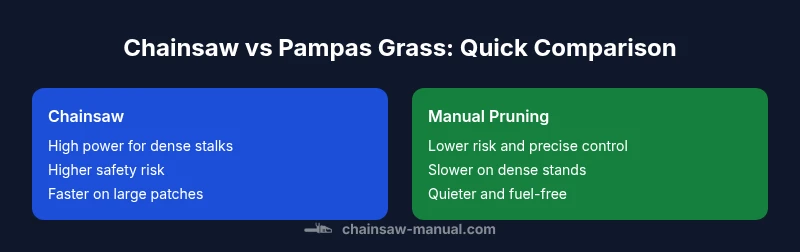
Comparison
| Feature | Chainsaw | Manual pruning with long-handled shears |
|---|---|---|
| Ease of use | Great for dense, tall stalks | Requires steady hands and more time |
| Safety risk | Higher risk due to kickback and blade exposure | Lower risk with proper technique |
| Finish quality | Rougher cuts with potential for splintering | Cleaner, more controlled edges |
| Time to clear patch | Faster for large patches | Slower but more precise |
| Best for | Dense, tall pampas stands or urgent removal | Edge maintenance and precise shaping |
| Noise and footprint | Louder, requires fuel and maintenance | Quieter, minimal equipment footprint |
| Recommended PPE | Helmet, eye/face protection, ear protection, gloves | Gloves, eye protection, sturdy clothing |
Strengths
- Chainsaw dramatically speeds up large clears
- Can handle thick, fibrous pampas stalks with less effort
- Useful for rapid removal in time-sensitive situations
- Reduces physical strain compared to manual cutting
Drawbacks
- Higher risk of kickback and injury if misused
- Requires extensive PPE and safety discipline
- Potential for collateral damage to nearby plants or structures
- More maintenance and fueling considerations
Chainsaw is useful for rapid clearing but should be used with caution and safeguards
Choose the chainsaw when you need speed on dense pampas stands, but pair it with safety gear and a staged plan. For edging and delicate areas, prefer safer manual methods or a hybrid approach.
FAQ
Is it safe to use a chainsaw on pampas grass around homes or gardens?
Chainsaws can be used on pampas grass, but safety must come first. Ensure you wear proper PPE, clear the area, and use controlled, deliberate cuts. If the plant is near structures or utilities, consider alternative methods or hire a professional.
Yes, but safety comes first. Wear PPE, clear the area, and keep your cuts controlled; near structures use caution or consider alternatives.
What are safer alternatives to a chainsaw for pampas grass?
Safer alternatives include long-handled pruning shears, hedge trimmers, and pruning saws. Use these for edge work or when proximity to people or structures is a concern. They offer more control with less risk of kickback.
Try long-handled shears or pruning saws for safer edge work; reserve the chainsaw for dense stands when absolutely necessary.
How should I plan a cutting sequence to minimize risk?
Plan from the outer perimeter inward, cutting in manageable sections. Clear debris as you go, maintain a stable stance, and pause if visibility or footing is compromised. Always reassess the area before continuing.
Plan outer edges first, cut in sections, and keep debris cleared and footing solid. Reassess as you go.
What PPE is essential when using a chainsaw on pampas grass?
Essential PPE includes cut-resistant gloves, eye and face protection, hearing protection, and sturdy boots. A helmet or face shield is recommended when debris could travel toward you or others.
Wear gloves, eye protection, hearing protection, and sturdy boots at minimum; consider a helmet for added safety.
Can cutting pampas grass with a chainsaw affect nearby plants?
Yes, cutting with a chainsaw can cause collateral damage if nearby plants are struck by the blade or falling debris. Work slowly, maintain distance, and use hand tools for close trimming when necessary.
Yes, nearby plants can be damaged; keep a safe distance and use manual tools near sensitive areas.
What maintenance steps should follow chainsaw use on pampas grass?
After cutting, clean the chain and bar, inspect for dullness or damage, and store fuel properly. Check the area for any missed debris and consider reseeding or mulching to manage regrowth.
Clean and inspect the chain, store fuel properly, and clear any remaining debris.
The Essentials
- Assess risk before cutting and plan the sequence
- Use appropriate PPE and maintain a safe work zone
- Reserve chainsaw for dense patches; use hand tools for edges
- Plan for cleanup to prevent airborne debris
- Balance speed with safety for best results