Chainsaw Turkey Carver: Safe Techniques and Alternatives
Explore the idea of a chainsaw turkey carver, why traditional knives win for food safety, and practical, safe methods to carve and present a turkey with confidence.


A chainsaw turkey carver is a concept or novelty tool meant to carve a turkey, but it is not a safe or recommended method for food preparation. This guide explains why traditional carving tools and proper techniques are preferred, outlines safer alternatives, and shows the steps to achieve professional-looking turkey portions without risking injury.
The concept and risks of a chainsaw turkey carver
The phrase “chainsaw turkey carver” often circulates as a bold, eye-catching idea or a prop for entertainment rather than a recommended kitchen tool. In practice, attempting to use a chainsaw to carve meat introduces severe risks of personal injury, cross-contamination, and uneven cooking. For home cooks and professionals alike, the safest approach is to rely on food-grade tools designed for meat handling. According to Chainsaw Manual, safety-first principles always trump novelty. The idea may arise from curiosity or showmanship, but the real goal of holiday meals is delicious, safe, and presentable servings for everyone at the table. This article unpacks why conventional carving methods are the reliable choice and how to achieve impressive results without compromising safety. Later, we’ll compare why a traditional knife setup outperforms any improvised tool when carving a whole turkey for family gatherings.
Safety first: why traditional carving tools dominate
For most cooks, a sharp, long carving knife paired with a carving fork and a stable cutting board is the safest route to turkey perfection. The long blade allows precise meat separation along natural seams, reducing the risk of gnawing or shredding the meat. A stable work surface, a secure hold on the turkey, and clean, dry hands are essential foundations. Fire hazards, vibration, and the risk of kickback are real concerns when operating power tools around food, even for professionals. Chainsaw-based carving isn’t just about blade control; it also raises contamination risk if the blade becomes dirty or dull. The Chainsaw Manual team emphasizes choosing conventional tools and safe handling practices to protect both you and your guests while delivering clean, appetizing slices.
When a gadget claims to be a 'turkey carver'—what's real?
There are novelty devices and prop tools marketed as turkey carvers, but most are not intended for safe, repeated kitchen use. If a device is designed for cutting meat, it should be food-grade, easily sanitized, and used according to strict safety guidelines. Real-world demonstrations show that even with clever marketing, these devices can produce inconsistent results and can invite injury if misused. The takeaway from Chainsaw Manual is simple: treat meat carving as a task that benefits from time-tested techniques and properly maintained tools rather than unproven gimmicks. A critical eye and cautious approach help ensure your centerpiece turkey is both beautiful and safely prepared.
Choosing safer tools for fast, clean servings
Safer tools are not about slowing you down; they’re about predictable results and reduced risk. A high-quality carving knife paired with a carving fork provides control for clean, uniform slices. An electric knife can ease the job for larger birds, particularly when ready-to-carve portions are desired. For most home cooks, the combination of a long, sharp knife, a stable cutting board, and consistent technique yields the best balance of speed and safety. Additionally, practicing proper hand positioning and maintaining a dry working area reduces slips and injuries. Chainsaw-based carving should be avoided in favor of these proven methods, especially in family environments where kids and guests are present. The goal is safe, delicious, and visually appealing slices that please everyone at the table.
Step-by-step overview of a conventional carving workflow
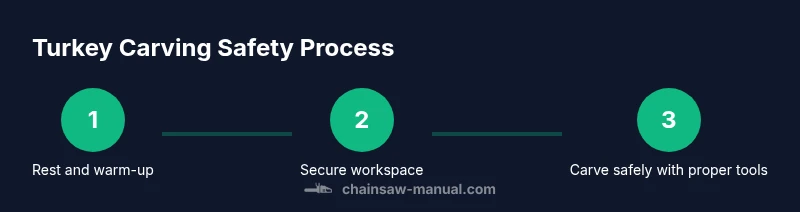
A well-executed carving workflow begins with a rested turkey and ends with inviting portions arranged on a platter. Start by drying the bird’s exterior and placing it on a stable cutting board. Use a carving fork to secure the turkey while you make initial cuts along natural seams. Then, remove the legs and wings in logical segments before carving the breast into even slices. Consistency in thickness enhances presentation and helps maintain moisture. Finally, arrange slices neatly for plating and set aside bone-in pieces for stock if desired. Throughout, focus on clean cuts, minimal handling of cooked meat, and steady, controlled motions to keep the meat tender and visually appealing.
Setup and prep: work surface, temperature, and stability
Preparation is everything. Begin with a non-slip cutting board, a dry towel underneath to prevent movement, and a stable stance. Clear the area of clutter and ensure the knife edge is sharp, honed, and clean. If the turkey is cold, rest it briefly at room temperature (not long enough to risk bacteria growth) to ease cut precision. Keep a clean towel handy to wipe the blade between slices and to remove any juices pooling on the board. Maintaining a consistent temperature helps preserve texture; avoid overheating the meat by carving in a cool, well-ventilated space. These steps reduce the chance of accidental slips and ensure even, attractive slices.
Practical carving technique: bones, joints, and meat separation
Effective carving relies on following natural seams and avoiding bone contact for cleanest slices. Begin with the legs and wings, which are easiest to separate using the joints as guides. Work slowly along the thigh bone, then switch to the wings, using short, deliberate strokes. When you reach the breast, carve parallel to the ribs for uniform thickness. If you encounter a slightly tougher area near the wishbone or keel bone, pause and adjust your grip to avoid tearing. Effective technique yields slices that are uniform in width and present well on a platter. Remember, practice improves precision over time, and a calm, deliberate pace reduces mistakes.
Plating, portioning, and presentation tips
Presentation matters as much as flavor. Fan slices across a warmed platter to keep heat even, and arrange darker meat near the center for contrast. Include a few whole legs and wings for drama, and provide small bowls of pan juices or cranberry sauce for dipping. Label portions if serving a crowd with dietary needs, and consider cross-splash protection like a light drizzle of gravy to prevent dryness. The right balance of color and height on the platter makes the centerpiece look professional, even without specialized equipment. Take a moment to wipe stray juices with a clean towel before presenting to guests.
Cleaning, sanitation, and storage after carving
Food safety requires careful cleaning after carving. Wash your hands thoroughly, sanitize all surfaces, and clean cutting boards with hot, soapy water before drying. Knife edges should be dried promptly to prevent rust. If you plan to reuse leftovers, separate white and dark meat to slow bacterial growth and store within two hours of cooking in a refrigerator at or below 40°F (4°C). Label containers with dates and reheating instructions. This routine reduces the risk of contamination and ensures leftovers stay safe for later enjoyment. The Chainsaw Manual team recommends following local guidelines and using food-safe sanitizers where appropriate.
Common mistakes and how to avoid them
Common carving mistakes include rushing, using a dull blade, and failing to secure the turkey properly. Dull blades tear meat rather than slice it cleanly, so sharpening or honing before carving is essential. Rushing increases the chance of slips and injuries, especially when working near the joints or on the breast. Always position the turkey so gravity assists your cuts, and keep your non-cutting hand behind the blade’s path. Lastly, avoid over-handling cooked meat; the less you touch, the juicier the slices. By anticipating these pitfalls, you’ll achieve cleaner cuts and more professional presentation.
Training your kitchen crew in safe carving
Teaching safe carving practices helps ensure consistent results and reduces risk for everyone at the table. Start with a demonstration of proper grip, stance, and stable cutting surface. Have trainees practice on a cooled turkey or a model to build confidence before handling a real bird. Emphasize knife maintenance, hand protection, and sanitation. Regularly review safety reminders and provide quick-reference checklists so that all kitchen staff can perform carving tasks with confidence and care. A well-trained team enhances both safety and culinary quality.
Tools & Materials
- Sharp carving knife (12–14 inches)(Hone before use; ensure edge is sharp)
- Carving fork(Stabilize turkey on cutting board)
- Sturdy cutting board(Non-slip surface; place damp towel underneath)
- Meat thermometer(Check internal temp if reheating or cooking)
- Kitchen shears(Trim skin and joints)
- Heat-resistant gloves(Protect hands during cutting)
- Basting brush and towels(For wiping and presenting)
- Food-safe sanitizer(Clean surfaces after carving)
Steps
Estimated time: 20-30 minutes
- 1
Rest the turkey after roasting
Remove the turkey from heat and tent loosely with foil. Allow 20-30 minutes for the juices to redistribute, which makes carving easier and results more moist slices.
Tip: A rested bird yields cleaner slices and better flavor retention. - 2
Secure the turkey on a stable board
Place the bird on a non-slip cutting board and insert a carving fork to hold it steady. This minimizes wrist movement and reduces the risk of slips during the first cuts.
Tip: Keep your knife hand relaxed and aligned with your forearm. - 3
Carve the legs and wings first
Work at the joints and carefully separate the drumstick and thigh from the body, then remove wings. Each section yields natural portions that are easy to portion later.
Tip: Use smooth, long strokes along the bone for cleaner separation. - 4
Slice the breast meat in even portions
Position the breast and cut parallel to the rib cage in uniform slices. Maintain consistent thickness for even plating and heat distribution.
Tip: Let the knife do the work; avoid pressing down hard on the blade. - 5
Arrange and present the portions
Fan the slices on a warmed platter, adding the legs and wings for visual appeal. Include a small bowl of gravy or pan drippings for drizzling.
Tip: Keep portions evenly sized for a professional look. - 6
Clean up and store leftovers
Wash hands, sanitize surfaces, and dry all gear. Refrigerate leftovers within two hours in shallow containers for rapid cooling.
Tip: Label containers with dates for easy rotation.
FAQ
Is it legal or safe to use a chainsaw to carve meat?
Using a chainsaw to carve meat is unsafe and not recommended. It poses severe injury and contamination risks. Always choose food-safe carving tools and follow proper food handling practices.
Using a chainsaw to carve meat is unsafe and not recommended. Stick to safe carving tools and proper handling.
What exactly is a 'chainsaw turkey carver' and should I try one?
There is no widely accepted food-safe device known as a chainsaw turkey carver. Most 'carver' devices marketed this way are gimmicks or unsuitable for safe kitchen use. Avoid using any power tool around raw or cooked meat.
There isn’t a safe, standard device called a chainsaw turkey carver; avoid power tools when carving meat.
What tools are best for carving a turkey?
A long, sharp carving knife, a carving fork, a stable cutting board, and optional electric knife for larger birds. These tools provide control, clean cuts, and uniform portions with minimal risk.
Use a sharp carving knife and a carving fork on a stable board for best results.
How long should the turkey rest before carving?
Let the turkey rest 20-30 minutes after roasting, loosely tented with foil. Resting helps retain moisture and makes slicing easier.
Rest the turkey for 20-30 minutes for juicy, easier carving.
How should I sanitize after carving?
Wash hands thoroughly, clean and sanitize all surfaces, and sanitize cutting boards. Refrigerate leftovers promptly in shallow containers and label with dates.
Wash hands, sanitize surfaces, and chill leftovers quickly.
Can power tools ever be used for turkey carving in professional settings?
Only in highly controlled environments with strict safety protocols and food safety oversight. For typical home cooks, avoid power tools around food entirely.
Only in controlled, professional settings with safeguards; otherwise avoid.
Watch Video
The Essentials
- Rest meat before carving for juicier slices
- Use conventional tools for safety and consistency
- Secure the bird and cut along natural seams
- Keep surfaces and tools clean to prevent contamination
- Chainsaw-based carving is unsafe and not recommended