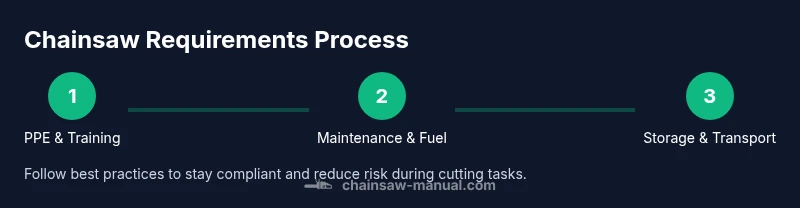
Chainsaw Requirements: Safe Operation Essentials for 2026
Learn the essential chainsaw requirements for safe, legal operation in 2026. This comprehensive guide covers PPE, training, maintenance, storage, and verification steps to help homeowners, DIY enthusiasts, and professionals work confidently.


By the end of this guide, you will know the essential chainsaw requirements: the PPE and training you must have, maintenance standards to keep the saw safe, storage and transport rules, and how to verify your equipment meets safety and performance expectations before use. This practical checklist helps homeowners, DIYers, and professionals work confidently and safely.
What chainsaw requirements mean in practice
In practice, 'chainsaw requirements' describe the combination of safety, training, equipment, and local rules that govern responsible use. According to Chainsaw Manual, fulfilling these requirements is not about chasing a single checklist but about creating a safe workflow from pre-use checks to post-job storage. The core idea is to reduce risk for you and others around you while ensuring the saw remains reliable and compliant. Most home and professional projects require a blend of personal protective equipment, operator knowledge, and regular maintenance. Public lands, work sites, and rental facilities typically make these standards explicit, while private property may rely on best practices. For many operators, the first step is to interpret the manufacturer’s manual, which details acceptable fuel mixes, chain tension, lubrication, and service intervals. This knowledge then informs a practical routine you can repeat for every job, regardless of tree size, weather, or terrain.
Essential PPE and training prerequisites
The foundation of any chainsaw operation is personal protective equipment (PPE) and appropriate training. PPE should include a helmet with a full faceshield, hearing protection, and ANSI-rated safety glasses or goggles. Add cut-resistant chaps or pants, sturdy boots with slip-resistant soles and steel toes, and high-visibility gloves. Training should cover start-to-finish workflow: hazard identification, kickback awareness, safe cutting techniques, and emergency procedures. Even experienced operators benefit from refresher courses. The Chainsaw Manual Team emphasizes that training is not optional; it is a minimum you owe to coworkers, family, and bystanders. After training, maintain your skills with periodic practice and by reviewing manufacturer guidelines.
Equipment standards and maintenance prerequisites
A compliant chainsaw is not just a blade and motor; it is a system with coordinated parts. Verify chain tension is correct and the chain brake works before each start. Ensure the bar and chain are sharp enough to cut smoothly without forcing the saw. Check lubrication, fuel level, and air filter condition. Use the manufacturer-recommended fuel-oil ratio and bar oil viscosity, and replace fuel if it’s stale. Carry spare chain and a chain sharpening file and a scrench to adjust fasteners in the field. Keep the bar oil reservoir topped up to prevent overheating and wear. The Chainsaw Manual Team notes that regular maintenance reduces kickback risk and extends tool life, saving time on the job.
Regulatory considerations and permits
Regulatory considerations vary by jurisdiction, but most operators will encounter guidelines on training, permitting, and environmental impact. Check local forestry rules and landowner permissions before removing trees or delimbing. Some areas require proof of training or a permit for professional operations, while others rely on general safety standards. Keep a written record of your training dates, equipment inspections, and maintenance logs. Employers and rental yards may require compliance documentation. Chainsaw Manual's analysis indicates that consistency in documentation helps pass inspections and reduces liability for homeowners and professionals alike.
Storage, transport, and safe handling
Store fuel in approved containers away from ignition sources and heat; never store near the cutting area. Use a dedicated fuel can for mix or pre-mixed fuel; dispose of old fuel per local regulations. When transporting, secure the saw in a stable position, use the scabbard or bar cover, and keep the chain brake engaged. At the worksite, place the saw on stable ground and maintain a 3-point stance when cutting. Unplug or detach accessories not in use and avoid carrying the saw over your shoulder near people or obstacles. Chainsaw Manual recommends routine post-work checks to ensure the saw is ready for next use and to prevent battery or fuel leaks from becoming hazards.
Quick compliance checklist before starting work
Create a pre-use checklist with items like PPE worn, training verified, chain tension and sharpness checked, chain brake tested, fuel and bar oil levels adequate, work area secured, and an emergency plan communicated. If any item fails, do not operate the saw; address the issue before proceeding. Document findings for future reference and stay mindful of changing conditions such as weather or nearby activities.
Tools & Materials
- Chainsaw(In good working order; chain brake and chain catcher present; test kickback safety features.)
- PPE kit (helmet with face shield, eye protection, ear protection, gloves, cut-resistant chaps)(Ensure PPE meets local safety standards.)
- Sturdy boots with steel toe(Non-slip soles; ankle support.)
- Bar and chain oil(Use manufacturer-recommended viscosity.)
- Fuel mix (2-stroke fuel and oil) or pre-mixed fuel(Follow manufacturer ratio; label and store separately.)
- Spare chain(Include a sharpener or file for maintenance.)
- Chain sharpening file and scrench(Carry for field adjustments.)
- Screwdrivers and wrenches (S-shaped scrench)(Adjust chain tension and other fasteners.)
- First aid kit(Include item for bleeding control and basic trauma.)
- Fire extinguisher or bucket of water(Optional for environments with fire risk.)
- Work gloves with grip(Protect hands during handling.)
- Fuel container and spare fuel can(Use approved containers.)
Steps
Estimated time: 60-90 minutes
- 1
Audit requirements and prep
Review local regulations and read the chainsaw manual for your model. Confirm what training, permits, or inspections are required before use. Gather all required PPE and tools so you’re not searching mid-task.
Tip: Set up a dedicated safety zone with visible boundary markers before approaching the tree. - 2
Assemble PPE and environment
Put on helmet with face shield, hearing protection, gloves, and cut-resistant pants. Inspect the work area for people, pets, or obstacles and clear a safe retreat path for kickback scenarios.
Tip: Ensure visibility and lighting; avoid working in dim or flickering conditions. - 3
Inspect the saw condition
Check chain tension, chain brake function, and the sharpness of the chain. Inspect the bar for wear and ensure the chain catcher is intact. Confirm fuel and bar oil levels before starting.
Tip: If the chain is dull or the saw stalls, stop and sharpen or service before proceeding. - 4
Prepare fuel and lubrication
Mix fuel according to the manufacturer’s ratio, or use pre-mixed fuel. Fill bar oil to ensure proper lubrication during operation. Label containers clearly to avoid misfueling.
Tip: Only mix enough fuel for the planned duration to minimize stale fuel risk. - 5
Plan the cut and establish stance
Evaluate the tree or branch, plan escape routes, and identify potential kickback zones. Stand with feet shoulder-width apart, left foot slightly forward, left hand on the front handle, and right hand on the rear handle.
Tip: Keep your body to the left of the chain line to reduce recoil risk. - 6
Start and test in open area
Start the saw per the manual and idle test in an open space away from bystanders. Engage the chain brake before starting and release only when you are ready to cut.
Tip: Let the engine warm up briefly before applying full throttle. - 7
Make controlled cuts
Use controlled, two-handed grips, avoid forcing the saw, and keep the nose of the bar ahead of the cut. Watch for binding and escape quickly if the wood binds or kicks back.
Tip: Take small bites and adjust pressure gradually rather than forcing a deeper cut. - 8
Finish and store safely
Cool down the saw, inspect for damage, wipe off debris, and store with the bar cover on. Refuel and clean in a well-ventilated area away from ignition sources.
Tip: Document any issues and schedule maintenance before next use.
FAQ
What are the basic chainsaw requirements for safe operation?
The basics include proper PPE, training, regular maintenance, and adherence to manufacturer guidelines. Local rules may add permitting or inspection requirements. Always verify you have a safe work plan and clear boundaries before cutting.
The basics include PPE, training, maintenance, and following the manual. Check local rules and have a safe work plan before cutting.
Do I need a license to operate a chainsaw?
Licensing requirements vary by location. Some areas require training certification or permits for professional use, while private homeowners may not. Always check with local authorities or the equipment rental facility.
License requirements depend on where you are. Check local rules or the rental facility for guidance.
What PPE should I wear when using a chainsaw?
Wear a helmet with a face shield, hearing protection, safety glasses, cut-resistant pants or chaps, gloves, and sturdy boots. Ensure all PPE is in good condition and properly fitted.
Wear a helmet with face shield, ear protection, gloves, cut-resistant pants, and sturdy boots.
How often should I sharpen the chain to meet safety standards?
Check the chain for dullness before each use and sharpen as needed. A sharp chain improves control and reduces kickback risk. Do not operate with a dull chain.
Check for dullness before use and sharpen as needed. A sharp chain improves control and safety.
What maintenance tasks are essential before operating the saw?
Inspect chain tension, chain brake, bar, and chain sharpening. Verify fuel and bar oil levels, air filter condition, and general saw integrity. Address any issues before use.
Check tension, brakes, fuel, oil, and overall condition before cutting.
Watch Video
The Essentials
- Identify all local requirements before use.
- PPE and training are non-negotiable.
- Regular maintenance reduces risk and downtime.
- Document inspections for liability protection.