Can You Run a Chainsaw Without a Muffler? Safety and Practical Guidance
Discover whether a chainsaw can run without a muffler, the safety risks, legal implications, and safer muffler-friendly alternatives. Chainsaw Manual provides practical, safety-first guidance for homeowners, DIY enthusiasts, and professionals.


Short answer: can you run a chainsaw without a muffler? Generally, no. Mufflers reduce noise, protect hearing, and help manage exhaust; removing them can violate laws, void warranties, and raise safety risks. Always follow manufacturer specs and local regulations for safe operation.
Why Mufflers Exist on Chainsaws
Mufflers on chainsaws serve several essential purposes. They quiet the engine to reduce noise exposure, protect the operator’s hearing, and help manage exhaust flow to prevent backpressure problems. For homeowners, DIY enthusiasts, and professionals, understanding why a muffler exists is the first step in safe, responsible equipment use. If you're asking can you run a chainsaw without a muffler, the practical answer is no: mufflers are designed to reduce noise and protect hearing. They also limit the spread of sparks and help control emissions in the work area.
From a safety perspective, loud equipment increases fatigue and the risk of hearing damage over time. A muffler also favors engine reliability by smoothing exhaust pulses that could otherwise cause vibration and performance variations. For most models, removing or bypassing the muffler can trigger warranty voids, legal penalties in certain jurisdictions, and more stringent noise restrictions on job sites. Chainsaw Manual's team notes that mufflers are not mere accessories but integral safety components that influence how a saw is operated, maintained, and stored.
Can you run a chainsaw without a muffler? Safety, Legal and Environmental Implications
Can you run a chainsaw without a muffler? In most cases the answer is no. Mufflers are not just an optional feature; they serve to protect hearing, reduce disruptive noise on job sites, and limit exhaust emissions. Removing or bypassing a muffler can violate local noise ordinances and warranty terms, and may expose operators to legal penalties in certain jurisdictions. Environmentally, louder tools often mean higher stress on nearby wildlife and more disturbance in residential areas. Chainsaw Manual emphasizes that safety data and field observations consistently point to mufflers as standard equipment for proper operation. According to Chainsaw Manual, mufflers help manage backpressure and exhaust flow, which influences engine performance and safety behavior on the worksite.
How Muffler Design Affects Noise, Emissions, and Backpressure
The muffler is a carefully engineered exhaust component that dampens sound waves and reduces peak pressure pulses as exhaust gases exit the cylinder. A well-maintained muffler lowers overall noise exposure for the operator, which is critical in long-duration work. It also helps control emissions by promoting smoother combustion and reducing unburned fuel displacement through the exhaust stream. Removing a muffler alters backpressure characteristics, which can change engine timing, fuel efficiency, and idle stability. Chainsaw Manual analysis shows mufflers play a key role in noise reduction and reliability, reinforcing why most saws ship with a muffler in place and why removal is typically discouraged by manufacturers.
Real-World Practices: What Pros Do in the Field
In professional settings, mufflers are treated as essential safety and compliance components. Maintenance crews inspect mufflers for cracks, nesting debris, and heat damage to prevent overheating and backfiring. Some technicians may perform muffler-related diagnostics during service, but complete removal is rare and generally discouraged outside of manufacturer-approved testing or diagnostic procedures. The risk profile changes dramatically when the muffler is missing: noise levels rise, hearing protection becomes even more critical, and nearby workers may be exposed to higher sound pressures. Chainsaw Manual’s guidance is to prioritize muffler integrity as part of routine safety checks.
Safer Alternatives to Lower Noise
If noise is a concern, there are safer, legal alternatives rather than removing a muffler. Regular muffler maintenance—cleaning intake passages, ensuring proper fuel mix, and addressing any exhaust leaks—can visibly reduce noise without compromising safety. Use high-quality ear protection, implement distance-based work practices, and schedule use during times that minimize residential disturbance. Consider upgrading to newer, compliant models with built-in noise-reduction features or applying manufacturer-approved muffler accessories designed for your model. Chainsaw Manual emphasizes that quiet operation should not come at the expense of safeguarding hearing, ventilation, or legal compliance.
Maintenance and Safe Inspection Practices
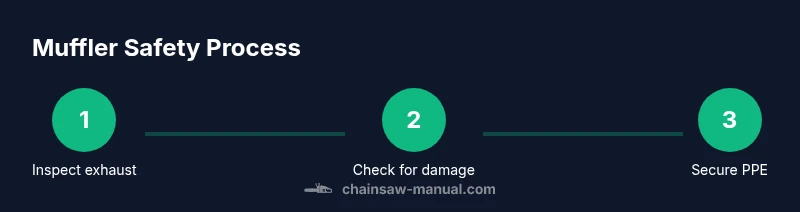
Regular inspection of the exhaust system is part of responsible tool maintenance. Look for cracks, warped components, loose brackets, and signs of overheating. When inspecting, always perform the process with the engine off, the spark plug disconnected, and fuel secured to prevent accidental starts. If you notice damage, replace damaged parts promptly and consult the service manual. Safe handling includes wearing PPE, working on a stable surface, and keeping a clean workspace to prevent tool slips and injuries. The goal is to keep the exhaust system functioning as designed, preserving safety and performance.
AUTHORITY SOURCES
For further reading on chainsaw safety and exhaust systems, consult authoritative references such as OSHA and NIOSH. These sources provide guidance on hearing conservation, safe operation practices, and equipment compliance that align with best-practice expectations in the field. See the following resources for additional context: • OSHA safety standards on chainsaws and hearing protection • NIOSH topics on chainsaw safety and noise exposure • U.S. Forest Service safety recommendations on powered equipment
THE BOTTOM LINE
Mufflers are a core safety and regulatory component of chainsaws. While there may be niche diagnostic contexts where exhaust configurations are temporarily examined, running a chainsaw without a muffler is not recommended for routine operation. The best path is to maintain the muffler in working order, use appropriate personal protective equipment, and follow manufacturer guidelines and local laws. The Chainsaw Manual team stresses that safe chainsaw operation hinges on respecting exhaust systems as designed, not bypassing them.
Tools & Materials
- Safety glasses or face shield(Protect eyes from debris and sparks during inspection.)
- Hearing protection (ear muffs or plugs)(Critical due to higher noise exposure when exhaust is compromised.)
- Work gloves(Protection against sharp edges and hot surfaces.)
- Screwdriver set and socket wrench(Used for removing covers or accessing the muffler area per the service manual.)
- Shop rag and solvent(For cleaning dust and grease around the exhaust area.)
- Torque wrench(If you plan to reassemble muffler components to spec.)
- Manufacturer service manual(Always follow model-specific instructions and safety precautions.)
Steps
Estimated time: 45-60 minutes
- 1
Prepare and secure the saw
Power down the chainsaw, remove the battery or disconnect spark plug, and place the saw on a stable work surface. Ensure the area is well-lit and free from obstructions. This setup minimizes slips and accidental starts while you inspect the exhaust system.
Tip: Keep tools within reach and never rely on weight or balance to hold the saw during maintenance. - 2
Inspect the muffler area for damage
Visually inspect the muffler, heat shield, and mounting bolts for cracks, warping, or loose hardware. Look for signs of overheating such as discoloration or melted gaskets. A damaged muffler can distort exhaust flow and amplify noise.
Tip: If you see any cracks or loose mounts, do not operate the saw until parts are replaced. - 3
Check for exhaust leaks
With the saw off, run a brief external inspection around the exhaust port to detect any gaps or leaks. Leaks can increase noise and smoke exposure and may indicate a need for gasket replacement or muffler re-seating.
Tip: Use a dry tissue to detect air movement around seams; if you feel air leaking, stop and inspect further. - 4
Assess heat and debris buildup
Excessive heat can degrade muffler components and coating. Remove debris around the muffler area using a soft brush and compressed air if available. Do not use metal tools that could scratch or damage the exhaust surface.
Tip: Allow the saw to cool before any cleaning; hot components cause burns and can be misinterpreted as damage. - 5
Reassemble and verify integrity
If you performed any servicing, reassemble per the service manual and tighten fasteners to the manufacturer’s torque spec. Double-check that all protective shields and covers are in place before test-start.
Tip: Do a brief test in a safe, open area with proper PPE and stand clear of the exhaust path. - 6
Document and maintain
Record what you found and any parts replaced. Schedule future inspections of the exhaust system and muffler to prevent silent failures. Routine maintenance is key to safety and performance.
Tip: Set reminders for periodic checks aligned to your work schedule.
FAQ
Is it illegal to run a chainsaw without a muffler?
Yes, in many regions mufflers are required by law for noise control and emissions. Removing a muffler can violate regulations and lead to fines, warranty voids, or disqualification from job sites.
Yes. In many places, running a chainsaw without a muffler breaks noise and emissions rules and can lead to fines or job-site removal.
What are the risks of removing a muffler?
Removing a muffler increases noise exposure, which harms hearing, may irritate neighbors, and can escalate safety concerns at a work site. It can also affect backpressure and engine behavior, potentially causing mechanical issues.
Removing a muffler makes the saw louder, increases hearing risk, and can cause engine performance issues.
Will running without a muffler affect warranty?
Yes. Many manufacturers specify that altering exhaust systems voids warranty coverage. Always consult the manual and authorized service channels before any modification.
Yes. Modifying the exhaust can void the warranty, so use original parts and follow the manual.
Are there safer ways to reduce noise?
Yes. Maintain the muffler, use proper PPE, select quieter model options when possible, and apply manufacturer-approved noise-reduction accessories rather than removing components.
Yes. Maintain the muffler, wear ear protection, and consider quieter models or approved noise-reduction add-ons.
What should I do if the muffler is damaged?
Stop using the saw, inspect the damage, and replace damaged muffler parts. Refer to the service manual or contact an authorized technician for safe replacement.
If the muffler is damaged, stop using the saw and replace the muffler according to the manual.
Can aftermarket mufflers be used safely?
Only if the aftermarket part is specified for your model and complies with local regulations. OEM parts are usually the safest choice for warranty and safety.
Only if it’s compatible with your model and legal where you work; OEM parts are generally safer.
Watch Video
The Essentials
- Respect mufflers as safety-critical components.
- Inspect exhaust systems regularly and replace damaged parts promptly.
- Use proper PPE and adhere to manufacturer specifications.
- Explore legal noise-reduction alternatives before considering removal.