Can You Chainsaw Ice? Safe Techniques and Alternatives
Explore whether you can safely chainsaw ice, the hazards involved, and practical safer alternatives. This Chainsaw Manual guide covers safety gear, proper technique, and when not to use a chainsaw on ice.


According to Chainsaw Manual, you should not rely on a chainsaw to cut ice as a primary method. Ice presents unpredictable bite and kickback risks, and the blade can bind or slip unexpectedly. For most winter tasks, use dedicated ice tools or safer methods instead, and reserve chainsaw use for timber-related work only when conditions are clearly safe and supported.
Why Ice Presents Unique Hazards for Chainsaws
Ice appears solid but is deceptive once a powered blade is introduced. When the chain contacts ice, the surface can fracture unpredictably, exposing hidden voids or air pockets. A saw that bites into ice can suddenly grab and throw the user off balance, or ride up the surface and strike higher terrain or clothing. Ice near the edge of a body of water also introduces the risk of slipping into cold water, which can be life-threatening in minutes. Chainsaws are engineered to cut wood, not frozen bonds. Even with a sharp chain and careful throttle control, the ice can bind or shatter, causing sudden kickback or chain derailment. These dynamic forces are amplified when the ice is mixed with slush, snow, or air pockets. From a safety perspective, the risk matrix includes kickback potential, blade pinch, and the possibility of hidden fissures that may fail without warning. Chainsaw Manual emphasizes that any use of a chainsaw on ice should be treated as a last-resort option, and only with enhanced PPE, a solid retreat plan, and a trained helper nearby.
Can You Chainsaw Ice? The Pragmatic Answer
Many outdoor workers encounter the question 'can you chainsaw ice' when clearing walkways, forming ice blocks for sculpting, or attempting to free ice that has trapped equipment. The answer is nuanced. In a controlled setting, with a purpose-built ice saw or a chainsaw equipped with an ice-rated chain and a stable platform, some light-cutting tasks may be possible. However, according to Chainsaw Manual analysis, cutting ice with a standard chain saw is not recommended for routine use. The risk of kickback, broaching the ice surface, and hidden cracks remains high even for experienced operators. If you must attempt it, keep adjustments minimal, maintain a strong, balanced stance, ensure people are out of the cutting arc, and plan a quick exit if the surface begins to fail. In practice, most professionals rely on dedicated ice tools or non-cutting methods to handle ice, reserving the chainsaw for timber and other tasks where the ice is clearly not involved.
Safer Alternatives for Ice Handling
When ice must be dealt with, consider safer options before reaching for a chainsaw. A cold-weather ice chisel or an ice saw designed for frozen surfaces reduces the chance of binding and kickback. Manual removal using a long-handled pick or puller can break ice in a controlled way without high RPM forces. For thinning ice along a walkway, consider a hand tool with a sharp blade and slow, deliberate strokes rather than a power tool. If you only need to clear surface debris or create a safe path, sweeping, breaking, or chipping from a distance with a tool designed for ice is preferable to a chainsaw. For professionals, using a plan-based approach and multiple small cuts with a specialized device is safer than direct ice cutting with a wood saw. The overall goal is to minimize sudden blade contact, maintain personal balance, and avoid proximity to water or people.
Tools, Gear, and Setup for Ice Work
Before approaching ice work, assemble protective gear and the right equipment. Wear a hard hat with a face shield, impact-rated goggles, and hearing protection. Use cut-resistant gloves, insulated waterproof boots with good traction, and layered warm clothing. A sturdy belt or harness, a partner for spot protection, and a clear plan reduce risk. Keep a spare chain and a basic tool kit on hand, and ensure the chainsaw’s chain brake is engaged when not actively cutting. Establish a stable stance, secure footing on dry ground or a solid platform, and keep the cutting area free of bystanders. Always monitor weather and water conditions, as melting or moving ice dramatically increases danger. This block emphasizes PPE, fall protection considerations, and equipment readiness to minimize exposure to ice-related hazards.
Case Scenarios: When People Try It (and the Risks)
In hot or thawing conditions, ice can shift rapidly, creating new crack lines and hollow spots. Some workers attempt to carve or trim ice near walkways, docks, or boats, hoping to clear space or create channels. These scenarios are high-risk because a sudden bite or kickback can throw the operator toward untreated water or through fragile ice. In winter operations, many teams realize that a chainsaw is a poor tool for ice removal and switch to ice-specific devices or non-cutting methods. The cognitive load of maintaining balance, distance, and precise throttle while ice shifts is substantial; mistakes here can result in serious injury.
Expert Tips from Chainsaw Manual
- Never place yourself directly in the line of potential kickback arc and always maintain a two-point stable stance. 2. Use the chain brake when not actively cutting and avoid high RPM cutting on unknown ice. 3. If in doubt about ice stability, stop and reassess; do not push through risky sections. 4. Keep a clear retreat path behind you and advise bystanders to stay out of range. 5. Wear full PPE for cold-weather work, including a face shield and insulated gloves. 6. Consider alternative tools first and reserve the chainsaw for traditional wood cutting when conditions are safe. 7. Maintain your chainsaw with clean oil and a sharp chain; a dull chain increases the likelihood of binding.
Authority sources
- OSHA safety guidelines for chainsaw use: https://www.osha.gov
- Extension service ice-safety resources: https://extension.illinois.edu
- National Institute for Occupational Safety and Health: https://www.cdc.gov/niosh
How to Decide in Your Situation
If you are facing a time-critical ice-clearing task, compare the risk profile to using ice tools. Consider professional training, ice thickness, current weather, and nearby hazards. When in doubt, pause the project and switch to a safer method. The aim is to protect yourself, others nearby, and the structural integrity of the ice surface, rather than pushing through to achieve a quick result.
Tools & Materials
- Chainsaw with chain brake(Engage chain brake when not actively cutting. Use a blade suitable for cold conditions and a sharp chain.)
- Personal protective equipment (PPE)(Hard hat with face shield, protective goggles, hearing protection, cut-resistant gloves, insulated waterproof boots.)
- Ice-specific tools (optional)(Ice chisel, ice saw, or long-handled pick for safer, non-powered ice work.)
- First aid kit and warm change of clothes(Include thermal blankets and a change of dry clothing in case of immersion.)
- Stability aids(Rope, harness, or traction mats to improve footing on uneven ice.)
- Spare chain and chain oil(Carry a spare chain and oil to prevent overheating or binding during prolonged cuts.)
- Two-way communication device(Essential for coordination with a partner in case rapid retreat is needed.)
Steps
Estimated time: 60-90 minutes
- 1
Assess ice conditions and site safety
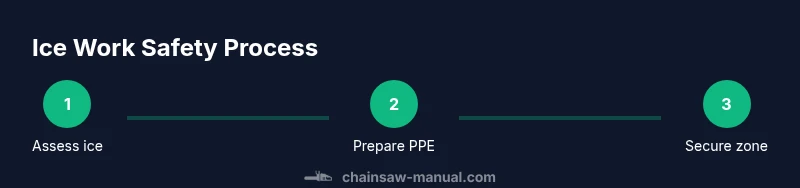
Survey ice thickness, stability, and potential hazards. Check weather and water proximity. Identify a firm stance and a clear retreat path before you begin.
Tip: Test thickness with a weighted boot or a probe in multiple spots; avoid areas with visible cracks. - 2
Prepare equipment and PPE
Inspect the chainsaw, chain tension, and chain brake. Don PPE before approaching the ice and verify a clear work area free from bystanders.
Tip: Keep the chain brake engaged when not cutting and have a spare chain ready. - 3
Establish a safe cutting path
Mark a route away from edges and water, with a spotter watching for shifting ice. Ensure footing is dry and stable.
Tip: Set up a visible boundary that others can see to stay out of the work zone. - 4
Make a controlled test bite
Gently apply throttle and test a shallow bite to evaluate how ice responds. Observe for binding or chipping and adjust.
Tip: If the saw binds or increases resistance, stop immediately. - 5
Proceed with incremental cuts only
If safe conditions persist, cut in small increments at low speed. Pause between cuts to reassess ice stability and your stance.
Tip: Do not push through larger cuts if ice shows any signs of movement. - 6
Finish, inspect and retreat
Power down, allow the chain to stop, and inspect equipment for damage. Leave the area slowly and safely, keeping others at a distance.
Tip: Remove debris and dry the blade to prevent freezing in cold weather.
FAQ
Is it ever safe to chainsaw ice?
In general, using a chainsaw to cut ice is not safe. The hazards—kickback, binding, and hidden cracks—make it a last-resort option. Safer tools and methods are preferred.
Generally not safe. Kickback and hidden cracks make it a last-resort option; use ice tools when possible.
What ice conditions are safer for cutting?
Clear, thick, and stable ice with no visible cracks is safer for any tool use. If ice is slushy, melting, or cracking, do not attempt to cut.
Safer ice is clear, thick, and stable; avoid ice that is slushy or cracked.
What PPE should I wear for ice work?
Wear a hard hat with face shield, safety goggles, hearing protection, cut-resistant gloves, and insulated waterproof boots. Layered clothing helps protect against cold exposure.
Wear a helmet with face shield, eye protection, hearing protection, cut-resistant gloves, and warm boots.
Are there safer tools than a chainsaw for ice?
Yes—ice chisels or ice saws designed for frozen surfaces are safer for most ice tasks than a wood chainsaw.
Yes, consider ice chisels or ice saws as safer alternatives.
What should I do if the chain binds or ice shifts?
Stop immediately, disengage power, and reassess both ice stability and your stance. Do not force the cut or continue if movement continues.
If binding or shifting occurs, stop and reassess; never force the cut.
Are there legal or insurance considerations when cutting ice?
Local regulations and insurance policies may restrict or require safety protocols for ice work. Check applicable rules and ensure you have proper coverage before attempting risky tasks.
Check local rules and insurance before attempting risky ice work.
Watch Video
The Essentials
- Assess ice safety before any cutting
- Prefer dedicated ice tools over a chainsaw
- If you proceed, maintain clear space and proper PPE
- Use controlled, incremental cuts with a clear retreat path
- Know when to stop and switch to safer methods