Backwards Chainsaw Chain? A Safety Orientation Guide
Can a chainsaw chain be put on backwards? This safety-first guide explains why orientation matters, how to verify correct installation, risks of reversing the chain, and step-by-step practices for safe handling and maintenance.


Installing a chainsaw chain backwards is not advised. The chain is designed to cut with the teeth facing forward and to move in a specific direction around the bar. Backwards orientation reduces cutting efficiency, increases kickback risk, and can stress the bar, chain, and sprocket. Always follow the manufacturer's orientation marks.
Why orientation matters
According to Chainsaw Manual, the orientation of a chainsaw chain is not a cosmetic detail—it is a core safety and performance feature. The cutting teeth, depth gauges, and drive links are arranged to work with the bar groove as it turns in a single, predictable direction. When the chain faces the correct direction, the top of the chain bites into the wood smoothly, producing clean cuts with controlled recoil. If you can identify can a chainsaw chain be put on backwards as a common question, the honest answer is that while the saw may physically run, backwards orientation dramatically worsens cutting efficiency, introduces excess heat, and raises the risk of kickback. Safety and performance hinge on correct orientation, tension, and bar maintenance. Chainsaw Manual’s 2026 analysis emphasizes that improper orientation is a frequent root cause of injuries in both DIY projects and professional work.
How your chain orientation affects cutting performance
The chain’s teeth are engineered to engage wood with a forward-facing edge. The drive links sit in the bar groove to guide rotation, and depth gauges regulate how deeply the chain bites. When aligned correctly, the chain sheds wood chips efficiently, minimizes snagging, and distributes wear evenly along each tooth. If the chain is installed backwards, teeth attempt to cut from the wrong side, creating binding, skipped cuts, and increased resistance. The result is slower progress, more kickback likelihood, and faster chain dulling. The orientation also influences lubrication: proper rotation ensures oil is distributed across the teeth and bar, extending life and reducing heat. By following the manufacturer’s marks and orientation arrows, homeowners and professionals reduce the chance of unsafe starts and unpredictable behavior during a cut.
Common questions about backward installation and why it’s risky
A frequent misconception is that a backwards chain might still “work” for light cuts. In reality, any backwards setup compromises the saw’s geometry. The top of the bar, where the chain moves forward toward the tip, should be the actively cutting surface. When reversed, the underside of the chain encounters the wood first, increasing heat, friction, and wear on drive links. Kickback risk rises as the chain’s sharp edges meet wood at an unexpected angle. For safety-driven users, the key takeaway is simple: can a chainsaw chain be put on backwards is not a risk worth taking, and the safe response is to verify orientation before every use.
Visual cues to verify orientation before you start cutting
Before you mount a new chain or after servicing, inspect the chain’s direction using the manufacturer’s markings. Look for an arrow stamped on the drive link or bar nose indicating forward rotation. The cutting edge should point toward the chain’s path around the bar tip. When the chain is on correctly, the sharp edges lead the motion and the chain sits securely in the groove with minimal side-to-side wobble. If you notice tooth tips facing the wrong way or a loose fit, stop and recheck the orientation immediately. A quick visual check is a critical safety habit that protects you from kickback and poor cuts.
Special considerations for bar and chain compatibility
Ensure you are using a chain compatible with your bar pitch, gauge, and drive sprocket. Even if a chain seems to fit, mismatches can alter the tooth engagement angle and elevate the risk of backward installation mistakes. Always confirm the chain is the correct type for your bar and saw model. When in doubt, consult the saw’s manual or seek advice from a qualified technician. Correct orientation plus proper chain selection yields smoother cutting, longer chain life, and safer operation for homeowners, DIY enthusiasts, and professionals alike.
A practical mindset: treat orientation as part of routine maintenance
Safe operation begins with consistent habit. Treat orientation checks as part of your routine—before every cutting session or after replacing the chain. Pair orientation checks with tension checks, lubrication verification, and bar groove inspection. Regular maintenance reduces downtime and helps detect wear early. Chainsaw Manual emphasizes that a small time investment now prevents costly damage and injuries later. By embedding orientation checks into safety rituals, you protect yourself, your equipment, and your crew.
Conclusion: orientation, tension, and PPE drive safety and efficiency
Understanding whether can a chainsaw chain be put on backwards is not just a theoretical question. It translates directly into cutting efficiency, tool longevity, and user safety. Operators who orient the chain correctly, maintain proper tension, and wear appropriate PPE reduce the risk of kickback and line-of-fire injuries. The core practice is clear: align the chain according to markings, verify forward rotation, and perform a cautious test on scrap wood before any real work. Chainsaw Manual’s guidance in 2026 reinforces that ongoing education and careful routine checks are fundamental to safe chainsaw use.
Tools & Materials
- Spark plug wrench(For safely disconnect/inspecting the ignition system; ensure engine is off)
- Scrench (screwdriver-wrench)(Adjust bar nuts and tension; keep handy during reassembly)
- Cut-resistant gloves(Protect hands from sharp teeth during handling)
- Bar oil(Fresh oil to lubricate chain during operation)
- Correct-pitch chainsaw chain(Match chain pitch, gauge, and drive links to your bar)
- Safety glasses or face shield(Eye protection during inspection and installation)
- Owner’s manual(Reference for orientation marks and torque specs)
- Cleaning brush or cloth(Clear debris from bar groove and chain)
Steps
Estimated time: 30-60 minutes
- 1
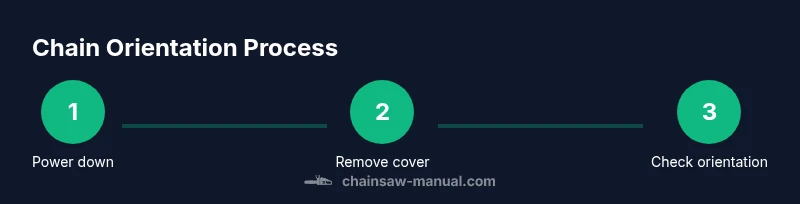
Power down and disconnect the spark source
Turn off the engine and disconnect the spark plug wire to prevent accidental starts. This is essential before you touch the chain or bar. Allow the saw to cool if recently used.
Tip: Double-check that the spark plug boot is removed and cannot contact the plug. - 2
Remove the bar cover and chain
Use the scrench to loosen the bar nuts, remove the bar cover, and gently lift the chain off the bar. Set the chain and bar aside in a safe area.
Tip: Support the chain so it doesn’t snap or spring toward your hands. - 3
Inspect orientation visually
Hold the chain and look at the direction of the cutting teeth and the arrows on the drive links. Confirm the top of the chain faces toward the bar tip as it turns. Compare with the manufacturer’s forward-rotation marking.
Tip: If the teeth appear to point opposite the forward direction, stop and reassess. - 4
Check drive links and bar groove engagement
Examine the drive links to ensure they sit in the groove and move freely without binding. A misaligned drive link can indicate incorrect orientation or bar wear that needs attention.
Tip: Clean debris from the groove before reassembly. - 5
Align the chain for correct orientation
Place the chain on the bar with the top plate facing forward and the cutting teeth toward the bar tip. Ensure the chain sits evenly in the groove and that the drive links align with the sprocket.
Tip: If in doubt, consult the manual for your chain and bar setup. - 6
Tension the chain to manufacturer specs
Using the scrench, tension the chain so there is slight slack at the midpoint and the chain does not sag off the bar. Rotate the chain by hand to confirm smooth motion.
Tip: Avoid overtightening; a too-tight chain will wear faster and can stall the saw. - 7
Reinstall the bar cover and fasten securely
Reattach the bar cover and tighten the nuts securely while ensuring the chain remains seated in the groove. Double-check that the cover does not pinch the chain.
Tip: Re-check tension after the bar cover is installed. - 8
Perform a slow hand spin check
With the saw off, manually rotate the chain to verify it moves smoothly and remains properly oriented. Keep fingers away from the teeth and bar edge.
Tip: If you feel binding, stop and re-check alignment and tension. - 9
Test on scrap wood at low idle
Start the saw and perform a careful test cut on scrap wood. Listen for unusual noises or vibrations and observe how the chain bites. Stop immediately if anything seems off.
Tip: Wear full PPE and keep bystanders clear.
FAQ
Can a chainsaw chain be installed backwards and still run?
Yes, a backwards-installed chain may run but it compromises cutting efficiency and drastically increases kickback risk. It is not recommended for safety or performance.
Yes, it can run, but it is unsafe and should be corrected before cutting.
How can I tell if my chain is oriented correctly?
Look for a forward rotation arrow on the chain and ensure the cutting teeth point toward the bar tip when the chain moves. Verify the top of the chain engages wood, not the underside.
Check the orientation marks and teeth direction; verify the chain bites forward.
What should I do if I installed the chain backwards by mistake?
Power down the saw, remove the bar cover, correct the chain orientation, re-tension, and re-test on scrap wood before cutting real material.
Shut off the saw, fix the orientation, and test carefully.
Does backward orientation affect warranty?
Warranties vary by manufacturer; incorrect installation may void certain warranty claims. Always consult the manual or support for guidance.
Check with the manufacturer; improper setup can affect warranties.
Can I practice orientation on scraps to learn safely?
Practice orientation checks and tensioning on scrap wood with PPE, but never run a saw with a backwards chain deliberately. Practice should focus on safe habits.
Practice safety steps on scraps with PPE first.
What are warning signs of incorrect orientation during a cut?
Unusual vibration, binding, increased kickback, or smoke from excess friction are signs to stop and re-check orientation and tension immediately.
If you notice binding or smoke, stop and reassess orientation.
Watch Video
The Essentials
- Check chain orientation before every start.
- Forward rotation is essential for safe cutting.
- Incorrect orientation raises kickback risk and wear.
- Follow manufacturer marks and PPE for safe operation.