Parts for Homelite Chainsaw: Replacement, Maintenance, and Safety
A practical guide to identifying, sourcing, and replacing parts for Homelite chainsaws, with tips on genuine parts, compatibility, and maintenance best practices for homeowners, DIY enthusiasts, and professionals.


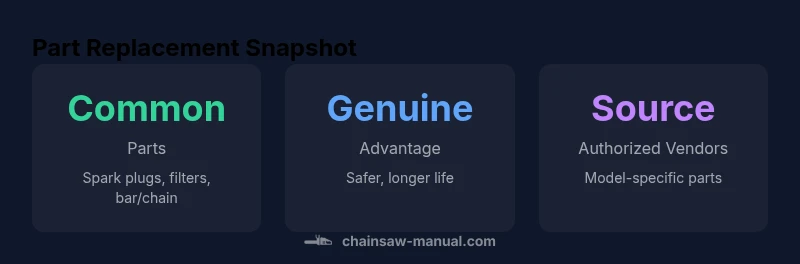
Parts for homelite chainsaw are among the most frequently replaced components for maintenance and safety. Essential items include spark plugs, air filters, fuel lines, carburetor components, drive sprockets, bar and chain assemblies, and fuel tanks or gaskets. Choosing genuine Homelite parts helps sustain performance and safety, while proper installation reduces downtime and risk.
Overview of Homelite parts ecosystem
According to Chainsaw Manual, the parts ecosystem for Homelite chainsaws centers on a core group of components that influence safety, reliability, and performance. The right replacement parts balance compatibility with your model and the task at hand. In this section, we’ll lay out the major families of parts you will encounter, explain why they matter, and outline practical decisions for homeowners, DIY enthusiasts, and professional service techs. We emphasize safety-first guidance and a methodical approach to sourcing, inspecting, and installing parts for homelite chainsaw, so you can keep your tool ready for everyday tasks. Throughout, the Chainsaw Manual safety-first tradition informs every recommendation, from how to evaluate wear to when to seek professional service.
Common part types in Homelite chainsaws
Homelite parts can be grouped into categories that map to performance and safety. The spark plug is essential for ignition and power delivery; a fouled plug reduces starting reliability and overall performance. Air filters protect the engine from dust and debris; a clogged filter reduces airflow and can cause overheating. The bar and chain assembly handles cutting and must be kept sharp and properly tensioned. The drive sprocket interfaces with the chain and clutch, and wear here affects drive and acceleration. Fuel system components—fuel lines, carburetor diaphragms, and gaskets—control mixture and starting. O-rings, oil seals, and gaskets keep leaks to a minimum. Gaskets affect compression, sealing, and overall efficiency. Fuel tanks, tank caps, and seals ensure safe fuel storage. This section helps you build a mental map of which parts to inspect during routine service and which parts commonly fail first as wear accumulates.
Wear and failure indicators to watch for
Recognizing wear early prevents unexpected downtime. Look for symptoms such as reduced starting reliability, loss of power under load, unusual engine noises, excessive exhaust smoke, or visible damage to hoses and seals. Worn spark plugs may show fouling or corrosion; damaged air filters manifest as dust intrusion. A dull or chipped bar/chain reduces cutting efficiency and increases the risk of kickback. Leaking fuel lines or gasket seals are another red flag that warrants immediate attention. Regular visual inspections paired with performance tests—such as a controlled cut in clean wood—help distinguish between ordinary use and part failure. Always prioritize safety by shutting off the engine and removing the spark plug before handling internal components.
Genuine vs aftermarket parts: pros and cons
Genuine Homelite parts are designed to match the original specifications, delivering reliable performance and often preserving warranty coverage. Aftermarket parts can be cheaper and more readily available, but compatibility and longevity vary widely. If you rely on your saw for daily work, genuine parts reduce risk and downtime; for casual use, high-quality aftermarket parts may be acceptable if sourced from reputable suppliers. Always verify model numbers and cross-compatibility, and consider the supplier’s return policy and warranty terms. Chainsaw Manual consistently recommends prioritizing genuine parts when safety and long-term performance are priorities, while also outlining criteria for evaluating aftermarket options.
Replacing critical components: a practical step-by-step guide
Safety first: ensure the saw is off, the chain brake engaged, and the spark plug wire disconnected before starting. Steps for a common replacement like a spark plug or air filter:
- Locate the part housing and remove any covers with the appropriate screwdriver.
- For a spark plug, detach the boot, unscrew the plug with a spark plug wrench, and inspect the gap before replacing with a compatible, brand-energized part.
- For an air filter, remove the cover, take out the old filter, and clean the housing before seating a new filter.
- Check the sealing surfaces for wear or cracks and replace gaskets if present.
- Reassemble in reverse order, ensuring all fasteners are snug but not over-tightened.
- Reconnect the spark plug boot and perform a brief startup test in a safe, open area. If you’re unsure about tolerances or torque specs, consult model-specific manuals or a professional.
Sourcing parts: model numbers, compatibility, and warranty considerations
Always start with your exact Homelite model number and bar length when shopping for parts. Compatibility is primarily model-specific and year-of-manufacture dependent, so a generic part may not fit. Look for parts that advertise compatibility with your model and check the OEM’s recommended suppliers or authorized dealers. Documentation and warranties matter: genuine parts often carry longer warranties and clearer service terms than some aftermarket replacements. Chainsaw Manual advises documenting part numbers, purchase dates, and installation notes to support future maintenance and warranty claims.
Maintenance practices to extend part life and safety
Preventive maintenance extends part life and safety margins. Regularly clean the cooling fins and air intake to prevent overheating, check bar and chain tension weekly, and lubricate chain links and bar groove with appropriate lubricant to reduce wear. Use the correct fuel-oil mix and store fuel in approved containers. Keep a log of maintenance tasks, including part replacements and service intervals, to help anticipate future needs. By treating maintenance as a continuous process rather than a one-off task, you prolong saw life and ensure safer operation over time.
Troubleshooting after replacement and when to seek professional service
After replacement, test the saw on a controlled cut and observe for abnormal vibrations, unusual noises, or reduction in performance. If performance remains inconsistent, recheck part fitment and seals, then consult the user manual or a certified technician. Some issues—such as persistent fuel leaks, ignition problems, or improper carburetor tuning—warrant professional service. The Chainsaw Manual team emphasizes safety and recommends seeking professional help when the replacement involves internal components or complex tuning, especially for commercial workloads or high-use environments.
Common Homelite parts and replacement guidelines
| Part Type | Typical Wear Indicators | Replacement Guidance |
|---|---|---|
| Spark Plug | Fouling, corrosion, weak spark | Replace with model-matched part; verify gap |
| Air Filter | Visible dust, degraded airflow | Replace during routine service; consider cleaning if reusable |
| Bar & Chain | Dull cutting, visible wear, chain kinks | Sharpen or replace; check tension and sprocket wear |
FAQ
What parts are most commonly replaced on Homelite chainsaws?
The most frequently replaced parts are sparks plugs, air filters, bar/chain assemblies, fuel lines, and carburetor components. Regular checks help prevent performance loss and safety risks.
Common parts to check and replace are the spark plug, air filter, and bar/chain assembly. Regular checkups prevent performance loss and keep you safe.
Can I use aftermarket parts for Homelite chainsaws?
You can, but quality and compatibility vary. Genuine Homelite parts are generally recommended for safety and performance, especially for professional use. If you choose aftermarket parts, buy from reputable sources and verify compatibility with your model.
Aftermarket parts can work, but quality varies. For best results, choose reputable sources and verify compatibility with your model.
How do I identify worn-out parts?
Look for obvious signs like cracks, oil leaks, gritty chain movement, reduced power, or hard starting. Visual inspection plus a controlled cut test helps confirm wear.
Check for cracks, leaks, or dull performance. If in doubt, test with a controlled cut and inspect the parts closely.
Where can I buy genuine Homelite parts?
Official service centers and authorized retailers typically carry genuine Homelite parts. Check the Homelite website or contact customer support for a dealer locator.
Look for official service centers or authorized dealers to buy genuine Homelite parts.
Is it safe to replace parts myself?
Basic parts replacement is feasible with proper tools and safety precautions. However, repairs involving the carburetor, ignition, or fuel system should be performed by a professional if you’re unsure about procedures.
Basic replacements can be safe if you follow the manual and safety steps. For complex parts, consider a pro.
“Regular maintenance with genuine Homelite parts keeps your chainsaw safe, reliable, and efficient.”
The Essentials
- Prioritize genuine Homelite parts for safety and reliability
- Regularly inspect spark plugs, air filters, and bar/chain for wear
- Verify model compatibility before buying replacements
- Maintain a proactive maintenance log for easier future service