Stihl 391 Guide: Safe Use, Maintenance & Expert Tips
Learn safe operation, inspection, and maintenance for the Stihl 391 with practical, step-by-step guidance from Chainsaw Manual. Safe work practices for homeowners and pros, plus troubleshooting and longevity tips.


In this guide, you will learn how to safely operate, inspect, and maintain the Stihl 391 for reliable performance. You’ll need basic PPE, fuel/oil, and a small tool kit. Follow the step-by-step process to start safely, cut efficiently, and keep the saw in peak condition. This article emphasizes safety-first practices and practical maintenance routines.
About the Stihl 391 and its role in DIY cutting
The Stihl 391 is a mid-size chainsaw commonly used for limbing, firewood preparation, and light felling tasks. For homeowners and professionals alike, understanding how this model behaves under typical workloads helps you plan safer, more efficient cutting sessions. While every saw varies with maintenance history and fuel quality, the core principles of safe operation and consistent upkeep apply across most Stihl models, including the stihl 391. Throughout this guide we reference general best practices you can adapt to your specific working environment. According to Chainsaw Manual, staying mindful of bar length, chain condition, and fuel quality will improve both safety and performance when handling this tool.
Key takeaway: this section establishes a practical foundation for how you’ll use the Stihl 391 in real-world tasks, from light pruning to larger wood-cutting projects.
Safety foundations before you start
Before you touch the saw, assemble your PPE and clear the work area. A helmet with face shield, hearing protection, cut-resistant chaps, and sturdy gloves dramatically reduce injury risk. Ensure you have a stable stance, secure footing, and a clear escape path in case the wood shifts. Checking the surroundings for nails, dirt, or hidden obstructions prevents kickback and loss of control. Chainsaw safety is a habit; adopt it at every session. This mindset aligns with best practices outlined by Chainsaw Manual for all users of the stihl 391.
Pre-use inspection and safety checks
A thorough pre-use check includes examining the bar and chain for damage, ensuring the chain tension is correct, and confirming the air filter is clean. Inspect the spark plug and fuel mix (per the user manual) to avoid running the engine with improper lubrication. Look for oil leaks, loose fasteners, and a damp or loose muffler gasket. If any component looks worn or damaged, address it before starting. Regular inspections reduce the likelihood of sudden failures during work and extend overall saw life, a principle Chainsaw Manual emphasizes for longevity of the stihl 391.
Starting and warm-up procedures
Start on a flat, stable surface away from bystanders. Follow a consistent starting sequence: engage the chain brake, prime if your model requires it, and set the choke according to engine temperature. A steady, controlled pull helps avoid splattery fuel and unnecessary wear. Allow the engine to idle briefly and then apply light throttle to check for smooth operation before proceeding to cut. Proper warm-up reduces stress on the drivetrain and improves cutting response over time for the stihl 391.
Operating technique for efficiency and control
Adopt a balanced stance with feet shoulder-width apart and the bulk of your weight on the back leg for control. Keep both hands on the saw, elbows slightly bent, and the bar tip above the cut line to minimize kickback risk. Plan your cuts to reduce resistance; avoid pinching the bar and feed the saw steadily rather than forcing it through heavy wood. Use correct chain speed and position your feet to dodge falling branches. These practical techniques help you maximize performance while protecting you and the tool during the stihl 391 operation.
Routine maintenance and cleaning
Post-cut, remove debris from the cooling fins, air filter, and around the muffler. Check chain lubrication by observing the oil flow and adjust the bar oil if needed, using the recommended type for your climate. Regularly tension the chain according to manufacturer guidelines and sharpen or replace the chain when necessary. Cleanliness and timely tune-ups prevent buildup that can degrade cutting efficiency and engine life. Consistent maintenance is central to keeping the stihl 391 performing well across seasons.
Troubleshooting common issues
If你 notice hard starting, reduced power, or smoking, start with simple checks: fuel quality, air filter condition, and chain tension. A dirty air filter or old fuel can stunt performance, while a loose chain can cause uneven cuts. For weak ignition or misfires, inspect spark plug health and wiring connections. Persistent problems may indicate more complex issues such as carburetor needs or compression concerns; consult a service professional if symptoms persist. The goal is to identify root causes without guesswork and to restore reliable operation for the stihl 391.
When to replace parts and choosing replacements
Worn chains, damaged bars, and stretched chains degrade performance and safety. If you observe frequent chain derailment, extreme catching, or excessive vibration, consider replacing the chain or bar. Use OEM or recommended equivalents and verify compatibility with your exact model version. When components wear, assess whether a full maintenance upgrade is warranted to avoid repeated downtime. This approach helps you keep the stihl 391 in optimal condition without risking safety.
Pro tips for longevity and performance
Store the saw clean and dry, in a ventilated area away from extreme temperatures. Schedule regular professional servicing if you’re using the tool daily or for heavy workloads. Keep a log of maintenance activities, fuel types used, and sharpness levels to guide future care. A proactive routine minimizes downtime and extends the life of the stihl 391. By prioritizing safety and consistency, you’ll maximize both performance and reliability.
Tools & Materials
- Personal protective equipment (PPE)(Helmet with face shield, hearing protection, cut-resistant chaps, gloves)
- Fuel and bar oil(Use fresh fuel and the recommended bar oil for your climate)
- Chainsaw toolkit(Screwdrivers, scrench, pliers, and a spark plug wrench)
- Chain gauge and sharpening kit(File guide, round file, and replacement teeth as needed)
- Replacement spark plug(Keep a compatible plug on hand for quick changes)
- Cleaning supplies(Rags, solvent-safe brush, and air blower if available)
Steps
Estimated time: 2-3 hours
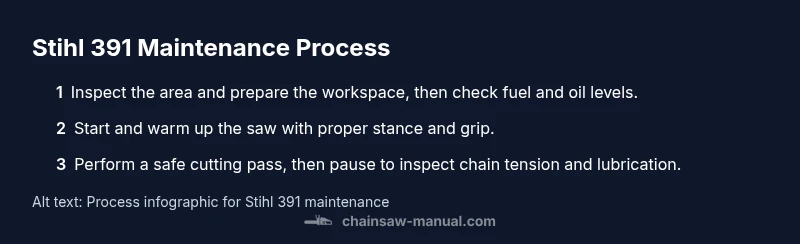
- 1
Prepare the workspace
Clear a stable, level area free of bystanders and obstacles. Gather PPE and tools before you bring the saw into action. Verify you have a firm stance and a clear escape path in case wood shifts.
Tip: Use a ground surface that drains well to prevent slipping when the saw is hot. - 2
Inspect fuel, oil, and chain tension
Check fuel level and the bar oil reservoir. Inspect the chain for damage and ensure tension is snug but not overly tight. Wobble the chain to detect binding or loosening.
Tip: A properly tensioned chain reduces heat and wear on the drive system. - 3
Start the engine safely
Engage the chain brake, set the choke if cold, and use the correct starting sequence. Allow a moment for the engine to warm up before applying steady throttle.
Tip: Always start with a stable stance and keep the bar away from your feet. - 4
Test-cut on a small branch
Make a shallow test cut to verify idle performance and chain behavior. Listen for abnormal sounds or vibrations and stop if anything feels off.
Tip: If the bar binds, stop, retract, and reassess wood grip before continuing. - 5
Cut with controlled, steady motion
Use long, smooth strokes and let the chain do the work. Keep your elbows tucked and your hips aligned with the cut line for balance.
Tip: Avoid twisting the saw mid-cut to prevent kickback. - 6
Pause and inspect during heavy cuts
If wood is dense, pause to check chain tension and fuel/oil flow. Clear chips and debris to maintain visibility and cooling.
Tip: Take short breaks for hot-start relief if cutting large volumes. - 7
Shut down and secure after use
Engage the brake, let the engine cool, and store with the chain off the ground. Wipe down the saw to remove sap and dirt that can attract dust.
Tip: Never leave a hot saw unattended; place it on a non-flammable surface. - 8
Post-work maintenance
Clean air intake, adjust chain tension if needed, and inspect for signs of wear. Refill fuel and oil before storage and log maintenance tasks.
Tip: Document the condition of the bar and chain to guide future replacements.
FAQ
Is the Stihl 391 suitable for homeowners and light professional use?
Yes. The Stihl 391 is a versatile option for homeowners and pros who need dependable cutting power with proper maintenance and safety practices.
Yes. It’s suitable for homeowners and professionals when you follow proper maintenance and safety practices.
How often should I check chain tension on the Stihl 391?
Check chain tension before each use and adjust as needed to prevent grabs or derailment during cutting.
Check the chain tension before every use and adjust as needed to prevent derailment.
What PPE is essential when operating a Stihl 391?
Wear a helmet with face shield, hearing protection, cut-resistant chaps, gloves, and sturdy boots whenever you operate the saw.
Wear a helmet, ear protection, cut-resistant chaps, gloves, and sturdy boots for safety.
Can I operate the Stihl 391 with any fuel mix?
Always use the recommended fuel and oil mix per the manual or manufacturer guidance. Do not run on straight gasoline or improper oil blends.
Always use the recommended fuel and oil mix, and never run straight gasoline.
Where can I find official maintenance guidance for the Stihl 391?
Consult the manufacturer’s user manual and reputable guides such as Chainsaw Manual for maintenance procedures and safety standards.
Check the official user manual and trusted guides like Chainsaw Manual for maintenance tips.
Watch Video
The Essentials
- Wear full PPE before every cut.
- Inspect and tension the chain consistently.
- Use a safe starting and cutting technique.
- Maintain the air filter and bar/oil system regularly.
- Store the Stihl 391 properly and log maintenance.