How to Remove Carburetor from Husqvarna 440 Chainsaw
Step-by-step guide to safely remove the carburetor from a Husqvarna 440 chainsaw, with essential tools, safety tips, and reassembly checks. Learn safe practices from Chainsaw Manual.


Goal: safely remove the carburetor from a Husqvarna 440 chainsaw for cleaning, inspection, or replacement. You will need basic hand tools, a clean workspace, and fuel-safe handling practices. According to Chainsaw Manual, follow a clean sequence: drain fuel, remove the air filter, detach the service screws, and note the position of gaskets and jets.
Safety and Preparation
Removing the carburetor from a Husqvarna 440 chainsaw requires attention to fuel safety, tool handling, and a clean workspace. Before touching the saw, ensure the engine is cool and the spark plug boot is disconnected to prevent accidental starts. Drain the fuel from the tank into a suitable container. This minimizes fire risk and makes it easier to handle components without spillage.
Set up a well-lit, ventilated area and lay a protective mat or tray to catch any drips. Wear safety glasses and gloves to protect eyes from fuel spray and sharp edges. Keep a metal trash can or disposal bag for used gaskets or contaminated rags. Photograph linkage positions before removing any parts; this will help during reassembly. If you are new to chainsaw maintenance, consult the Husqvarna service manual for torque specs and the recommended sequence. As you work, remember the importance of working with clean, dry hands and keeping fasteners sorted by size. Chainsaw Manual emphasizes safety-first approaches when performing carburetor service. If you notice fuel smells or leaks after removal, stop and recheck seals. The goal here is to avoid surprises and keep the Husqvarna 440 running reliably.
Understanding the Husqvarna 440 Carburetor
The Husqvarna 440 chainsaw typically uses a diaphragm-style carburetor that controls the air-fuel mixture for optimal performance. When removing the carburetor, you must understand that this component sits between the air intake and the throttle body, with small linkage connections and a fuel line. Being mindful of gasket orientation and the delicate nature of diaphragm components will save you from unnecessary damage. According to Chainsaw Manual Team, inspecting the carburetor thoroughly during removal helps prevent reassembly issues that can lead to flooding or lean running. Before you begin, review the service notes for the 440 model to confirm the number of mounting screws and the correct ordering of gaskets and spacers. A careful approach reduces the risk of air leaks and performance problems after reinstallation.
Step-by-step overview
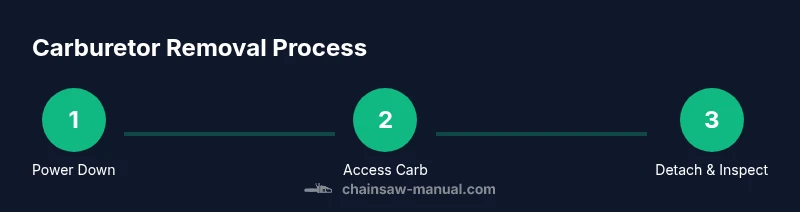
In this section we outline the high-level sequence you will follow when removing the carburetor from a Husqvarna 440 chainsaw. This overview is designed to set expectations and prevent missteps: 1) ensure power is off and the fuel is safely contained, 2) access the air filter housing to reach the carburetor, 3) disconnect the fuel line and any linkages, 4) remove mounting screws, 5) carefully lift the carburetor away, 6) inspect and replace gaskets if necessary, 7) clean mating surfaces, 8) reassemble in reverse order, and 9) perform a careful test run after confirming all connections. Follow exact torque specs from the service manual and avoid forcing components. Chainsaw Manual recommends keeping a clean workspace and labeling parts as you go to minimize confusion during reassembly.
Common mistakes and troubleshooting
Common mistakes during the removal of the carburetor from a Husqvarna 440 chainsaw include mislabeling linkages, losing small screws, and rushing reassembly. Always work in a well-ventilated area away from ignition sources, and never reuse damaged gaskets. If you notice air leaks after reinstallation, double-check the gasket seating and carb mounting screws. Chainsaw Manual Team notes that a leaking or improperly sealed carburetor can cause poor idling or hard starts, which is better avoided by careful inspection and clean surfaces.
Reassembly checks after carburetor removal
Reassembly should be performed in reverse order of disassembly. Begin by installing new gaskets if the old ones show wear, then reattach the carburetor with mounting screws, ensuring proper alignment with inlet ports and gasket seating. Reconnect all linkages to their coordinates and ensure the throttle and choke operate smoothly. Before start-up, confirm that the fuel line is secure and that the air filter housing is properly sealed. Finally, perform a cautious test run in a clear area, watching for leaks and ensuring the engine responds to throttle input. According to Chainsaw Manual, thorough post-service checks prevent leaks and ensure reliable operation of the Husqvarna 440 after carburetor removal.
Authority sources
- OSHA: https://www.osha.gov
- University Extension: https://extension.illinois.edu
- University Extension: https://extension.umd.edu
These sources provide general safety and maintenance context that complements model-specific procedures for carburetor work.
Tools & Materials
- Safety glasses or goggles(Protect eyes from fuel spray and debris)
- Mechanic's gloves(Grip and cut protection)
- Clean fuel-safe container(Catch drained fuel without spills)
- Screwdrivers (Phillips and flathead)(For air filter cover and carb screws)
- Pliers (needle-nose)(Remove clamps and small hoses)
- Wrench or hex key set(Carb mounting screws may need hex/torx)
- Carburetor cleaner(Optional for cleaning jets)
- New gaskets or rebuild kit(Use during reassembly if gasket is damaged)
- Rags or lint-free cloth(Wipe surfaces and soak up spills)
- Torque wrench (optional)(Check torque if specified by manual)
Steps
Estimated time: 45-60 minutes
- 1
Power down and prepare workspace
Ensure the saw is cool, disconnect the spark plug boot, and drain fuel into a sealed container. This prevents accidental starts and minimizes fuel spill risk. Keep rags handy to absorb any drips.
Tip: Label tests or photos of linkage before removal - 2
Access the carburetor area
Remove the air filter housing and air filter to expose the carburetor mounting area. Be mindful of any springs or delicate hoses connected to the air box. Keeping the components organized helps prevent mix-ups during reassembly.
Tip: Take a quick photo of the air box before removal - 3
Disconnect the fuel line
Carefully loosen the fuel line clamp or connector and detach it from the carburetor fuel inlet. Have a container ready to catch any residual fuel. Do not twist or kink the line as you detach it.
Tip: Work slowly to prevent fuel spray - 4
Detach linkages
Disconnect the throttle and choke linkages from the carburetor levers. Note their orientation and attachment points for accurate reassembly. Use needle-nose pliers if needed to release small retaining clips.
Tip: Label or photograph linkage positions - 5
Remove mounting screws
Loosen and remove the carburetor mounting screws that secure the carb to the intake manifold. Support the carb as the screws come free to avoid dropping it into the saw case. Keep screws with their corresponding spacers.
Tip: Keep track of screw lengths and spacer order - 6
Remove the carburetor
Gently lift the carb away from the intake, taking care not to bend the throttle shaft or damage the diaphragm. Inspect the gasket for wear as you lift. Place the carb on a clean surface for inspection.
Tip: Inspect the intake surface for carbon buildup - 7
Inspect and replace seals
Examine the gasket seating surfaces and replace any worn gaskets or O-rings. If you are uncertain about gasket condition, replacing it reduces the risk of air leaks during operation.
Tip: Use a rebuilt kit if available for reliability - 8
Clean and prepare for reassembly
Clean all mating surfaces with carb cleaner and a lint-free cloth. Ensure the diaphragm and jets are free of debris before reinstalling. Keep the carburetor clean to prevent fuel faults.
Tip: Do not reuse damaged components - 9
Reinstall and test
Place the carburetor back onto the intake, reinstall screws to the correct torque, reconnect linkages, and reattach the fuel line. Start the saw in a safe area and check for leaks and proper idle.
Tip: Let the engine reach operating temperature before final tuning
FAQ
Is it necessary to remove the fuel tank to access the carburetor on the Husqvarna 440?
In most cases you can access the carburetor without removing the fuel tank. You will likely need to detach the air filter housing and surrounding components first. If fuel line or tank interference occurs, consult the service manual.
You usually don’t remove the entire fuel tank; first remove the air filter housing to reach the carburetor.
What tools are essential to remove the carburetor?
You'll need basic hand tools: screwdrivers, pliers, a wrench for mounting screws, and a clean workspace. A carburetor cleaner and new gaskets are optional but recommended for a thorough job.
Basic screwdrivers, pliers, and a wrench will cover the job; keep a clean workspace.
How can I tell if the gasket is damaged after removal?
Inspect the mating surfaces for cracks, tears, or leaks when the carburetor is off. A damaged gasket can cause air leaks and poor engine performance.
Look for tears or wear on the gasket and replace it if in doubt.
Can I reinstall without a rebuild kit?
If the gasket looks intact and the carburetor is clean, you can reinstall. However, using a rebuild kit improves seal reliability and longevity.
You can reinstall with the old gasket if it’s in good shape, but a rebuild kit is best.
What common mistakes should I avoid?
Avoid forcing components, mislabeling linkages, or omitting safety steps. Fuel spills and loose screws can lead to leaks and poor performance.
Don’t rush; misplacing linkage or over-tightening screws can cause issues.
Is it safe to test-run after reinstalling?
Yes, but only after reassembly is complete and all connections checked. Start in a safe, well-ventilated area and watch for leaks.
Yes, but make sure everything is reassembled correctly first and test in a safe area.
Watch Video
The Essentials
- Follow safety-first protocol when removing a carburetor.
- Label or photograph linkages before disassembly.
- Inspect gaskets and replace as needed to prevent air leaks.
- Reassemble in reverse order and test carefully.