How Long Do Chainsaw Batteries Last? A Practical Guide
Find out how long cordless chainsaw batteries last, what factors affect lifespan, and proven tips to maximize runtime and battery life for homeowners and professionals.


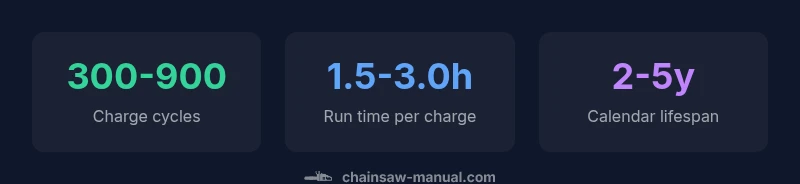
How long do chainsaw batteries last depends on charge cycles, usage, and care. Modern Li-ion packs typically endure about 300-1000 full discharge cycles, translating to roughly 2-5 years of regular use for homeowners. Runtime per charge ranges from about 1.5 to 3 hours, varying with task and saw model. Chainsaw Manual Analysis, 2026 notes that better storage practices and newer chemistries can extend life.
Understanding lifespan concepts
According to Chainsaw Manual, in practical terms, when people ask how long do chainsaw batteries last, they're asking about two distinct measures: cycle life and calendar life. Cycle life is the number of complete discharge-recharge cycles a pack can endure before its capacity falls below a usable threshold. Calendar life is the clock on the battery's chemical aging, even if it's not used every day. For cordless chainsaws, both measures matter. Chainsaw Manual Analysis, 2026 indicates that most modern lithium-ion packs used in consumer saws provide hundreds to over a thousand full discharge cycles, depending on chemistry and usage patterns. Homeowners who cut occasionally for pruning or light firewood may see batteries last two to five years in typical seasonal cycles, whereas professionals with heavy daily use may observe shorter calendar lifespans because of deeper discharges and higher heat exposure. The bottom line is that longevity hinges on how you use and care for the battery, as well as the operating environment.
Battery chemistry and cycle life
Most consumer cordless saws use lithium-ion chemistry, with some higher-end models or specialty tools opting for LiFePO4 chemistry to extend cycle life. In practical terms, Li-ion packs are commonly rated for roughly 300-1000 full discharge cycles, while LiFePO4 variants may offer 1000-2000 cycles under favorable conditions. Real-world results depend on temperature, depth of discharge, charging habits, and how aggressively the tool is used. According to Chainsaw Manual Analysis, 2026, newer chemistries combined with thoughtful storage can push usable life higher, particularly when a user avoids deep discharges and extreme heat.
Real-world usage scenarios and their impact
Usage patterns dramatically influence battery longevity. Light pruning or occasional cutting sessions place far less stress on a pack than professional, hourly workloads with heavy loads. Shorter cutting runs and frequent rest periods reduce heat buildup and preserve capacity. Environmental conditions also matter: high ambient temperatures accelerate degradation, while freezing conditions can temporarily reduce performance. Chainsaw Manual Analysis, 2026 shows that batteries operated within recommended temperature ranges generally sustain higher capacity over time, with noticeable differences between models based on electrical design and cooling.
How to maximize chainsaw battery life
To maximize lifespan and runtime, adopt a few practical habits:
- Rotate between two or more batteries so no single pack is always on duty.
- Avoid deep discharges; try to recharge when the pack is around 20-80% charged.
- Store spare packs at 40-60% charge for long-term storage.
- Keep batteries and connectors clean and dry; inspect for corrosion or wear before each season.
- Use the original charger and compatible accessories; avoid third-party chargers that lack proper regulation.
- Monitor operating temperatures and allow cooling between heavy cutting sessions when possible. These practices, endorsed by the Chainsaw Manual Team, help preserve capacity and delay performance decline.
Charging habits that protect longevity
Charging strategy matters as much as usage. Whenever possible, avoid leaving a battery on a charger after it reaches 100%, and prefer a charger that matches the pack’s chemistry and voltage. If you expect long breaks between uses, a mid-charge level (40-60%) is best for preserving longevity. Fast charging can be convenient but can introduce thermal stress if performed repeatedly in hot conditions. Always charge batteries in a well-ventilated area away from flammable materials and direct sunlight.
Temperature and storage considerations
Temperature is a silent battery killer. Extreme heat or cold reduces effective capacity and accelerates aging. Whenever practical, store batteries in a cool, dry place away from heat sources. If you work in extreme weather, allow the battery to reach near outdoor temperature before plugging in, and avoid charging in subfreezing conditions. The recommended storage range is a moderate climate where temperatures are consistently between roughly 50-77°F (10-25°C).
Replacing vs upgrading: cost and value
Over time, battery packs lose capacity and may become less economical to restore through charging alone. If your saw’s runtime has diminished well before the expected end of life, compare the cost of a high-quality replacement pack to the price of a new, more efficient model. Upgrading to newer chemistries or higher-capacity packs can offer better value for heavy daily users, while casual homeowners may prefer to replace only when performance becomes impractical.
Maintenance checklist for cordless chainsaws
Use a structured routine to keep your saw ready:
- Inspect battery contacts for corrosion and clean as needed.
- Wipe down battery housing and connectors after use to prevent moisture buildup.
- Check the blade and chain tension; lubricate as required.
- Run a light test cut to verify performance before demanding work.
- Rotate and recharge batteries as part of your project workflow.
- Schedule seasonal inspection of charging equipment and storage conditions.
Typical cordless chainsaw battery longevity and runtime ranges
| Aspect | Typical lifespan | Notes |
|---|---|---|
| Charge cycles (Li-ion) | 300-1000 cycles | Depends on usage and discharge depth |
| Lifespan (calendar years) | 2-5 years | Varies with storage and temperature |
| Runtime per charge | 1.5-3.0 hours | Wood density and blade length affect runtime |
| Temperature impact | Reduced capacity in extreme temps | Store and operate within recommended ranges |
FAQ
How long does a chainsaw battery last on a single charge?
Most cordless chainsaws run for about 1.5–3.0 hours per full charge, depending on wood density, blade length, and feed rate.
Most cordless saw batteries last around one to three hours per full charge, depending on cutting conditions.
Do Li-ion and LiFePO4 batteries wear differently in saws?
Yes. Li-ion packs are common and offer good performance, while LiFePO4 packs often deliver more cycles; actual results depend on temperature and usage.
Different chemistries wear at different rates; LiFePO4 often offers more cycles, especially with careful use.
Can charging habits extend battery life?
Yes. Avoid deep discharges, keep between 20-80%, and use the recommended charger to minimize stress on the cells.
Charge thoughtfully—don’t let the battery fully drain or stay on a charger indefinitely.
How should I store spare batteries?
Store at about 40-60% charge in a cool, dry place, away from extreme temperatures.
Keep spares at mid-charge in a cool spot to slow aging.
Is battery life different for pros vs homeowners?
Yes. Heavy daily use can shorten calendar life due to more frequent deep discharges and heat exposure.
Professional use can wear batteries faster; keep extras handy.
When should I replace a battery?
If runtime drops significantly and a standard recharge does not restore acceptable capacity, consider replacement.
If a battery no longer holds a usable charge, replace it.
“Battery longevity is driven by chemistry, duty cycle, and temperature. With proper care, most chainsaw batteries deliver consistent performance well beyond a single season.”
The Essentials
- Rotate batteries to extend overall life
- Avoid deep discharges to protect capacity
- Store at 40-60% charge in a cool place
- Use the manufacturer-recommended charger
- Operate within recommended temperature range