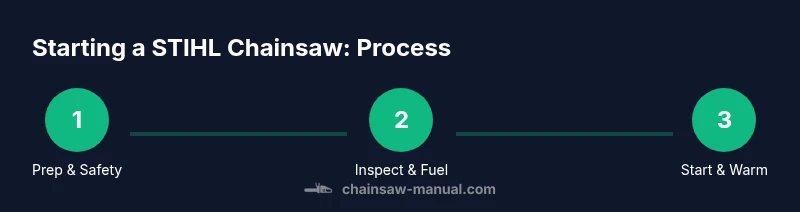
Essential Tips for Safely Starting a STIHL Chainsaw
A comprehensive, safety-first guide to starting a STIHL chainsaw. Learn the correct sequence, pre-start checks, and practical tips to prevent kickback and injuries. Designed for homeowners, DIYers, and professionals.


By the end of this guide, you’ll confidently perform the proper starting sequence for a stihl chainsaw, complemented by essential safety checks. You’ll know when to use the choke, the correct throttle position, and how to verify ignition before cutting. Follow these tips for starting stihl chainsaw to reduce kickback risk and get reliable starts every time. Always wear PPE.
Why Starting Safely Matters for stihl chainsaws
According to Chainsaw Manual, a safe start is more than a quick pull of the cord—it’s a deliberate sequence of checks and actions designed to protect you and bystanders. A properly started chainsaw reduces kickback risk, minimizes fuel waste, and helps you gain control quickly as soon as the bar begins to move. Homeowners, DIY enthusiasts, and professionals all benefit from a consistent starting routine, especially when working around uneven ground, debris, or trees. The goal is to establish a predictable, repeatable process you can rely on, model after model, and adjust only for model-specific features. Chainsaw Manual’s guidance emphasizes personal protective equipment (PPE), a clear workspace, and understanding how the choke and throttle interact with the ignition to deliver a safe start every time.
Before You Start: Safety Prep
A safe start begins long before you pull the rope. Put on full PPE: a helmet with a face shield, hearing protection, cut-resistant pants or chaps, gloves, and sturdy boots. Clear the work area of bystanders and obstacles, and ensure you have a stable stance. Engage the chain brake before handling the saw, and confirm the bar is away from your body. Chainsaw Manual notes that a dedicated warm-up spot, dry hands, and dry clothing reduce the chance of slipping, which is a common factor in accidents. The small precautions you take at the outset compound into much safer operation once the saw starts.
Inspect and Prepare the Bar, Chain, and Fuel
A safe start also depends on the saw’s physical condition. Check chain tension and sharpness; a loose chain can derail a start and cause injury when the bar bites. Inspect the bar for wear or cracks and ensure the sprocket area is clean. Fuel and oil should be fresh and properly mixed or labeled for your model, and the bar oil reservoir should be topped off for proper lubrication. If your model has a primer bulb, ensure it feels firm and primes as needed; if not, skip priming. The overall aim is to prevent unexpected starts, stalls, or chain binding caused by poor maintenance.
The Cold Start Sequence for STIHL Chainsaws
For cold starts, follow a clear sequence: ensure chain brake is engaged; position the choke to the cold-start setting if your model uses one; prime with a primer if equipped; grip firmly with your left hand on the front handle and your right hand on the rear handle; slowly pull the starter rope in smooth, steady motions. When the engine fires, gradually move the choke toward the run position and allow the saw to idle briefly. This staged approach reduces raw fuel wash and helps the carburetor adjust to a stable idle.
Restarting and Hot Starts: What Changes
If the saw starts and then stalls, wait for a moment and re-check the chain brake, fuel, and air filter. For hot starts, use less choke or none at all, depending on the model. Avoid full throttle during a cold restart; instead, allow a brief warm-up at idle while you monitor for smoke or unusual noises. By following model-specific recommendations from the Chainsaw Manual, you minimize wear on the internals and maintain safety when power is needed for the first cut.
Common Mistakes and How to Avoid Them
The most frequent mistakes include starting with the chain brake off, starting in an awkward stance, and ignoring the area around you. Another error is attempting to start with a dull or loose chain, which can cause kickback or binding and lead to loss of control. Don’t ad-lib beyond the manual’s guidance: if something feels off, stop, recheck the basics (PPE, brake, fuel, air filter, and chain tension), and reset the procedure. Consistency is your best safety tool.
Maintenance After Start and Long-Term Tips
After you finish starting, wipe down the saw if it’s dusty and inspect for leaks or loose fasteners. Store fuel and oil according to manufacturer guidelines, and keep the air filter clean for easier starts next time. Regular maintenance reduces the effort needed to start, improves reliability, and extends the life of the saw. The Chainsaw Manual team stresses documenting service milestones and sticking to a routine to minimize unexpected failures.
Quick Start Routine: A 5-Minute Check List
- Wear PPE and check the area for bystanders.
- Engage the chain brake and inspect chain tension.
- Fill fuel and bar oil; confirm the reservoir caps are snug.
- Apply the cold-start choke if required by your model and prime if available.
- Start with smooth pulls and move the choke to run as soon as the engine fires.
This routine aligns with the recommended best practices from Chainsaw Manual and helps you get reliable starts every time.
Tools & Materials
- PPE kit (helmet with face shield, hearing protection, gloves, cut-resistant pants)(Complete protection as you handle a running saw)
- STIHL chainsaw(Chain brake engaged; chain tensioned; bar in good condition)
- Fuel and bar oil(Use fresh fuel and the correct bar oil for your model)
- Approved fuel can and funnel(Safe storage and transfer of fuel)
Steps
Estimated time: 20-25 minutes
- 1
Prepare and Safety Check
Put on full PPE, clear the workspace, and confirm the chain brake is engaged. Stand with a solid stance away from bystanders, with the saw resting on a stable surface.
Tip: Walk the work area first to identify loose debris or trip hazards. - 2
Inspect Chain and Bar
Check chain tension and sharpness; ensure the drive link fits the bar groove. Inspect the bar for wear, and wipe away sawdust from the sprocket area.
Tip: A sharp chain reduces required force and improves control. - 3
Check Fuel and Lubricants
Verify the fuel level and confirm the bar oil reservoir is full. Use the recommended fuel mix and oil for your STIHL model.
Tip: Never start with an empty bar oil reservoir; engine wear increases quickly. - 4
Set Cold Start Chirp (Choke) if Needed
If your model uses a choke, set it to the cold-start position. Prime the primer if your saw has one, until fuel is felt or seen in the diaphragm.
Tip: Only use the primer if your model requires it; over-priming can flood the engine. - 5
Start the Engine
Grasp the front handle with your left hand and the rear handle with your right. Pull the starter rope smoothly until the engine fires, then ease off the choke toward run.
Tip: Keep the saw away from your body and maintain a firm stance during the pull. - 6
Verify Idle and Warm-Up
Let the engine idle for about 1–2 minutes to warm up. Observe for smooth idling and no unusual noises or vibrations.
Tip: If the engine stalls, re-check the choke, fuel, and air intake before attempting again. - 7
Remove Chain Brake and Check Readiness
Disengage the chain brake once the saw is running smoothly. Lightly tap the throttle to confirm the chain remains still while idling.
Tip: Always grab the saw firmly with both hands when testing throttle. - 8
Proceed to Safe Cutting
Move to a controlled cutting task in a clear space, maintaining a firm stance, and using smooth, progressive cuts.
Tip: Avoid forcing the saw; let the chain do the work while you guide it.
FAQ
What is the correct starting procedure for a cold start on STIHL chainsaws?
For many STIHL models, set the choke for cold starts, prime if equipped, and pull the cord until the engine fires. Move the choke to run as soon as it starts smoothly.
Set the choke, pull until it fires, then run as it starts smoothly.
Why does my chainsaw stall after starting?
Common causes include flooded carburetor, insufficient warm-up, or improper fuel. Re-check the choke setting, give it a brief warm-up, and ensure the air intake is clear.
Causes are usually fuel, choke, or warm-up related; re-check those areas and try again.
Is it safe to start a chainsaw indoors?
Starting a chainsaw indoors is not recommended due to exhaust, noise, and space constraints. Always perform starts in a well-ventilated, outdoor area with ample clearance.
No, use outdoor space with proper ventilation and clearance.
What should I do if the starter rope won't pull?
Stop and inspect for a snag, broken recoil, or a locked engine. Avoid forcing the rope; consult the manual or service professional if the issue persists.
If the rope sticks, stop and inspect the recoil and engine; don’t force it.
Do all STIHL models have a primer?
Not all STIHL models include a primer bulb. If your model lacks one, you’ll rely on fuel-soaked starting and a different choke procedure described in the manual.
Some models have primers; others don’t—follow the manual for your model.
How often should I service the spark plug after starting?
Inspect the spark plug during routine maintenance and replace if worn or fouled. Regular maintenance improves starting reliability and overall saw performance.
Check and replace the spark plug as part of routine maintenance.
Watch Video
The Essentials
- Wear PPE and clear the area
- Engage chain brake and set correct chain tension
- Follow cold-start steps and warm-up
- Verify fuel and oil before starting
- Test run in a safe, open space