Ryobi Pole Saw Chain: Replacement and Safe Maintenance
Learn how to choose, replace, and maintain a ryobi pole saw chain with practical, safety-first guidance. Includes pitch, gauge, tension, sharpening, and model compatibility for confident DIY work.


A correctly sized ryobi pole saw chain is essential for safe, efficient cutting. This guide shows how to identify the right pitch and gauge, select the correct replacement chain, tension it properly, and perform safe installation and break-in maintenance. Following these steps reduces kickback and improves overall performance. You’ll also learn when to sharpen or replace the chain and how to avoid common mistakes.
What is a Ryobi pole saw chain and why it matters
A ryobi pole saw chain is the cutting component that interfaces with your bar and engages the wood. It’s designed to withstand vibration, heat, and dulling forces during pruning and limb work. Using the correct chain protects the bar and sprocket and reduces the chance of kickback. According to Chainsaw Manual analysis, compatibility starts with the chain’s pitch and gauge matched to the bar groove and drive links. When the chain is mismatched, you’ll see sluggish cuts, increased heat buildup, and accelerated wear on the chain and bar. The right chain size also helps maintain a predictable cutting rate, which makes pruning safer and more controllable, especially from a ladder or elevated position. Always verify the chain is intended for a pole saw and compatible with Ryobi models before purchase.
Understanding chain specifications: pitch, gauge, and drive links
Chains are defined by several interconnected measurements. The pitch is the distance between the drive links and helps decide which chain will fit the bar’s channel. The gauge is the thickness of the drive links that ride in the bar groove, directly affecting tension and stability under load. Drive links count is another critical factor; the wrong number can bind or loosen easily. When shopping for a ryobi pole saw chain, you should read the bar and chain packaging to confirm pitch, gauge, and drive link count match your saw. If you’re unsure, take a picture of the bar’s labeling and compare it to Ryobi’s official replacement parts sheet. A mismatched chain can stall the saw and wear the bar faster.
How to choose the right replacement chain for your Ryobi model
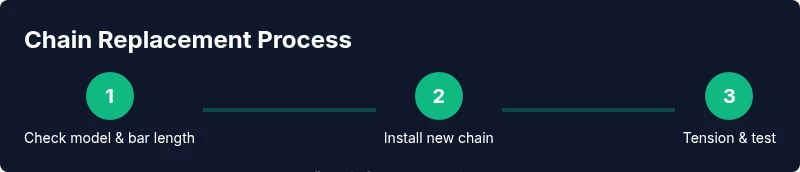
Start by locating your model number and bar length on the saw. The chain must match the bar length, pitch, and gauge. If you have a long bar, you may need a longer chain with the appropriate number of drive links. Ryobi often uses specific replacement parts; check the official Ryobi replacement catalog or the saw’s manual to confirm compatibility. Consider whether your typical work involves light pruning or heavier limb cutting; for frequent heavy use, a higher-quality chain with robust hardening can reduce wear. Finally, ensure the chain is designed for “pole saw” use and that the tooth configuration supports efficient wood release and smoother cutting.
Replacing the chain: a practical, safe workflow
Before touching the chain, disconnect power and wear cut-resistant gloves. Use the bar cover to prevent injury while loosening the nuts or screws that hold the bar and chain in place. Remove the old chain by lifting it from the bar and side plate, then thread the new chain through the bar groove, ensuring the drive links align with the bar sprocket. Replace the bar cover and hand-tighten the tensioner. If you feel resistance, stop and re-check alignment. A proper replacement minimizes heat buildup and helps you maintain control during cutting.
Tensioning, break-in, and first-use checks
After mounting the new chain, set the tension so there is a slight sag when the bar is held level and the chain rests in the middle of the bar groove. Make a few light cuts in soft wood to bed the teeth and distribute lubricant. Stop and inspect for any skipping, binding, or abnormal heat after the first few passes. Lubricate generously with fresh bar oil and keep the bar and chain clean during the break-in period. If the chain tightens as it heats, re-check tension once it cools.
Maintenance, sharpening, and lubrication best practices
Regular maintenance extends chain life. Sharpen with a proper file and guide that matches the chain’s tooth geometry. Avoid over-sharpening: remove material evenly to preserve tooth shape. Lubricate before each use and check oil flow; clean the bar groove of debris to prevent heat buildup. Replace the chain if you see cracked drive links, severe stretching, or missing or damaged teeth. Keeping a spare chain on hand helps you manage longer jobs without downtime.
Safety, common mistakes, and model-specific notes
Always wear PPE: gloves, eye protection, and a helmet if working overhead. Never operate with a damaged guard or loose bar cover. Common mistakes include assuming a chain will fit without checking pitch, gauge, and drive links, or using an incompatible chain on the bar. Ryobi models may have slightly different tensioning mechanisms; consult the manual for your specific saw. Keeping a clean workspace and documenting model-specific notes will reduce the risk of mis-matches.
Compatibility and model-specific notes
Pole saw chains vary by Ryobi model and bar length. If you changed bar length, you might need a different chain pitch or drive-link count. Always confirm with Ryobi’s official parts list or your local dealer. When in doubt, compare the new chain’s packaging with your existing chain to ensure exact match in pitch, gauge, and drive-link configuration.
Tools & Materials
- Ryobi pole saw replacement chain(Must match bar length, pitch, and gauge; check model-specific catalog)
- Screwdriver or wrench set(Use to loosen bar screws and tensioner nuts)
- Bar oil(Fresh oil for break-in and ongoing lubrication)
- Gloves (cut-resistant)(Protect hands during chain replacement)
- Chain gauge or ruler(Verify pitch and gauge accuracy)
- Owner’s manual or Ryobi replacement parts sheet(Cross-check model compatibility and parts numbers)
- Cloth or rag(Wipe excess oil and debris from bar and chain)
- Pliers or chain breaker (optional)(For removing stubborn links or nibs)
Steps
Estimated time: 25-45 minutes
- 1
Power down and secure the saw
Remove the battery or unplug the saw if it’s corded. Wear eye protection and cut-resistant gloves. Place the saw on a stable surface and engage a secure position to prevent accidental movement during the replacement.
Tip: Double-check that the chain is not loaded in the bar channel before touching any hardware. - 2
Relieve tension and remove the bar cover
Loosen the bar screws or tensioner and carefully lift the bar cover away. Keep track of screws and springs. Do not force the bar if it seems stuck.
Tip: Take a quick photo of the setup before removing parts to aid reassembly. - 3
Inspect and choose the replacement chain
Compare pitch, gauge, and drive-link count with your current chain. Verify the replacement matches Ryobi’s catalog and your model’s bar length.
Tip: If in doubt, consult the manual or a dealer before purchasing a replacement. - 4
Install the new chain on the bar
Thread the chain through the bar groove and align the drive links with the sprocket. Ensure the cutting teeth point in the correct direction. Reattach the bar and careful to keep the chain aligned along the groove.
Tip: Avoid bending or twisting the chain links during installation. - 5
Tension the chain appropriately
With the bar parallel to the ground, adjust the tension so the chain shows a slight sag when lifted at the midpoint. Recheck after a brief run.
Tip: Too tight can overheat; too loose increases derailment risk. - 6
Bed in and lubricate
Apply fresh bar oil and run the saw at no-load or with light cuts in soft wood to bed the chain. Listen for unusual sounds and watch for binding.
Tip: Wipe away excess oil and debris after initial run. - 7
Final checks and clean-up
Inspect the bar groove and drive links for wear. Make a few test cuts in a safe area to confirm stable operation, then clean the workspace.
Tip: Store spare parts in a dry place and keep tools organized for next time.
FAQ
What size Ryobi pole saw chain do I need?
The required chain size depends on the pitch, gauge, and drive link count that match your bar. Check your saw’s manual or the Ryobi parts catalog to confirm the exact specifications before buying a replacement.
Check the saw’s manual or parts catalog to confirm the exact pitch, gauge, and drive links before buying a replacement.
Can I use a different brand chain on a Ryobi pole saw?
Only chains designed for the same pitch and gauge should be used. Ryobi parts are tailored to their bars, and mismatched chains can be unsafe and cause damage.
Stick to chains that match your bar's pitch and gauge to stay safe and effective.
How often should I replace the chain?
Replace when dull after sharpening has little effect, when drive links are bent, or when teeth are chipped or worn. Heavy usage may require more frequent changes.
Replace the chain when it stops cutting efficiently or shows visible wear.
Is it safe to sharpen the chain myself?
Yes, with a proper file and guide that matches the chain. Maintain consistent angles and remove equal amounts from each tooth; if unsure, replace the chain.
Yes, with the right file and guide. Don’t over-sharpen and keep angles even.
What should I do after installing a new chain?
Tension and lubricate, run the saw briefly to bed the teeth, and verify alignment before making cuts. Recheck tension after a short test cut.
Tighten to the right tension, lubricate, and test on soft wood first.
How do I tension a Ryobi pole saw chain correctly?
The chain should have a slight sag under gravity when the bar is level. Adjust with the tensioner until the chain moves smoothly and sits in the groove.
A small amount of slack is normal; tighten until it moves freely with some resistance.
Watch Video
The Essentials
- Match chain pitch, gauge, and drive links to your bar.
- Follow model-specific instructions for tension and installation.
- Bed-in and lubricate the chain for safe initial use.
- Always apply PPE and remove power before maintenance.