Ryobi Battery Powered Chainsaw: Safe Use and Maintenance
Learn how to safely operate and maintain a Ryobi battery powered chainsaw with practical tips, safety gear, battery care, and troubleshooting from Chainsaw Manual.


You’ll learn how to safely operate and maintain a Ryobi battery powered chainsaw, from PPE and battery care to starting technique and basic maintenance. This guide covers setup, safe cutting practices, storage, and troubleshooting for homeowners, DIY enthusiasts, and professionals.
What makes a Ryobi battery powered chainsaw different from gas models
A Ryobi battery powered chainsaw offers a practical balance of portability, ease of use, and safety for homeowners and DIY enthusiasts. Using a rechargeable lithium-ion battery and a brushless motor, these saws deliver consistent torque without the noise, emissions, or gas handling that come with traditional gas-powered models. According to Chainsaw Manual, cordless saws like the Ryobi lineup excel for light- to mid-duty tasks such as pruning, limbing, and small-to-medium diameter cutting around the property. The absence of a cord makes maneuvering around obstacles easier, and the low-maintenance design reduces routine service needs. That said, performance depends on battery capacity and model design, so selecting the right battery and bar length is important. The Chainsaw Manual team emphasizes that understanding your workload and choosing appropriate battery packs can maximize runtime while preserving tool longevity. In practice, a typical Ryobi cordless chainsaw feels lighter in the hands, with a balanced feel that helps reduce fatigue during long trimming sessions. When used correctly, it provides a safe alternative to gas-powered chainsaws for homeowners and professionals doing medium-scale work.
Safety gear and pre-use checks
Before you pull the trigger on any chainsaw, gear up and perform quick checks. Personal protective equipment (PPE) is non-negotiable: a ANSI/OSHA-compliant helmet with a face shield, hearing protection, impact-resistant gloves, and chainsaw-specific chaps or leggings. Wear sturdy boots with good traction. Keep a first-aid kit and a fire extinguisher nearby in case of emergencies. For the Ryobi battery powered chainsaw, familiarizing yourself with the chain brake and on/off switch is essential: engage the chain brake before starting, and verify that the chain does not move when engaged. Check the bar oil level and ensure there is lubrication during operation. Wipe down the body to remove dust and debris; loose grit can affect chain movement. Finally, inspect the battery and charger for damage, and never use a swollen or damaged battery. A safe setup prevents accidents and prolongs tool life, especially for first-time users.
Battery care and charging best practices
Reliable battery performance starts with proper care. Use only the Ryobi One+ battery system recommended for your saw, and store batteries in a cool, dry place away from direct sun or heat sources. Charge in a well-ventilated area and follow the charger’s instructions to avoid overcharging. It’s wise to monitor the battery for swelling, and never attempt to use a damaged pack. A common best practice is to allow a full charge before long storage periods, and to cycle new batteries through a few charge/discharge cycles to calibrate the gauge. When cutting, resist the urge to drain the battery completely; aim to complete tasks with partial charges where feasible to maintain cell longevity. After use, allow the battery to cool before storage, and never leave it on or near flammable materials.
How to prepare the bar and chain for safe cutting
Begin with a clean bar and chain; rust and pitch can hinder cutting and increase kickback risk. Use a soft brush to remove sawdust and debris from the bar groove, and inspect the chain for damaged or dull teeth. Check chain tension when the chain is cold: it should have a slight sag but not hang loose. If in doubt, use the tensioning screw or wrench provided with the saw. Lubricate the bar and chain with the recommended bar oil; ensure the oil flow is adequate by observing a small oil smear on the bar tip during operation. Replace chipped or worn teeth; never run a dull chain as it increases stress and can cause dangerous jams. Lastly, confirm that the chain brake engages reliably and the scabbard is in place when transporting the saw.
Safe starting and efficient cutting techniques
Position yourself with feet firmly planted, one foot slightly ahead for balance, and hold the saw with both hands on the front handle and rear handle. Engage the chain brake, rest the bar tip on the workpiece, and start the saw using the on/off switch according to the user manual. With a Ryobi cordless saw, avoid full throttle at the moment of start; allow the chain to warm and the oil to circulate before beginning a cut. Use a steady, controlled motion, making relief cuts and avoiding forcing the chain. For overhead or awkward cuts, take extra care and consider repositioning. Let the chain do the work; apply light pressure and maintain a clean cutting line. If the saw stalls or chatters, stop, reduce effort, and re-establish a secure stance. Remember: always retreat to a stable position if the work shifts.
After-use maintenance and cleaning
After finishing a session, switch off the saw and engage the chain brake before removing the battery. Clean the bar groove and teeth with a brush; wipe away sap and dust. Check chain tension again and adjust as needed once the chain cools. Refill bar oil if the flow is low; wipe the outside and store the tool in a dry location. If you notice abnormal vibration, check for bent teeth or a loose bar nut. Periodically inspect the battery contacts for corrosion and clean as needed. Keep the chain sharp by following proper sharpening guidance; a dull chain wastes energy and increases risk. Regular maintenance extends life and ensures consistent performance.
Storage, transport, and longevity tips
For long-term storage, remove the battery and store it separately in a cool, dry place away from metal objects that could bridge connections. Keep the saw clean and dry; cover the bar with the scabbard or blade cover when not in use. When transporting the tool, secure the saw to prevent movement and protect the battery contacts from damage. Protect the chain from rust by applying a light coat of lubricant and avoiding moisture exposure. If the unit will be idle for weeks or months, perform a light maintenance check before the next use.
Troubleshooting common cordless saw issues
If the saw does not start, verify the battery is charged and properly seated, and confirm the switch is functioning. If the chain fails to move, check chain tension and for a stuck debris. If there is excessive vibration, inspect the bar and chain alignment or worn bearings. If the motor seems to run hot, pause to cool and reduce workload; overuse can overheat the motor. If you observe oil leaks or poor lubrication, check the oil reservoir and flow path.
Choosing the right Ryobi model and accessories
Ryobi offers several cordless saws within the One+ system; when selecting a model, consider bar length for the kind of work you expect, weight, and the capacity of your battery pack for runtime. For pruning and trimming, a shorter bar is lighter and easier to maneuver; for larger firewood tasks, a longer bar covers more ground but adds weight. Accessories such as a chain sharpening kit, extra batteries, a fast charger, and protective cases can extend versatility and uptime. Always verify compatibility with your existing Ryobi tools so you maximize the One+ ecosystem. Finally, read user guides and safety manuals to ensure you choose a model aligned with your experience level and safety preferences.
Tools & Materials
- Ryobi battery powered chainsaw(A preferred model within the Ryobi One+ family)
- Ryobi One+ battery(Match the saw’s voltage and capacity to your workload)
- Ryobi battery charger(Use the charger specified for your battery)
- Safety glasses or face shield(Impact protection for eyes)
- Hearing protection(Ear muffs or plugs)
- Chainsaw-safe gloves(Grip and protection)
- Chainsaw chaps or leg protection(Leg protection against accidental contact)
- Sturdy work boots with grip(Support and stability)
- Bar oil(Lubricant approved for chainsaws)
- Chain tensioning tool or wrench(Essential for proper tension)
- Soft brush or cloth(Clean bar groove and teeth)
- Replacement chain (optional)(Spare for quick swap)
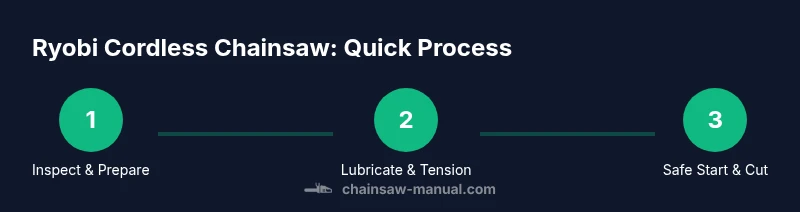
Steps
Estimated time: 45-60 minutes
- 1
Inspect and prepare
Power off, engage chain brake, check battery, and inspect bar and chain for wear. Clean debris from the bar groove to ensure smooth operation. This upfront check reduces kickback risk and helps identify worn components before work.
Tip: If anything looks damaged, replace it before continuing. - 2
Verify chain tension
With the chain cooled, check sag. It should have a slight dip but not hang loose. Use the tensioning screw to adjust until the drive links fit snugly on the sprocket without binding.
Tip: Tensioning with the engine off is safer and more accurate. - 3
Lubricate and oil flow check
Fill the bar oil reservoir and run the saw briefly to confirm oil is reaching the tip. A visible smear on the bar tip indicates adequate lubrication.
Tip: If oil flow is insufficient, inspect the oil line and nozzle for clogs. - 4
Safe starting setup
Engage the chain brake, place the bar tip against a secure workpiece, and start the saw according to the manual. Keep hands away from the chain during startup.
Tip: Do not start with the chain close to your body. - 5
Cutting technique
Use a stable stance, with the saw close to the body and the elbow joints slightly bent. Let the chain do the cutting; apply steady, controlled pressure without forcing the blade.
Tip: Avoid cutting above shoulder height to reduce kickback risk. - 6
Mid-work checks
Periodically stop to check chain tension, oil flow, and battery temperature. Clear debris from the bar and teeth so performance remains consistent.
Tip: Take short breaks on long jobs to prevent overheating. - 7
Post-cut shutdown
Switch off, engage the chain brake, and remove the battery before cleaning. Recheck tension and oil levels after cooling.
Tip: Clean the chain and bar after use to prevent sap hardening. - 8
Storage steps
Store the saw, battery, and charger in a cool, dry place away from metal objects. Cover the bar with the scabbard to prevent damage during storage.
Tip: Check for rust or corrosion on contacts before next use. - 9
Chain maintenance basics
Sharpen or replace the chain as needed using manufacturer guides. A sharp chain increases safety and efficiency and reduces wear on the motor.
Tip: Use proper files and guides to maintain correct tooth geometry.
FAQ
Is a Ryobi battery powered chainsaw suitable for beginners?
Yes, with proper PPE and a cautious approach, Ryobi cordless saws can be great for beginners performing light-duty tasks. Start with small branches and gradually progress as you gain confidence.
Yes. Start with safety gear, small tasks, and build up as you gain experience.
Can I use this saw for heavy-duty cutting?
Cordless Ryobi saws are typically best suited for light to medium work. For heavy-duty cutting, plan for shorter sessions and consider a higher-capacity model or alternative tools.
Best for light to medium work; for heavy tasks, consider a more capable tool.
How long does the battery last on a typical job?
Runtime depends on battery size, workload, and chain speed. Plan for multiple charges on longer jobs and manage tasks to maximize efficiency.
Runtime varies; expect multiple charges for longer tasks.
What maintenance is essential after each use?
Clean the bar and chain, check tension, refill bar oil, and safely store the battery. Regular maintenance keeps performance consistent and extends life.
Clean and check tension after use, then store safely.
Is it safe to cut overhead with a cordless saw?
Overhead cuts present kickback risk. Use proper stance, maintain a firm grip, and avoid overhead work when possible or use taller support to stabilize the work.
Overhead cuts are risky; avoid them when possible or take extra precautions.
How do I sharpen the chain on a Ryobi cordless saw?
Use a compatible chain file and guides, following the manufacturer’s angles. Secure the bar and rotate the chain for even, consistent sharpening.
Use the right sharpening tools and follow the guides for angle consistency.
Watch Video
The Essentials
- Choose the right battery and bar length for your workload.
- Always wear full PPE and use the chain brake when starting.
- Maintain proper chain tension and lubrication for safe operation.
- Clean and store the saw properly to maximize longevity.