Mini Electric Chainsaw Guide: Safe Step-by-Step Use
Learn how to choose, operate, and maintain a mini electric chainsaw with safety-first tips, practical steps, and setup guidance from Chainsaw Manual.


This guide shows you how to choose, set up, and safely use a mini electric chainsaw for light-cutting tasks. You'll learn safety gear, safe operation, battery care, and maintenance. By the end, you'll know how to perform small limb pruning, firewood prep, and DIY tasks with confidence. Follow the steps and stay aware of kickback risks.
Why a mini electric chainsaw is a practical tool for homeowners
According to Chainsaw Manual, a well-chosen mini electric chainsaw offers portable pruning power in a compact, low-emission package ideal for homeowners. Their team notes that this kind of tool excels at pruning shrubs, trimming branches, and light firewood preparation in backyards and small workspaces. By focusing on safety-first practices, you can expand your DIY capabilities while reducing the effort required for routine cutting tasks. These tools shine in tight spaces where gas-powered saws are cumbersome, and their quiet operation helps neighborhoods stay comfortable while you work. Keep in mind that a smaller bar length limits heavy-duty felling, but for pruning and shaping, a mini electric chainsaw is often the right choice.
For new users, the key isn’t horsepower alone but handling, safety setup, and steady technique. Start by defining your typical tasks (pruning, limbing, or light wood cut) then match a model to that job, paying attention to bar length, battery compatibility, and safety features. A thoughtful selection minimizes fatigue and maximizes control during repeated cuts.
Block length ~180-210 words
Tools & Materials
- Mini electric chainsaw with charged battery and charger(Ensure battery is compatible with saw model; verify charger is functional before use.)
- Safety glasses or goggles(ANSI Z87.1 or equivalent for impact resistance.)
- Hearing protection (earmuffs or earplugs)(Use even for short tasks to protect hearing.)
- Cut-resistant gloves(Grip-enhancing and abrasion-resistant for better control.)
- Long sleeves, pants, and sturdy non-slip boots(Avoid loose clothing and secure hair; tuck laces away.)
- Bar oil and lubricant(Use manufacturer-recommended oil; check fill level before use.)
- Screwdriver or hex wrench for chain tension(Check tension regularly to prevent derailment.)
- Spare battery (optional but recommended)(Useful for extended work; rotate to keep duty cycle even.)
- Cleaning brush or cloth(Keep bar, chain, and cooling vents free from debris.)
Steps
Estimated time: 45-60 minutes
- 1
Inspect and prepare
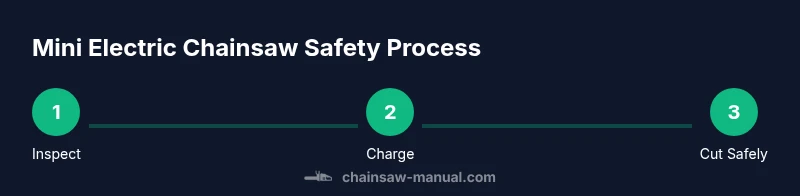
Unbox the saw and visually inspect the bar and chain for damage. Look for nicks, loose teeth, or oil leaks. Clean debris from the guide bar and chain with a brush. Make sure the chain is properly lubricated and the bar is aligned. This initial check reduces the risk of sudden failure during cutting.
Tip: Take a moment to review the user manual for specific torque specs and safety warnings. - 2
Charge the battery and test
Fully charge the battery before starting and test the saw on a scrap piece of wood to verify smooth operation. Listen for unusual sounds and watch for irregular chain movement. If anything feels off, stop and inspect before continuing.
Tip: Charge time varies by model; avoid used, damaged, or swollen batteries. - 3
Attach chain and tension
Ensure the chain is properly mounted with the teeth facing forward. Use the tensioning screw to remove excess slack until the chain runs smoothly along the track without sagging. Recheck after a couple of light cuts.
Tip: Never over-tighten; a slightly looser chain reduces heat buildup during use. - 4
Adopt a stable stance
Position your feet shoulder-width apart, weight centered, and your non-dominant hand toward the front handle. Keep the bar away from your body and maintain a clear cutting path. A stable stance improves control and reduces fatigue.
Tip: Keep both hands on the saw; never cut with one hand or while in motion. - 5
Start safely and test cut
Engage the safety lock, press the trigger, and allow the chain to reach full speed before contacting wood. Start with a shallow groove to establish a cutting line. If the wood binds, stop, release, and re-position.
Tip: Always cut with control; don’t force the saw through snagging wood. - 6
Make controlled cuts
Make shallow, progressive cuts rather than trying to take a deep bite all at once. For pruning, start with light passes to create a clean outline. For limbing, work from the outside in to avoid binding and kickback.
Tip: Never cut above shoulder height; keep the bar below shoulder line at all times. - 7
Withdraw safely and stop
Feather the trigger to slow the chain as you finish a cut, then carefully withdraw the saw. Move your body gradually to avoid sudden movements. Power off and engage the chain brake when the saw is not in use.
Tip: Clear the area of bystanders and pets before starting any cut. - 8
Clean, lubricate, and store
Wipe the body and clean the bar and chain. Refill bar oil if needed and apply light lubricant to moving parts. Store in a dry, sheltered place away from children and pets, with the battery removed safely.
Tip: Inspect the chain after use; replace dull teeth promptly to maintain performance. - 9
Schedule regular maintenance
Create a simple maintenance routine: after every use, clean, lubricate, and check tension; monthly, inspect the drive sprocket and cleaning vents; annually, replace the chain if teeth are worn. This keeps performance consistent and safe.
Tip: Keep a small maintenance log to track wear, oil levels, and battery health.
FAQ
Do mini electric chainsaws require gasoline?
No. Mini electric chainsaws run on electricity or battery power, which makes them cleaner, quieter, and easier to maintain than gas models. They’re best for pruning, trimming, and light-cut tasks.
No gasoline is required. These saws run on electricity or battery power for quieter operation and easier maintenance.
What PPE should I wear when using one?
Wear safety glasses, hearing protection, cut-resistant gloves, and sturdy clothing and footwear. A helmet with face shield is optional but recommended in busy or risky sites.
Always wear eye protection, hearing protection, gloves, and sturdy clothing and footwear for safe operation.
Can I use a mini electric chainsaw indoors?
Indoor use is possible for small pruning tasks with good ventilation, but avoid enclosed spaces where dust accumulates or where there’s limited clearance. Always ensure there’s a safe exit path and bystander-free zone.
You can, but ensure ventilation and space. Keep bystanders away and watch for dust buildup.
How long does a battery typically last per charge?
Battery life varies with model and task. For light pruning, expect shorter runtimes; for larger jobs, use spare batteries or pauses to recharge. Follow manufacturer guidelines for optimal runtimes.
runtimes depend on battery size and the task; have a spare ready for longer work.
How do I sharpen or replace the chain on a mini electric saw?
Most minis use replaceable chains or have easy-access sharpening tools. Consult the user manual for the correct pitch and sharpening method, and replace dull teeth promptly to maintain performance.
Check your manual for the correct process; replace dull teeth as needed for best results.
Watch Video
The Essentials
- Choose the right bar length for your tasks
- Prioritize safety gear and proper stance
- Maintain proper chain tension and lubrication
- Plan cuts and avoid kickback scenarios
- Store and maintain the saw for longevity