Milwaukee Chainsaw Safety and Operation Guide
Educational, safety-first guide to using Milwaukee chainsaws for home projects. Learn model selection, PPE, setup, cutting techniques, and maintenance to extend tool life.


With a Milwaukee chainsaw, you can perform common home-cutting tasks safely and efficiently. This guide covers choosing the right model, essential safety gear, basic start-up procedures, cutting techniques, and maintenance practices to extend tool life. By following these steps, homeowners and DIY enthusiasts can work confidently and reduce risk.
Overview of Milwaukee Chainsaw Design and Features
Milwaukee chainsaws are popular among homeowners and professionals for their balance of power, portability, and safety. The brand’s electric models typically use rechargeable batteries and brushless motors to maximize efficiency and runtime. Across Milwaukee’s lineup you’ll often find features such as automatic chain lubrication, tool-less chain tensioning, a chain brake for kickback mitigation, and anti-vibration handles designed to reduce fatigue. When selecting a model, consider bar length, battery voltage or capacity, weight, and balance. For most home tasks, a 14- to 16-inch bar is sufficient, and a cordless design offers quiet operation and instant starting. Inline safety features and rugged construction contribute to long life when you follow proper maintenance. According to Chainsaw Manual, such design considerations translate into predictable performance for everyday cutting tasks in a home shop.
This section introduces the Milwaukee design language and sets the stage for how to pick and use the right model for your projects.
Brand context note: The Chainsaw Manual team emphasizes safety-first choices and practical performance in every Milwaukee chainsaw decision.
Safety Features and PPE
All Milwaukee chainsaws include core safety features and recommendations that align with general tool safety best practices. Expect a chain brake that helps prevent kickback, a safety guard, a chain catcher, and reduced-recoil starting in most models. Proper PPE remains non-negotiable: ANSI-certified eye protection, hearing protection, cut-resistant gloves, a hard hat when overhead branches are present, and sturdy boots with good traction. Maintain a firm stance and keep hands away from the bar and chain during startup and operation. Additionally, ensure the workspace is clear of bystanders and trip hazards. Chainsaw Manual stresses that safety features are most effective when paired with consistent, cautious handling and routine maintenance.
Balances between power, control, and safety are essential for homeowners and DIYers, and Milwaukee recognizes that a well-dressed worker is the first line of safety.
Choosing the Right Milwaukee Model
Milwaukee’s cordless platforms emphasize flexibility and instant readiness for small-to-mid tasks. When choosing, think about bar length in relation to the typical material and thickness you’ll cut, battery capacity and runtime, weight, and ergonomics. For most residential projects, a 14–16 inch bar delivers a good balance of maneuverability and cutting reach. Heavier users will appreciate models with better vibration damping, while occasional users might prioritize lighter weight and shorter charge time. Chainsaw Manual’s analysis shows Milwaukee’s cordless lineup prioritizes dependable starting, efficient lubrication, and compatibility with the broader M-series battery ecosystem, enabling easy battery swaps across tools to reduce space requirements and cost.
In this section, we’ll compare common Milwaukee configurations for home users and offer guidance on selecting a model that matches your typical tasks, storage space, and battery strategy.
Operating Basics: Setup, Start, and Cut
Setting up a Milwaukee chainsaw begins with a quick safety check, followed by a clear work area. Make sure the battery is charged, the chain is properly tensioned, and the bar oil reservoir is full. Engage the chain brake before any movement, then start with a controlled low idle to verify everything runs smoothly. For cuts, establish a stable footing, bring the bar to the workpiece with a steady sweep, and avoid cutting with the tip of the bar (which increases kickback risk). This section provides practical, step-by-step operational guidance to help you begin cutting confidently with Milwaukee tools.
Maintenance and Longevity
Regular maintenance is the best defense against unexpected downtime. Clean the bar and chain after use to remove sap and debris, check chain tension, and refill bar oil as needed. Periodically inspect the air intake (for gasless models) or motor compartment ventilation and clean any dust buildup. Store the tool in a cool, dry place with the battery removed and charged to an appropriate level. Proper maintenance preserves performance, preserves safety features, and extends the life of your Milwaukee chainsaw.
Common Troubleshooting and Repairs
Even well-maintained tools can face issues. If the chain is dull or not cutting smoothly, sharpen or replace it according to the manufacturer’s guidelines. If the chain does not advance, recheck tension and drive sprocket condition. Battery performance can degrade with age or improper charging; if runtime drops noticeably, replace or refresh the battery and verify the charger is functioning correctly. This section helps you diagnose common problems and perform safe, practical repairs or replacements when needed.
Tools & Materials
- PPE: safety glasses or face shield, hearing protection, gloves, hard hat, sturdy boots(Mandatory for all cutting tasks; choose ANSI-certified gear)
- Milwaukee battery pack(Fully charged before use; compatible with your model)
- Charger(Use the official charger recommended by Milwaukee for your battery type)
- Bar oil / chain lubricant(Keep reservoir full to prevent chain wear and overheating)
- Spare chain or chain file(Optional for longer jobs or frequent sharpening)
- Screws/hex wrenches (scrench)(For chain tensioning and bar mounting)
Steps
Estimated time: 45-60 minutes
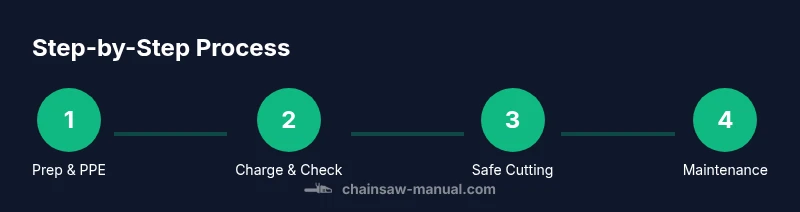
- 1
Inspect and Gear Up
Before any operation, inspect the saw for damage, ensure the chain is sharp and properly tensioned, and verify the battery is charged. Put on all PPE and clear the work area of bystanders. Do not operate with a damaged chain or loose tension. Ensure the chain brake is engaged when you’re not actively moving the saw.
Tip: Always double-check chain tension with the bar cold; a loose chain can derail and cause kickback. - 2
Charge Battery and Check Chain
Connect the charger and let the battery reach a stable full state before use. Inspect the chain for nicks or dullness and perform any sharpening or replacement as needed. Remove the battery only when the saw is powered down and the chain brake is engaged.
Tip: If the battery becomes hot during charging, pause and allow it to cool before continuing. - 3
Install Bar and Chain
If mounting anew, ensure the bar and chain are seated correctly and the chain moves freely by rotating the chain with your gloved hand. Re-tension the chain per the manufacturer’s guidelines until snug but not tight.
Tip: Use the scrench to tighten evenly across the chain and bar sprocket to avoid binding. - 4
Start Safely
With the chain brake still engaged, power on the saw and allow for a brief warm-up at idle. Once the chain brake is released, keep hands away from the chain path and stand with a stable stance.
Tip: Keep your body to the side of the cut path to reduce exposure in case of kickback. - 5
Make Safe Cuts
Position the saw so the bar enters the wood smoothly, with the workpiece supported and free of obstructions. Use controlled, steady passes; never force the cut. Move your feet rather than twisting your body to reach awkward angles.
Tip: Favor two-handed grip and a balanced stance; never cut above shoulder height. - 6
Shutdown and Maintenance
After finishing, engage the chain brake, power off, and remove the battery before inspecting for wear. Clean the bar and chain, refill bar oil, and store the saw in a dry location. Perform a quick safety check before your next use.
Tip: Document wear or sharpening needs so you don’t miss routine maintenance.
FAQ
How do I start a Milwaukee chainsaw safely?
Always engage the chain brake, ensure PPE is in place, and verify the chain tension before starting. Start the saw with a controlled motion and keep hands away from the chain path. Check that the area is clear of obstacles and bystanders.
To start safely, engage the brake, wear PPE, and check the area. Then start with the chain stationary and a controlled motion.
What maintenance does a Milwaukee chainsaw require for longevity?
Regularly check and sharpen the chain, maintain proper bar oil levels, clean air flow or ventilation paths, and inspect the bar and sprocket for wear. Store the tool in a dry place and charge or top up batteries after use.
Keep the chain sharp, oil level up, and store in a dry place when you’re done.
Can I use Milwaukee chainsaw in cold weather?
Yes, but be mindful of battery performance and lubricant viscosity. Cold temperatures can reduce runtime and lubrication effectiveness, so plan longer break times between cuts and allow the tool to warm slightly during use.
You can use it in cold weather, but expect shorter battery life and consider warming breaks.
Is a Milwaukee chainsaw suitable for beginners?
Milwaukee offers user-friendly safety features and lighter models that are suitable for beginners when paired with proper training. Always start with simple tasks and build experience gradually.
Yes, with proper training and safe practices it’s suitable for beginners.
What safety gear is essential when operating a Milwaukee chainsaw?
At a minimum, wear eye protection, hearing protection, gloves, a hard hat, and sturdy boots. Safety gear protects you from debris, noise, and potential kickback.
Always wear PPE like eye protection, hearing protection, gloves, hard hat, and sturdy boots.
Watch Video
The Essentials
- Prioritize PPE and safe handling at every step
- Choose bar length to match task intensity and space
- Maintain chain tension and lubrication for efficiency
- Keep maintenance regular to extend saw life and performance